Su Bingtian Science Population Center for Speed Research and Training
1 / 20
2 / 20
3 / 20
4 / 20
5 / 20
6 / 20
7 / 20
8 / 20
9 / 20
10 / 20
11 / 20
12 / 20
13 / 20
14 / 20
15 / 20
16 / 20
17 / 20
18 / 20
19 / 20
20 / 20
| Project name | Su Bingtian Science Population Center for Speed Research and Training |
| Project type | Hospitality |
| Design | TEG |
| Website | https://designteg.com |
| Contact e-mail | wuhan@tegdesign.net |
| Design year | 2025 |
| Completion Year | 2025 |
| Leader designer | Chengtian Pu |
| Team | Jinhui He, Dong Li, Yi Wang, Yue Wu |
| Project location | Panyu Campus, Jinan University, No. 855, Xingye Avenue East, Panyu District, Guangzhou, Guangdong Province, China. |
| Gross built area | 300㎡ |
| Photo credit | IN-FIELD studio |
| Partner | N/A |
| Clients | Jinan University Su Bingtian Center for Speed Research and Training, Guangdong Provincial Key Laboratory of Speed Capability Research |
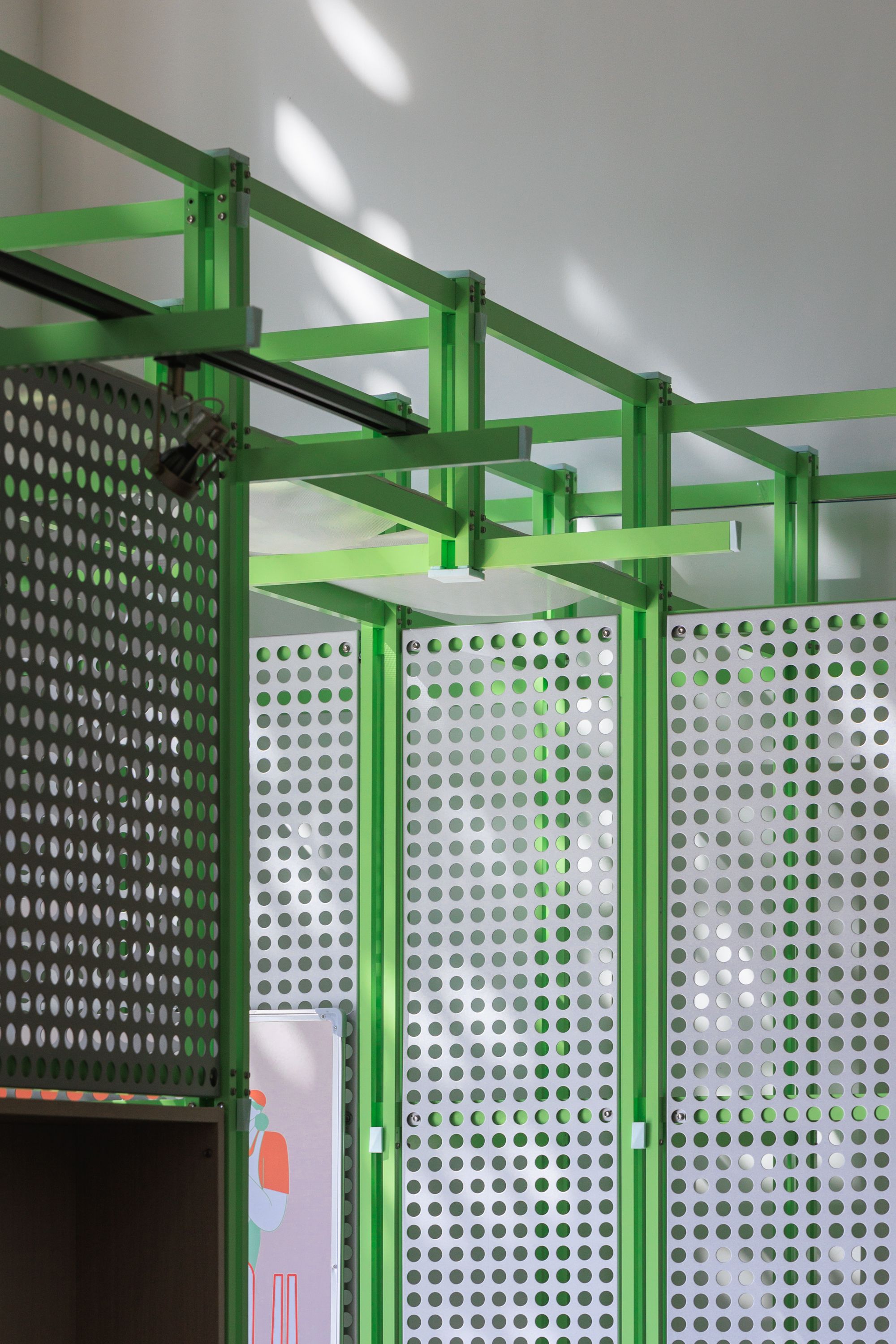
| Materials | Aluminum metal, Wood Veneer |
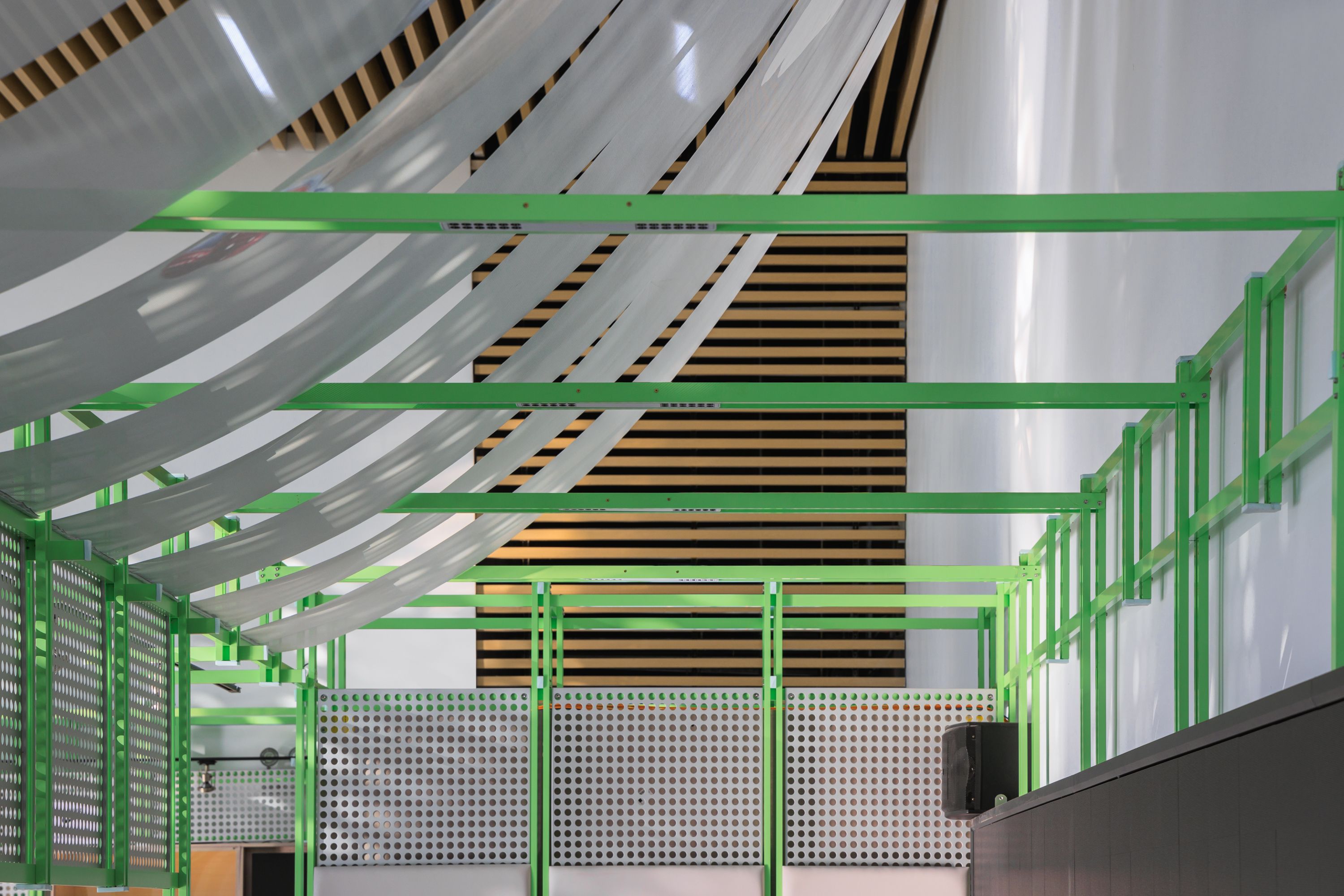
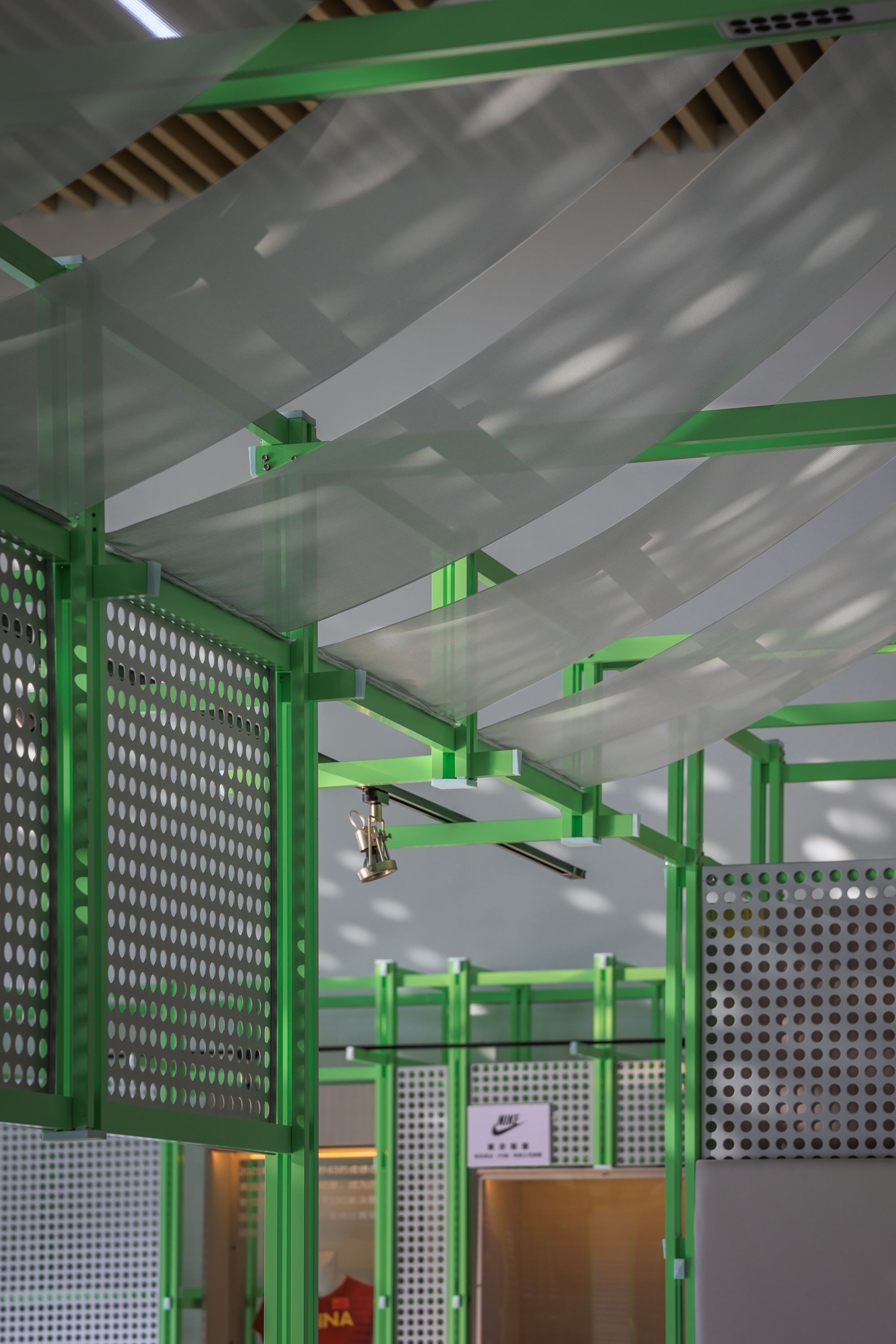
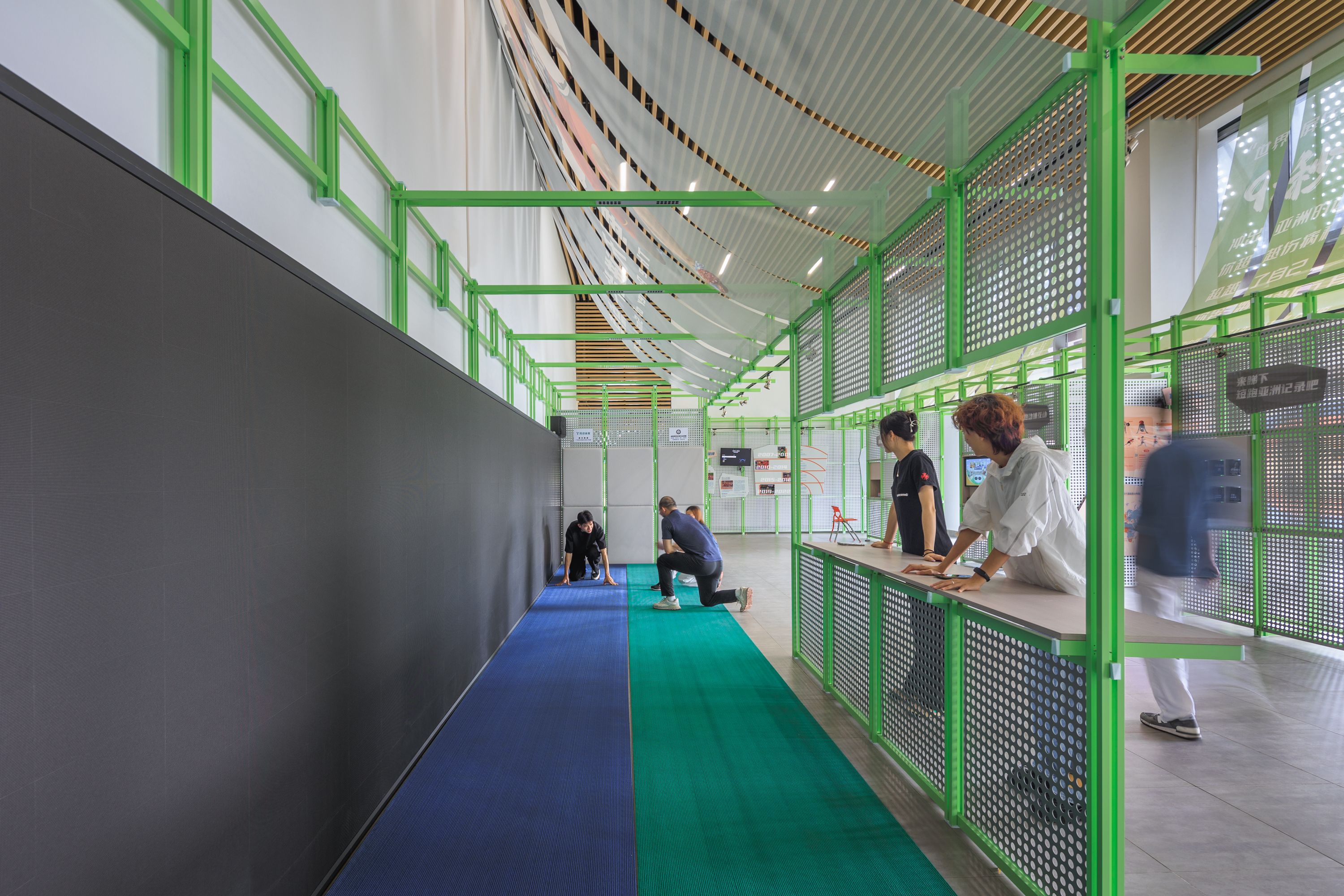
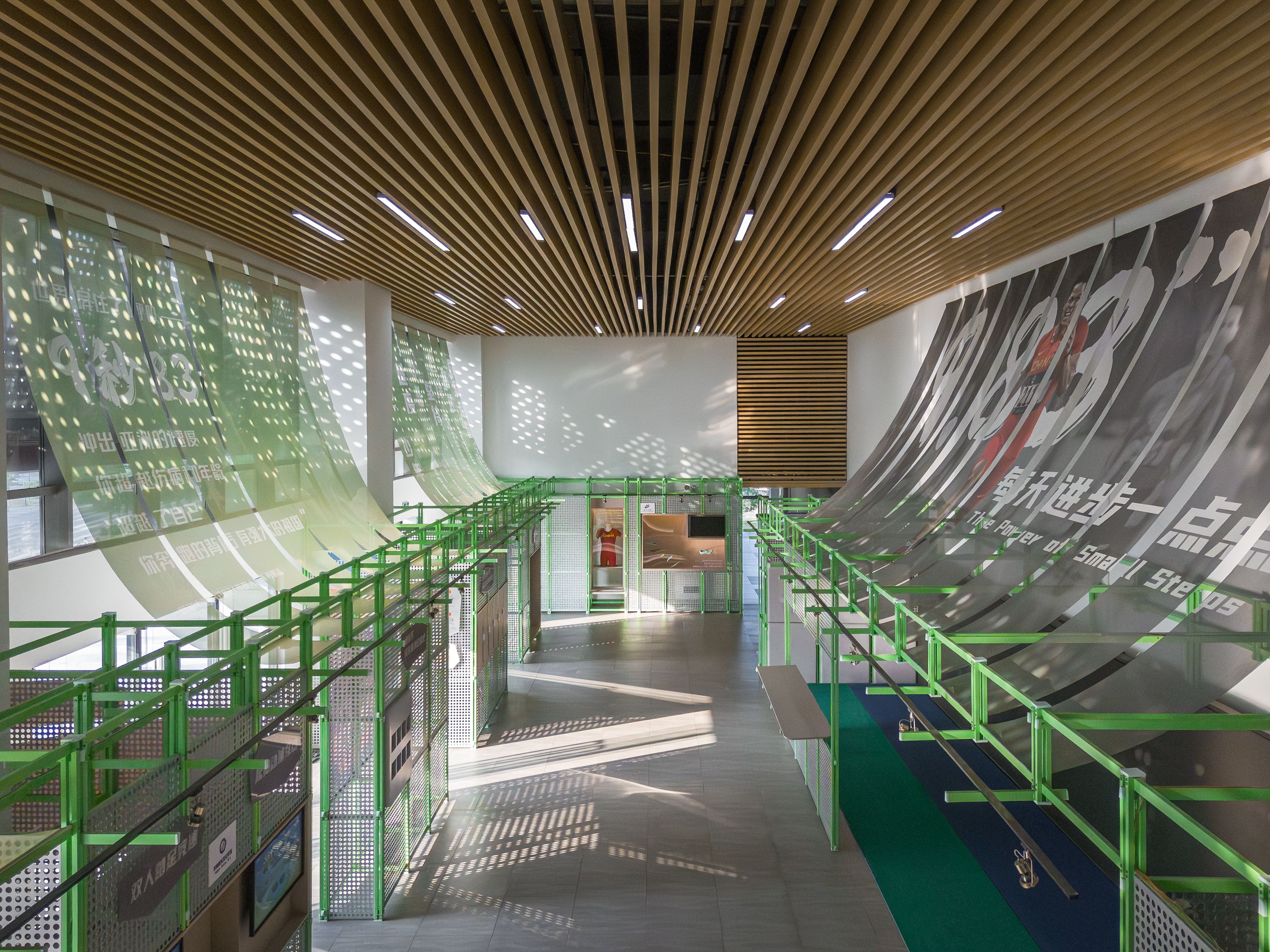
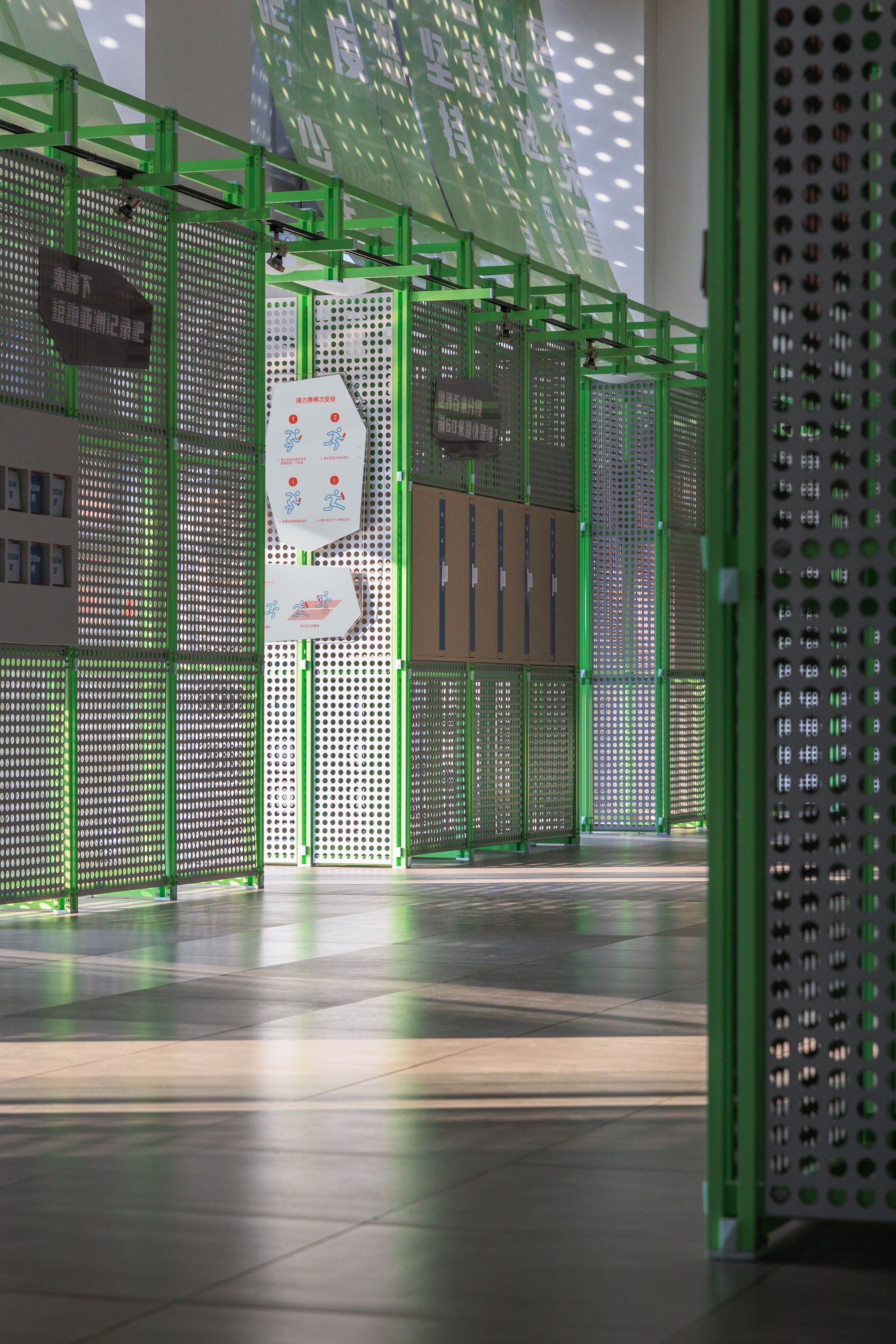
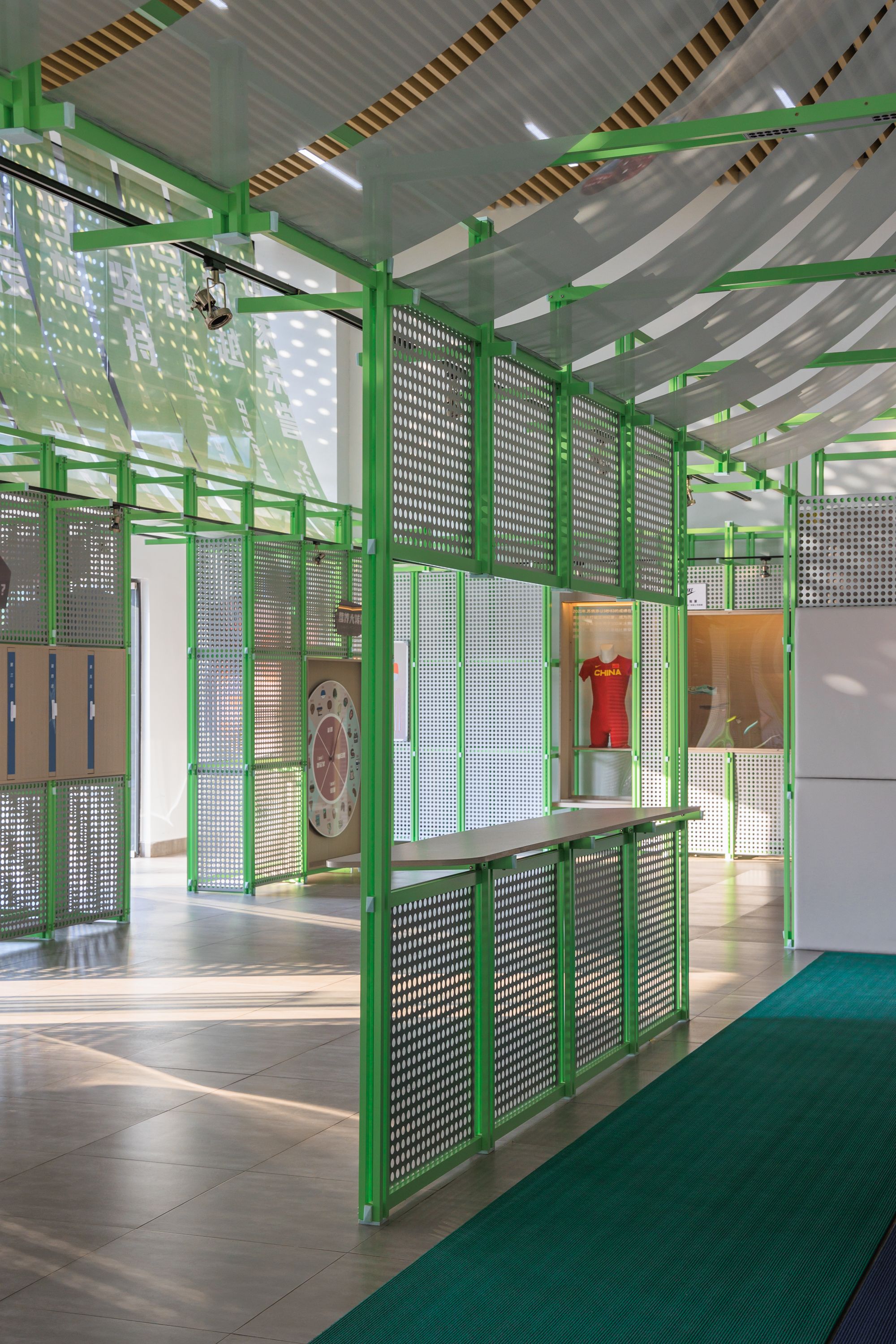
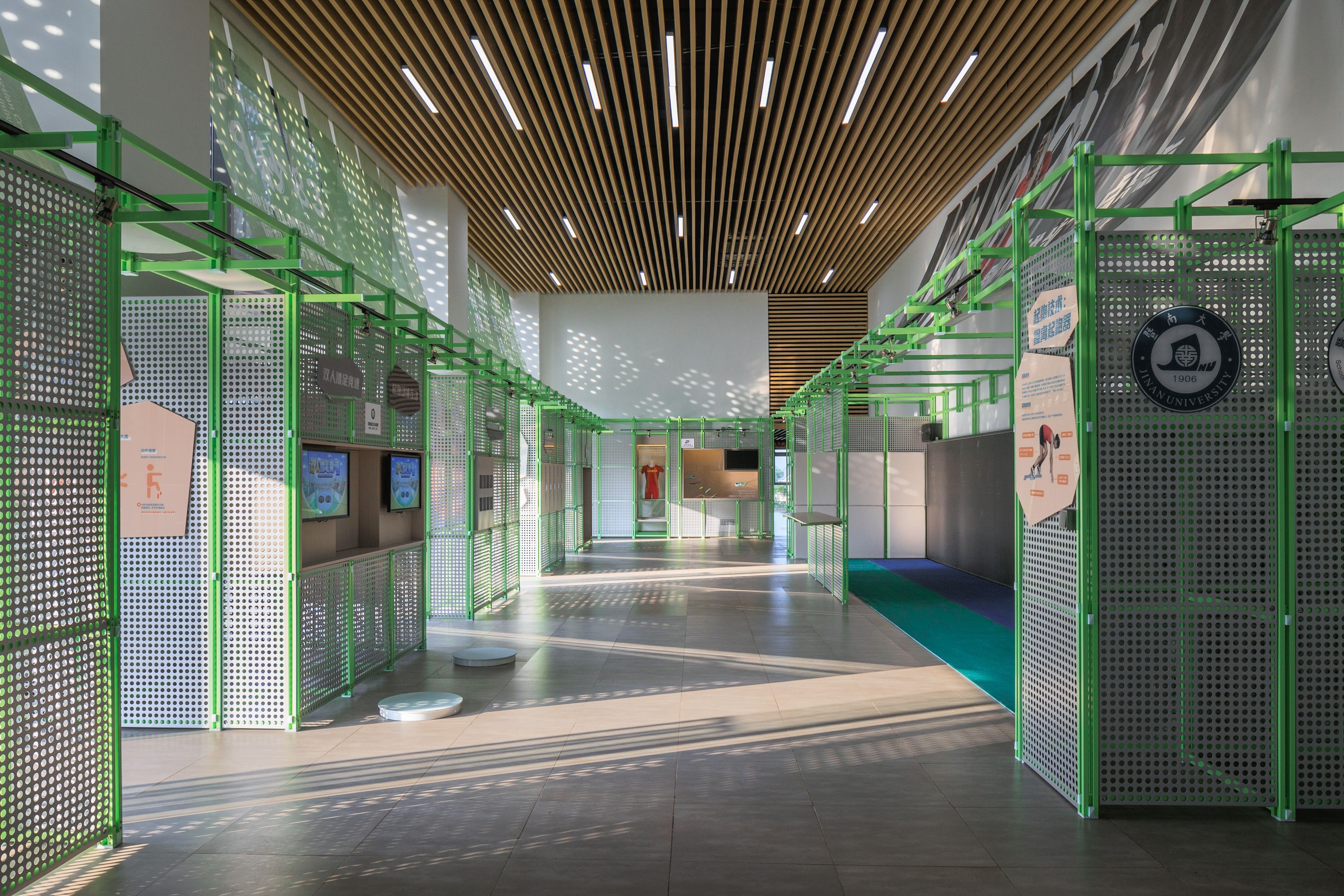
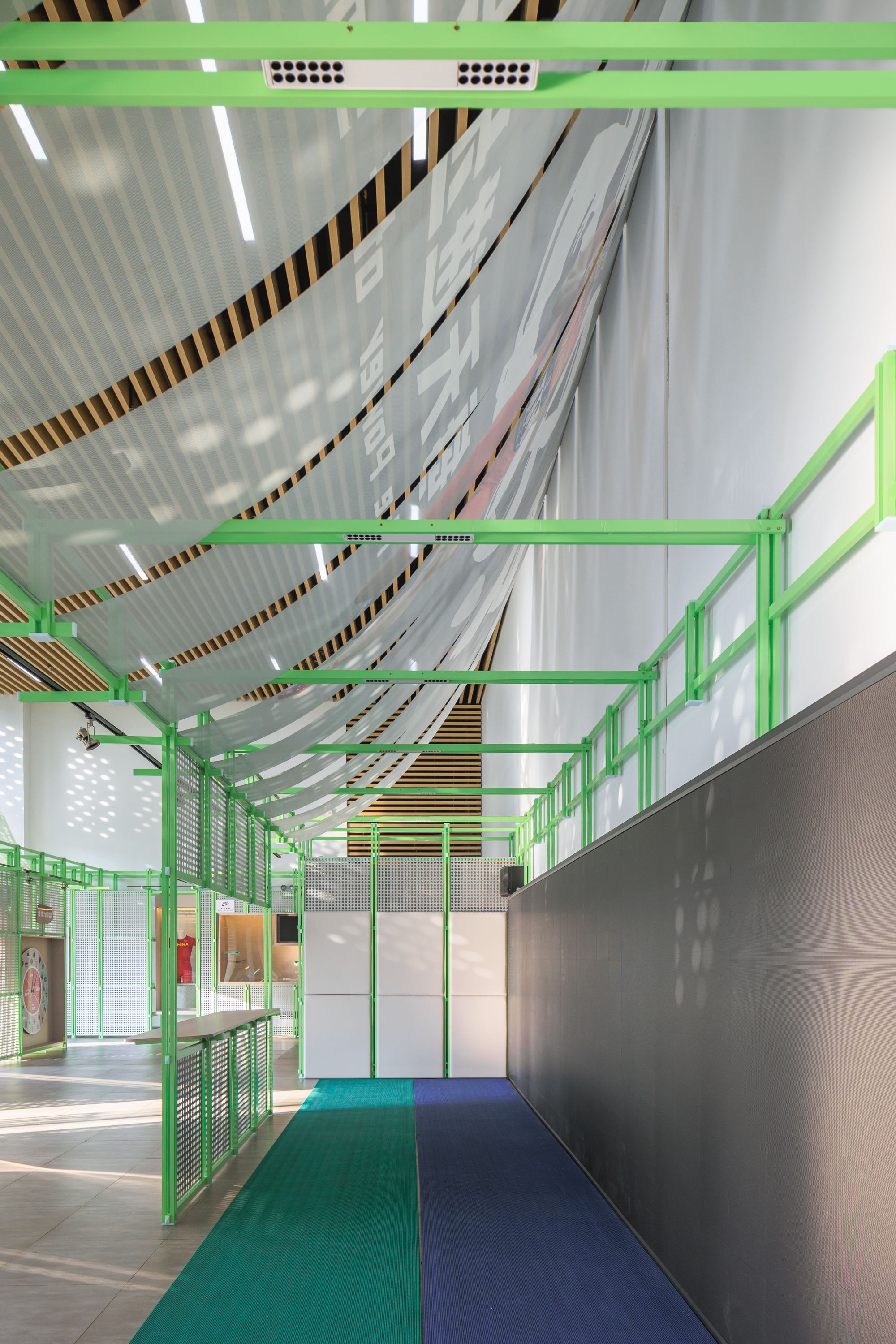
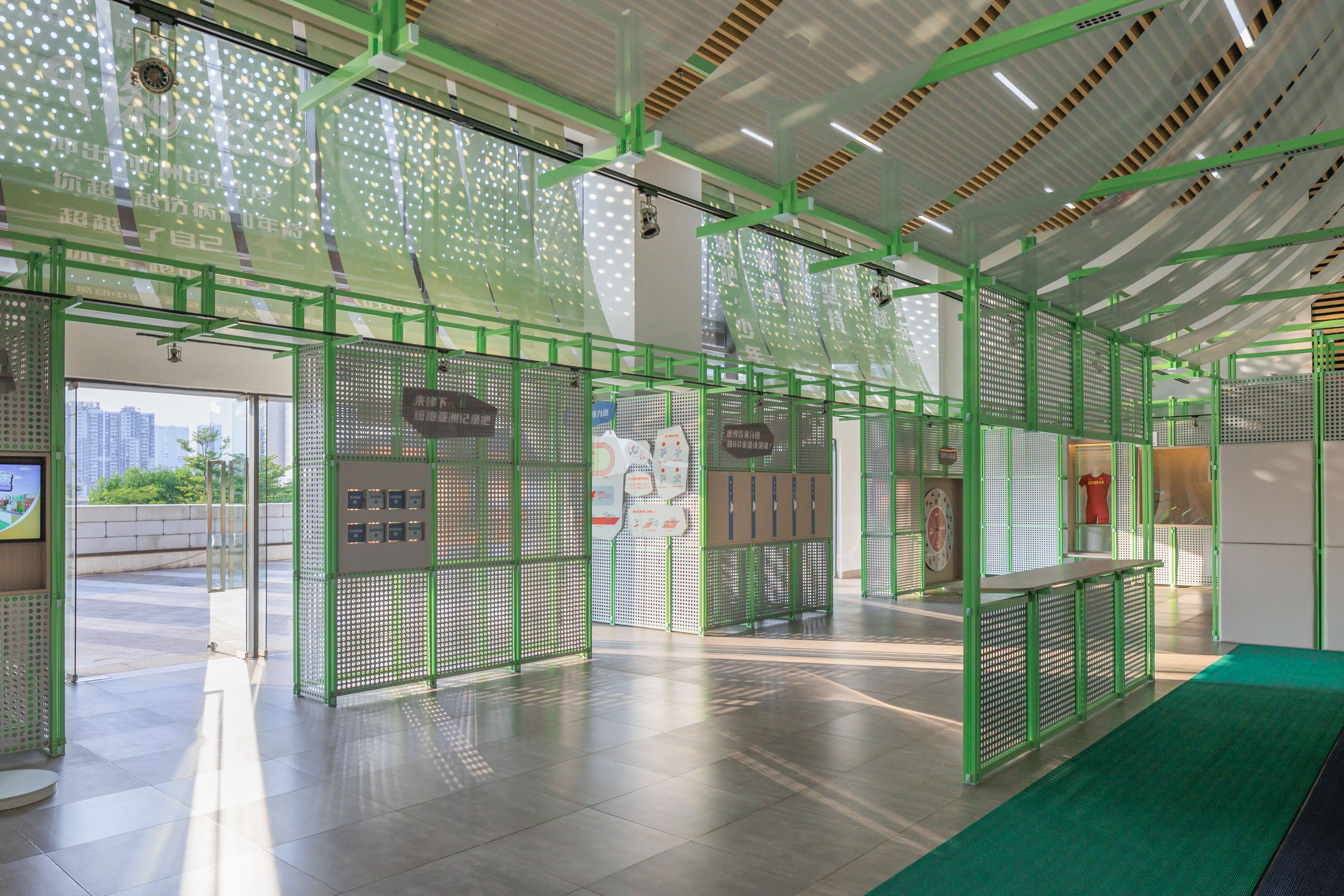
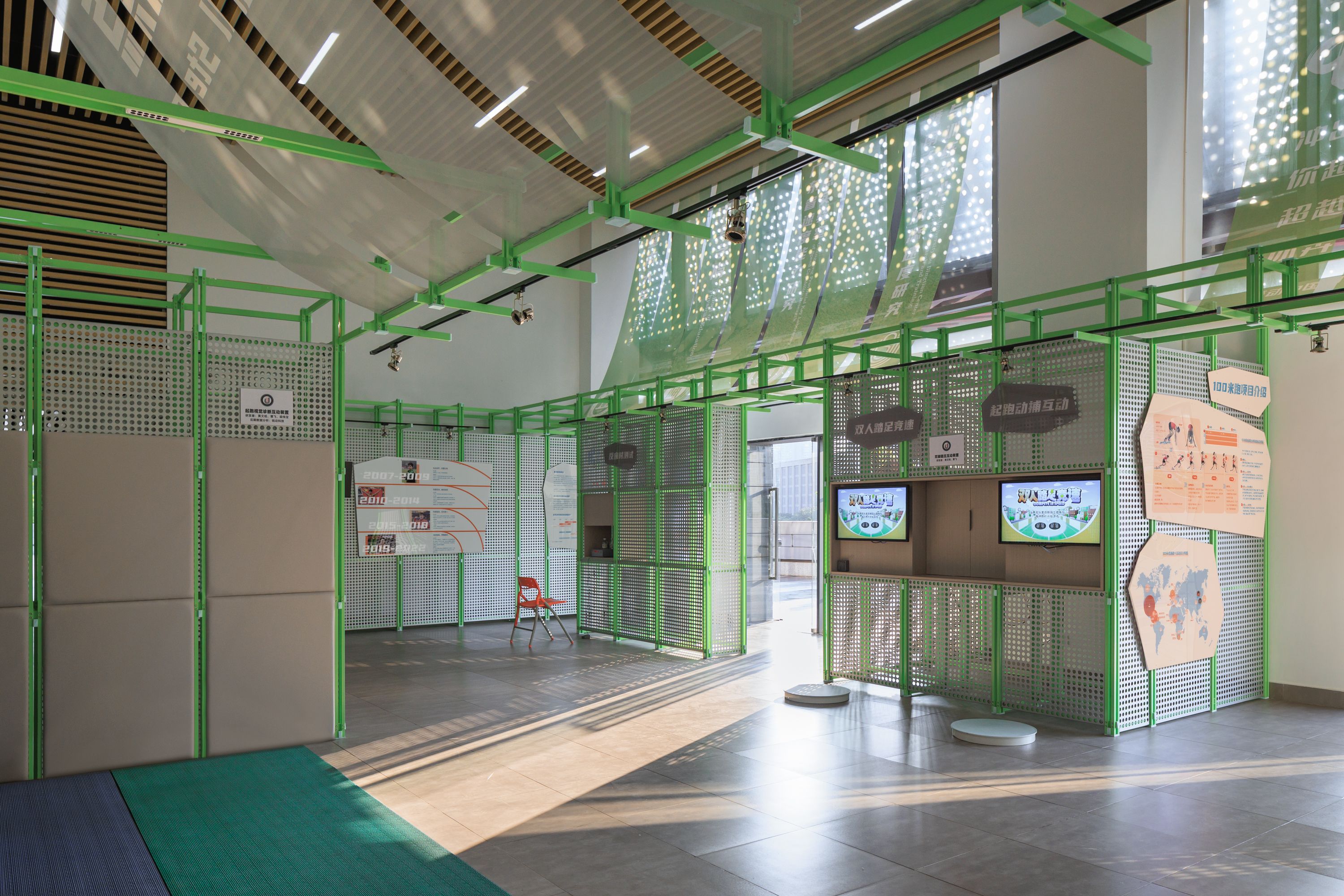
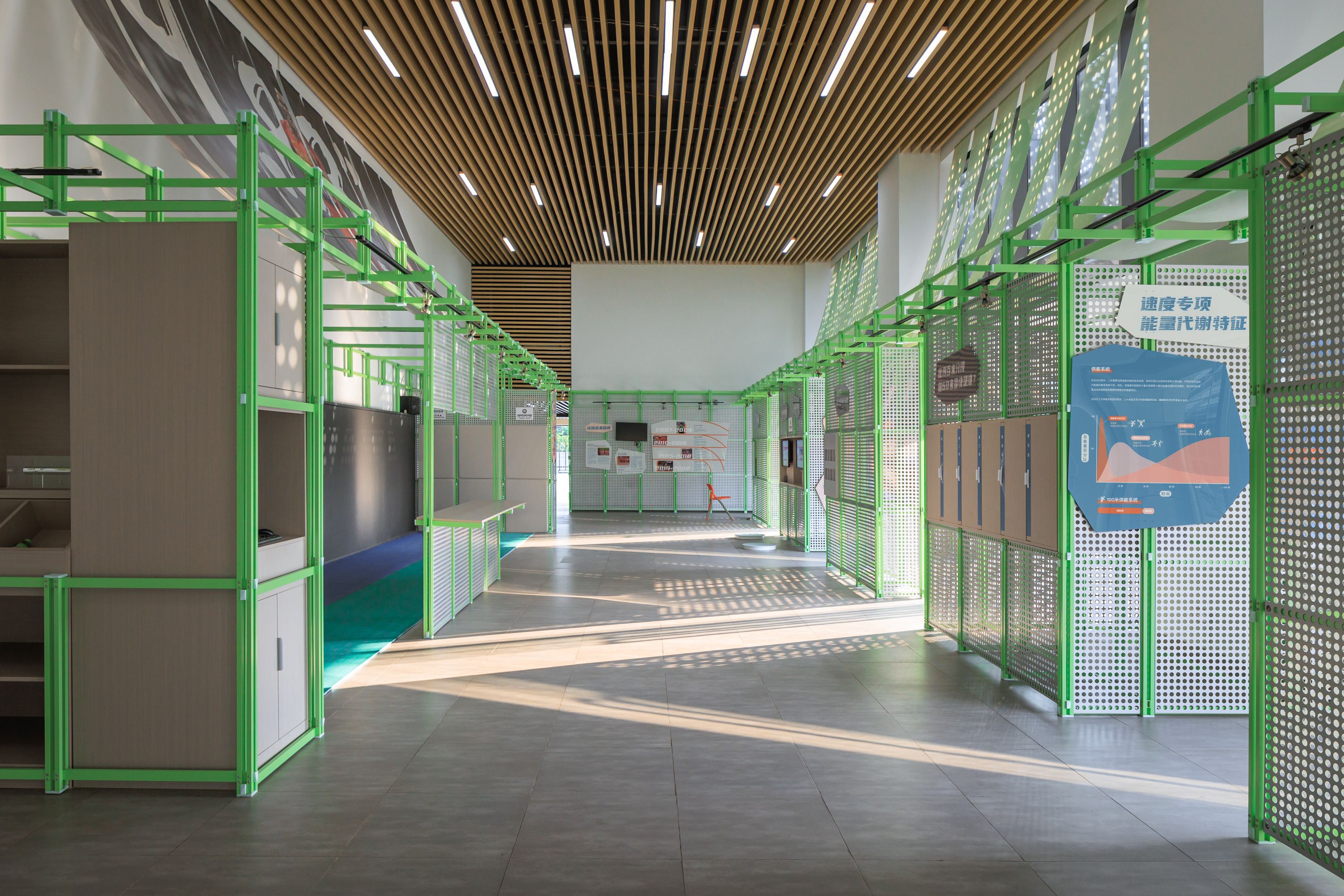
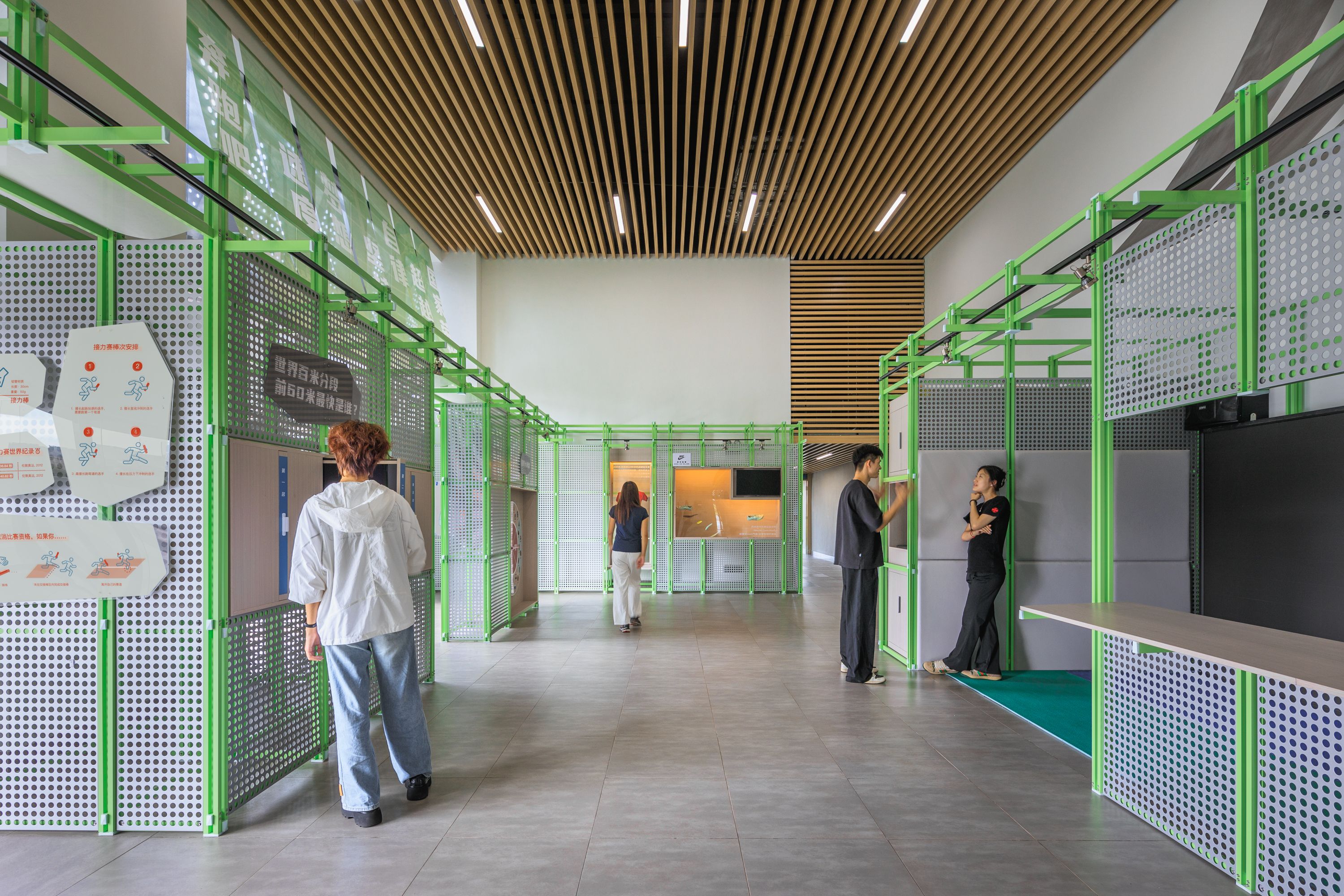
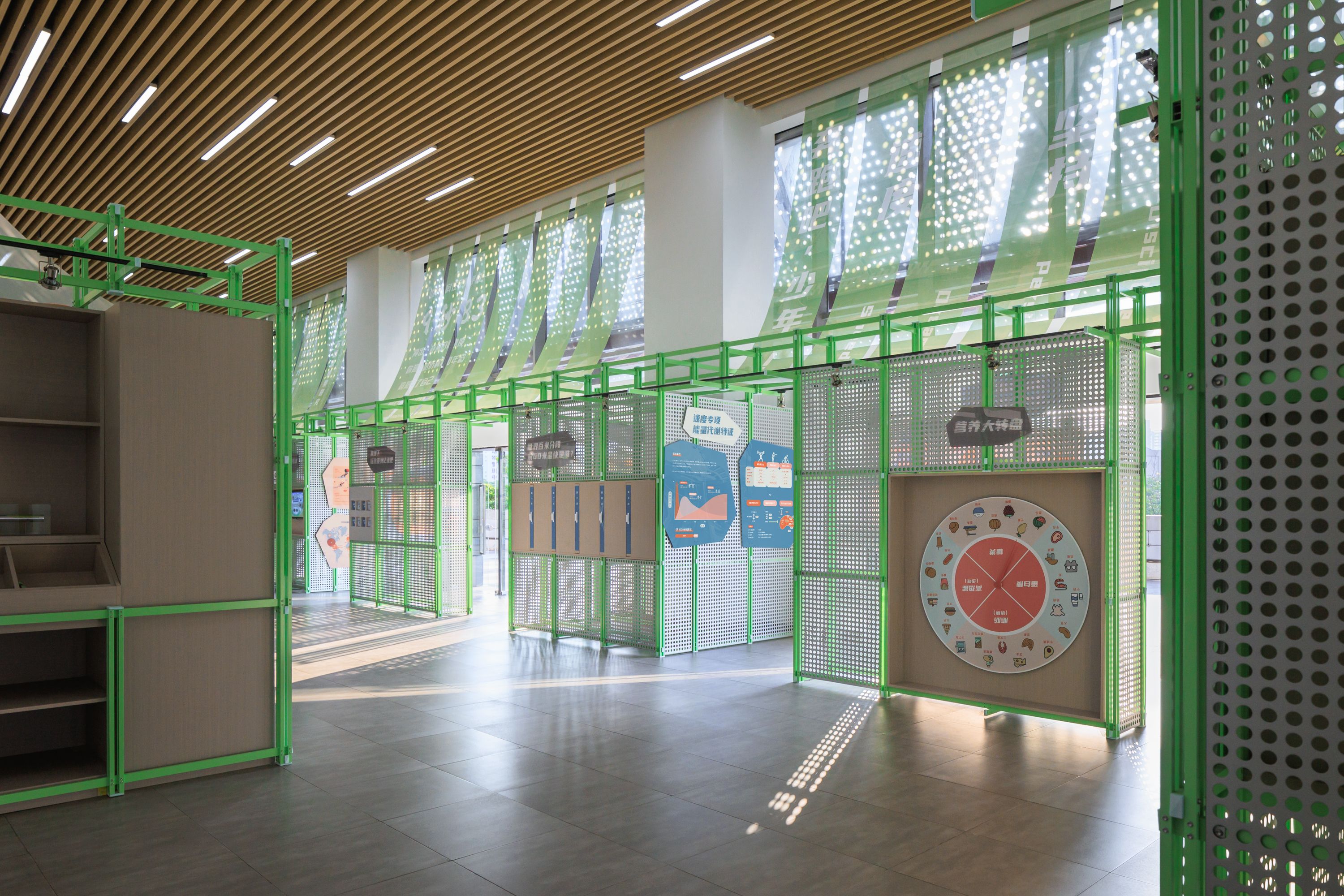
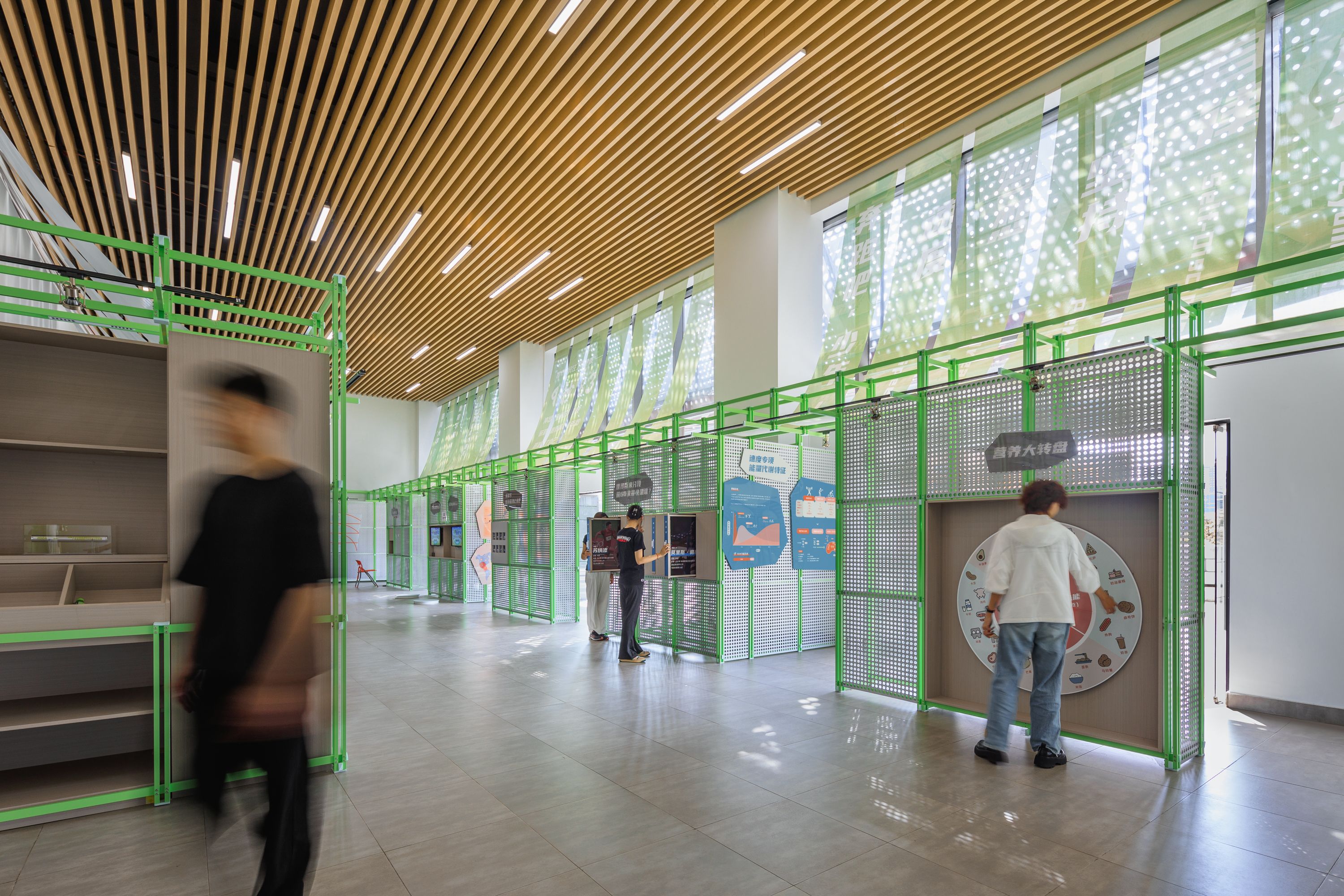
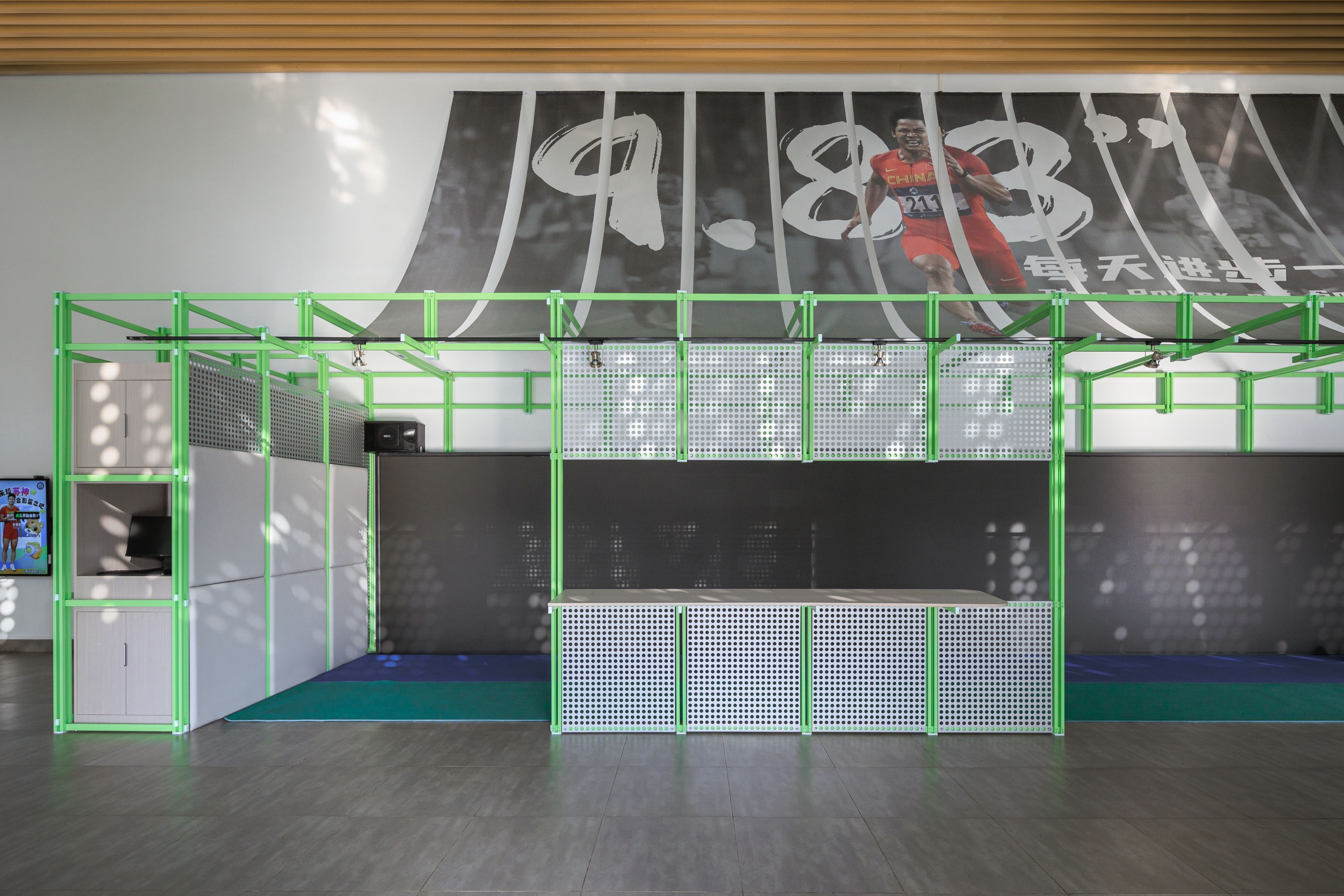
The Su Bingtian Speed Research and Training Science Education Center is a youth-focused sprint science education space jointly developed by the Su Bingtian Speed Research and Training Center and the Guangdong Key Laboratory of Speed Ability Research. Designed by TEG28 Design Studio, the project transforms a previously empty, open classroom into a multifunctional atrium that combines exhibition, interaction, discussion, and teaching. By employing a combination of green structural frameworks and semi-transparent curtains, the design achieves an organic separation between functional and contemplative spaces, providing young learners with a sprint training science center that is both professional and engaging. The space not only serves to disseminate proper sprint training concepts but also acts as a vital bridge connecting professional sports research with youth sports education.
Project Key Information
Client Requirements and Project Objectives
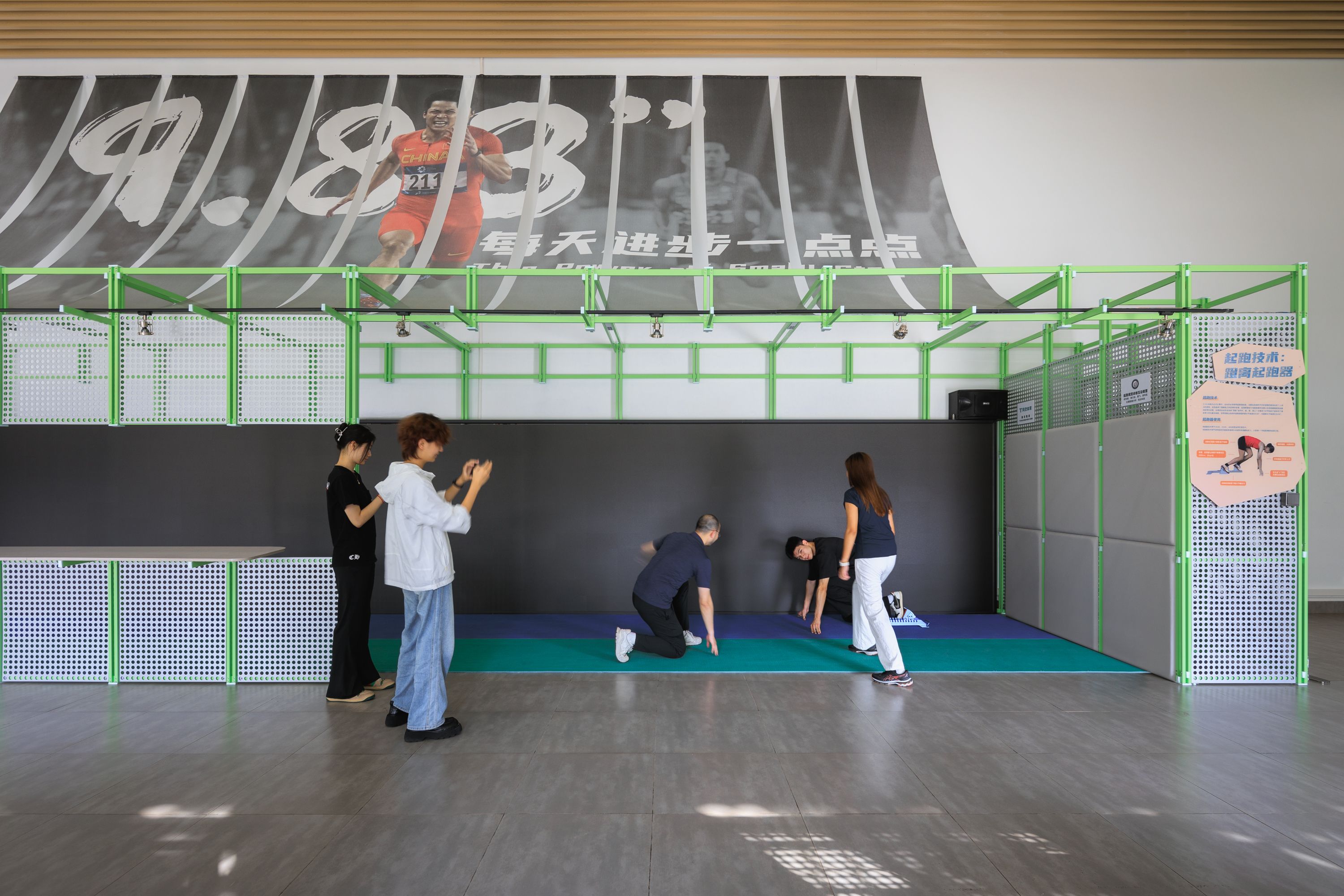
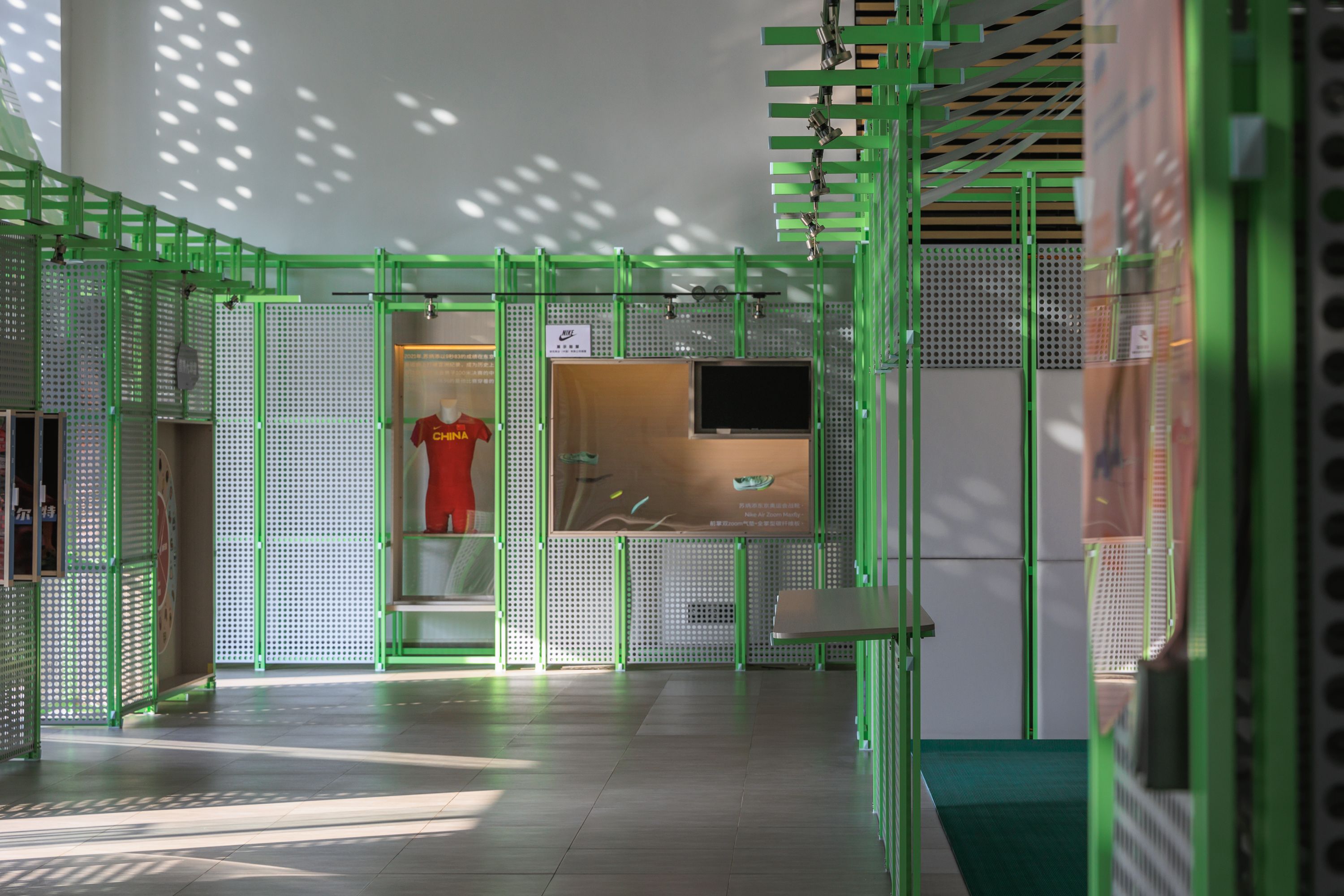
The center is designed to support multiple educational functions, primarily providing comprehensive sprint science education for young audiences. Its core content areas include speed science, sprint technique, sports nutrition, and starting technique, while also incorporating elements of modern Chinese sprinting history to promote cultural heritage.
Interactive and Exhibition Systems
The design team developed a diverse range of interactive installations, including:
Reaction time interactive tests
Step-on sprint experiences
Drawer-style interactive displays
Photocapture interactive devices
Nutrition knowledge spinners
Sprint starting technique training
Exhibitions are supported by carefully designed display panels and professional equipment, providing visitors with an intuitive and hands-on learning experience.
Design Constraints
The project faced several design challenges. First, strict fire safety regulations required all evacuation routes to remain completely unobstructed. Second, the original site included multiple existing circulation paths, which had to be accommodated without disrupting the overall flow.
Construction Materials and Methods
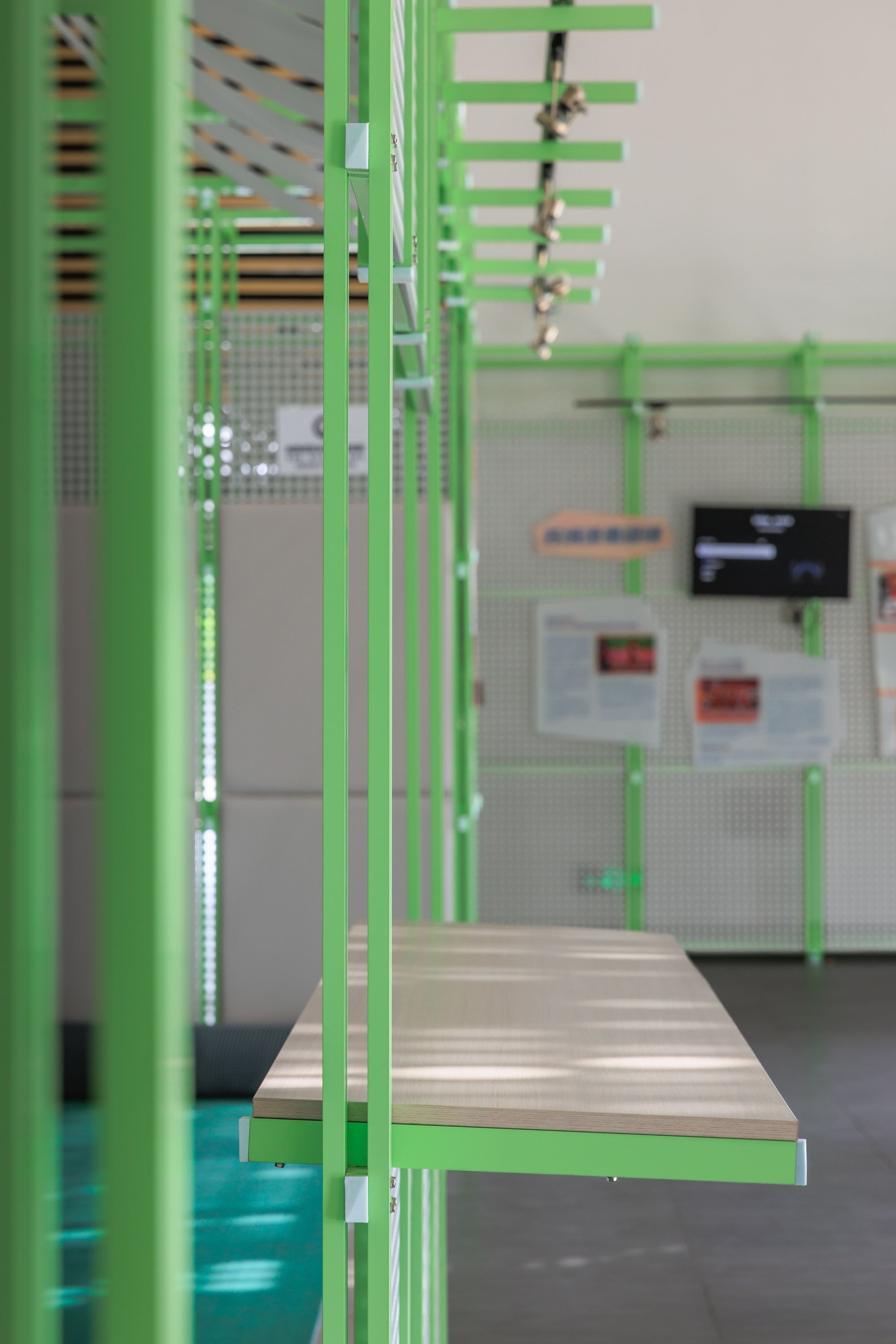
Given a tight one-week construction schedule, the project adopted an efficient modular assembly approach. Key materials included custom aluminum frame systems, specially designed connectors, and silicone sealing components. The standardized design of these materials ensured fast installation and high-quality results.
Innovation in Design
Innovative Rapid Assembly Solution
Faced with a one-week construction window, TEG implemented a modular assembly system. Pre-fabricated custom aluminum frames and standardized connectors enabled quick on-site assembly, significantly shortening construction time while ensuring structural stability and aesthetic quality.
Clever Handling of Multi-Path Circulation
The multiple existing circulation paths posed a complex challenge. The design team turned these constraints into advantages by using a high-transparency structural system to create a central atrium and three independent reading spaces around the open classroom. This solution satisfies diverse functional needs while maintaining spatial cohesion.
Youth-Oriented Science Education Innovation
For the young target audience, the design moves beyond traditional static exhibits. The six interactive systems convert abstract sprint science knowledge into tangible, experiential installations. Devices such as reaction time tests and step-on sprint experiences allow young learners to understand the science of sprinting through playful, hands-on engagement.
Balancing Fire Safety and Design Aesthetics
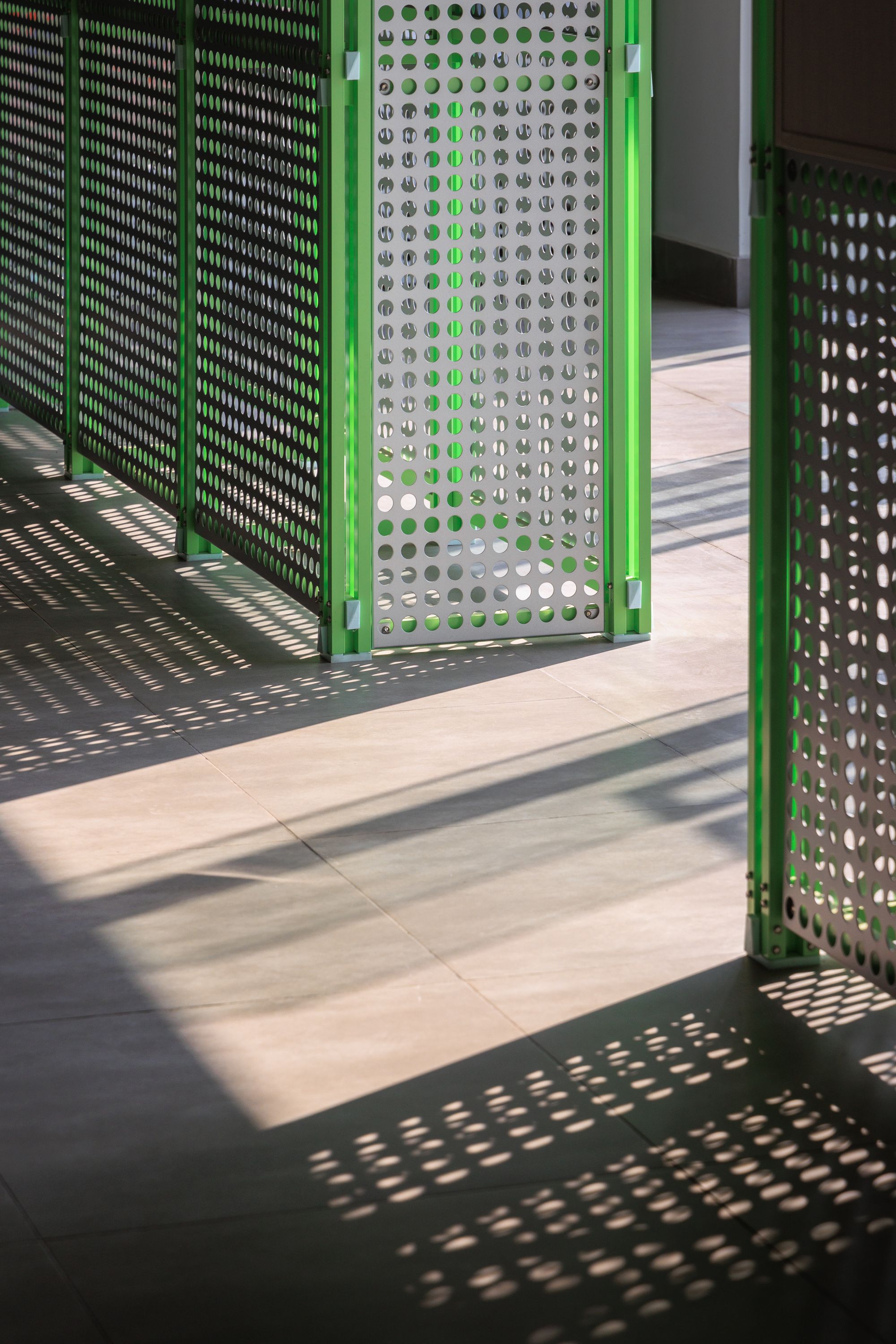
Under strict fire safety constraints, the team employed a translucent structural system that maintains clear evacuation paths while creating rich spatial layering. This approach addresses safety requirements while enhancing visual effects and the educational atmosphere through light and shadow dynamics.
Benefits and Impact
Maximized Space Utilization
The design achieves dual functional value: it serves as both a publicly accessible science exhibition space and a professional teaching environment. This flexible approach maximizes site efficiency and supports diverse activities, creating a sustainable, multi-use model.
Optimized Use of Natural Light
High-transparency structures maximize natural light penetration throughout the space. Transparent and semi-transparent partitions reduce reliance on artificial lighting, lowering energy consumption and carbon footprint while creating a healthier, more comfortable interior environment.
Environmental Advantages of Modular Construction
The modular assembly method demonstrates clear environmental benefits. Standardized prefabricated components ensure high material efficiency, minimizing construction waste. The short construction cycle reduces labor input, construction costs, and associated carbon emissions.
Youth-Friendly Color Design
Recognizing the psychological preferences of young users, the primary color scheme is bright green. This choice appeals to youth aesthetics, stimulates learning interest, and injects energy and playfulness into the space, fostering a positive educational atmosphere conducive to physical and mental well-being.
Inclusive Design and Social Contribution
Through diverse interactive systems and barrier-free spatial design, the project ensures that youth of all abilities and backgrounds can equally access science education resources. This inclusive approach reflects a commitment to social equity and contributes to the promotion of nationwide sports education and the Healthy China initiative.