Lento Whisky & Cigar Bar
1 / 20
2 / 20
3 / 20
4 / 20
5 / 20
6 / 20
7 / 20
8 / 20
9 / 20
10 / 20
11 / 20
12 / 20
13 / 20
14 / 20
15 / 20
16 / 20
17 / 20
18 / 20
19 / 20
20 / 20
| Project name | Lento Whisky & Cigar Bar |
| Project type | Bar and Beverage |
| Design | TEG |
| Website | https://designteg.com |
| Contact e-mail | wuhan@tegdesign.net |
| Design year | 2025 |
| Completion Year | 2025 |
| Leader designer | Chengtian Pu |
| Team | Jinhui He, Dong Li, Yi Wang, Yue Wu |
| Project location | No.50 South Ganjiang Road, Honggutan District, Nanchang, China |
| Gross built area | 270㎡ |
| Photo credit | IN-FIELD studio |
| Partner | N/A |
| Clients | Lento Whisky & Cigar Bar |
Located in Nanchang’s Honggutan district, Lento Whisky & Cigar Bar takes its name from the Spanish word “Lento,” meaning “to slow down.” The project brings together cigars and cocktails within a spatial experience that encourages pause, ritual, and social engagement.
A Slowed-Down Corner
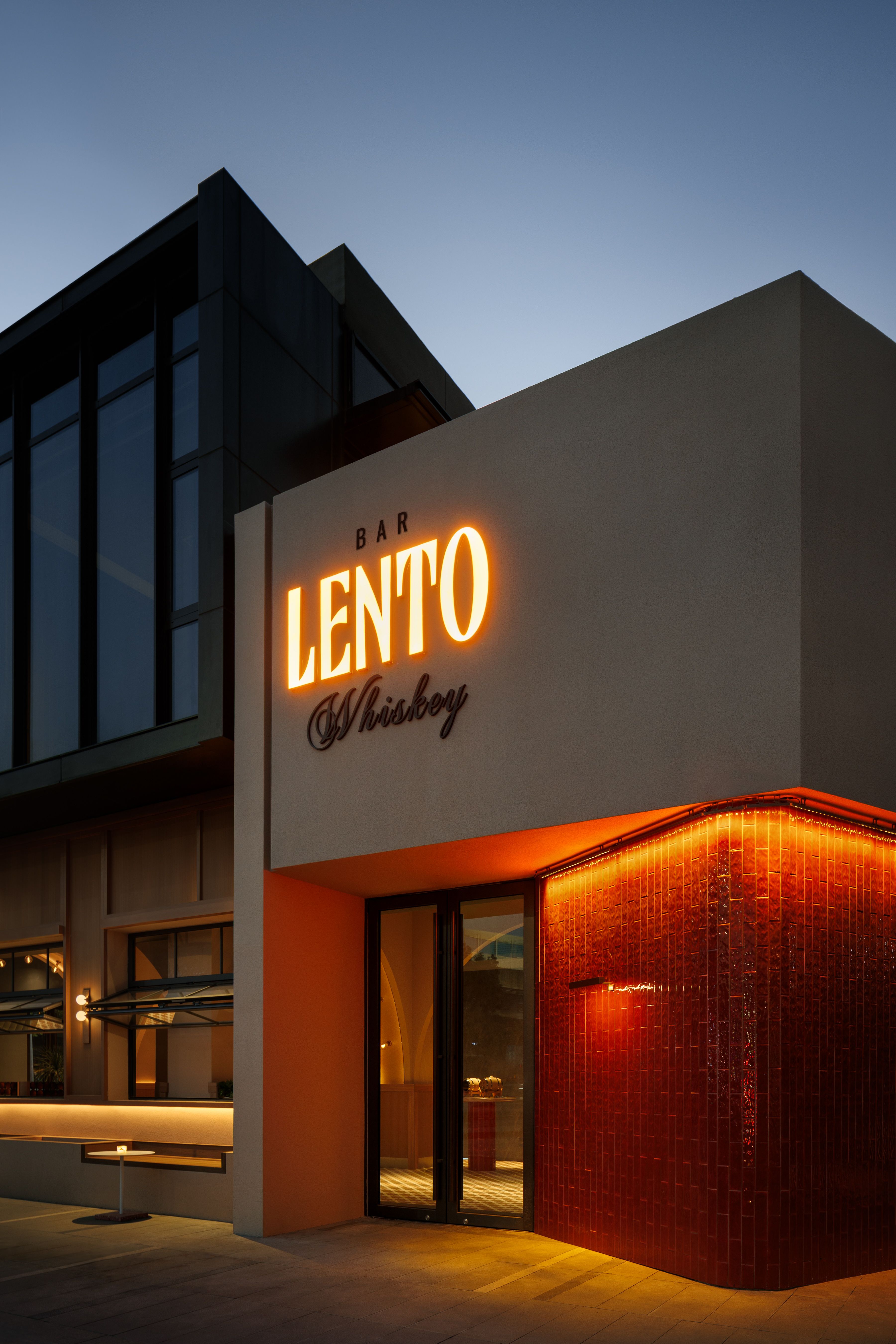
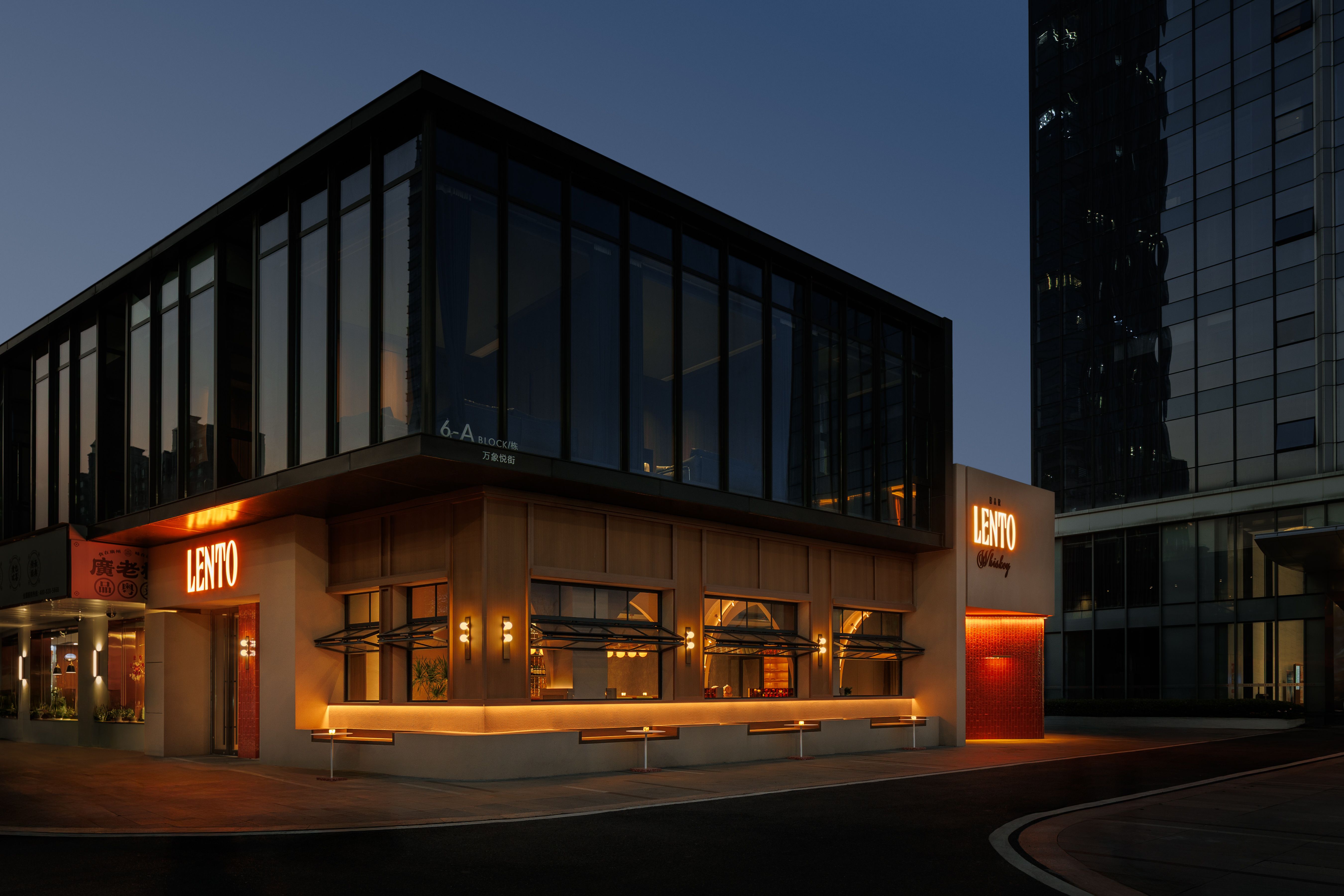
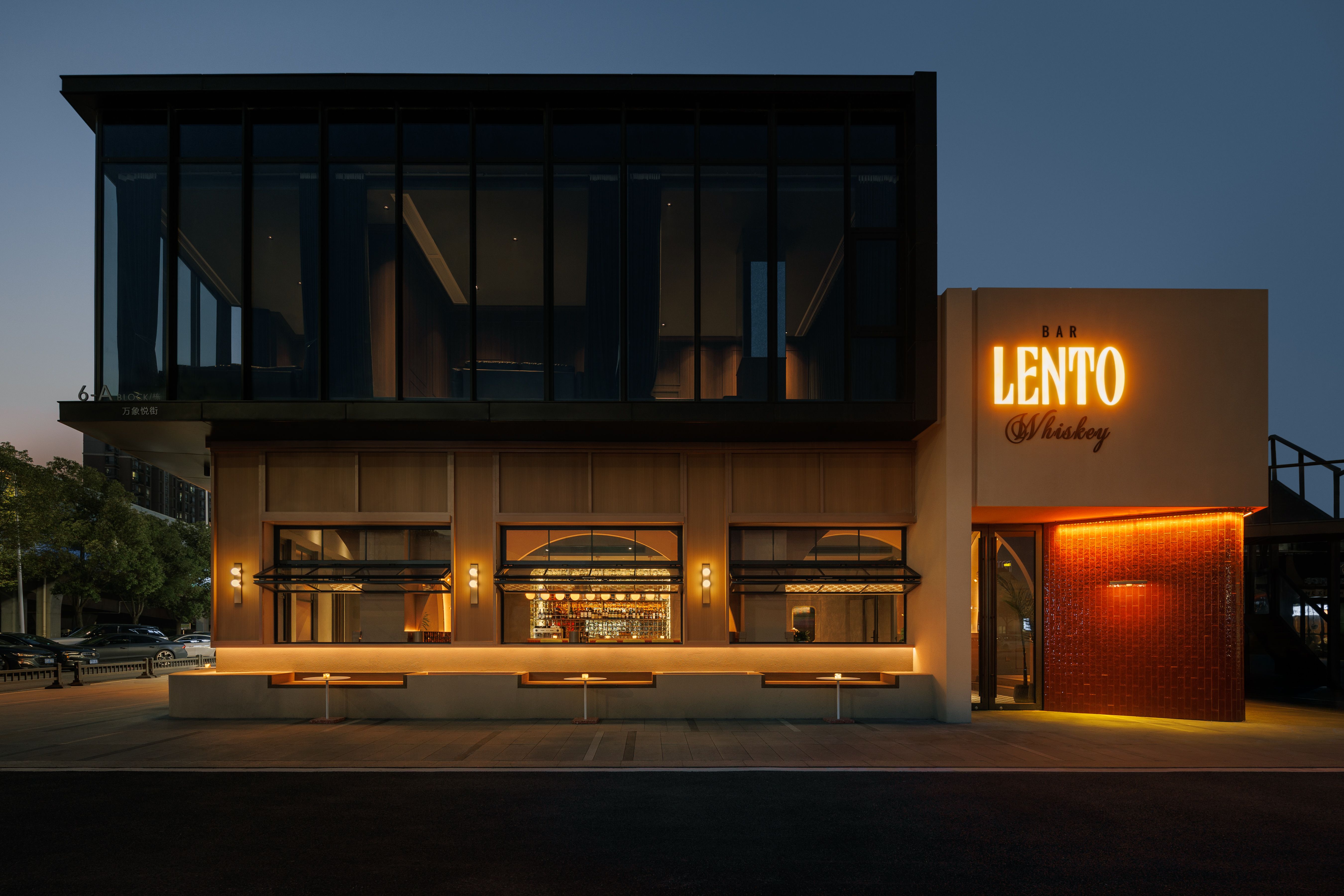
Positioned at a prominent street corner, the building addresses both the street frontage and an adjacent plaza with a fountain. The design rethinks the sharpness of the corner condition, transforming it into a softened urban moment that invites people to linger.
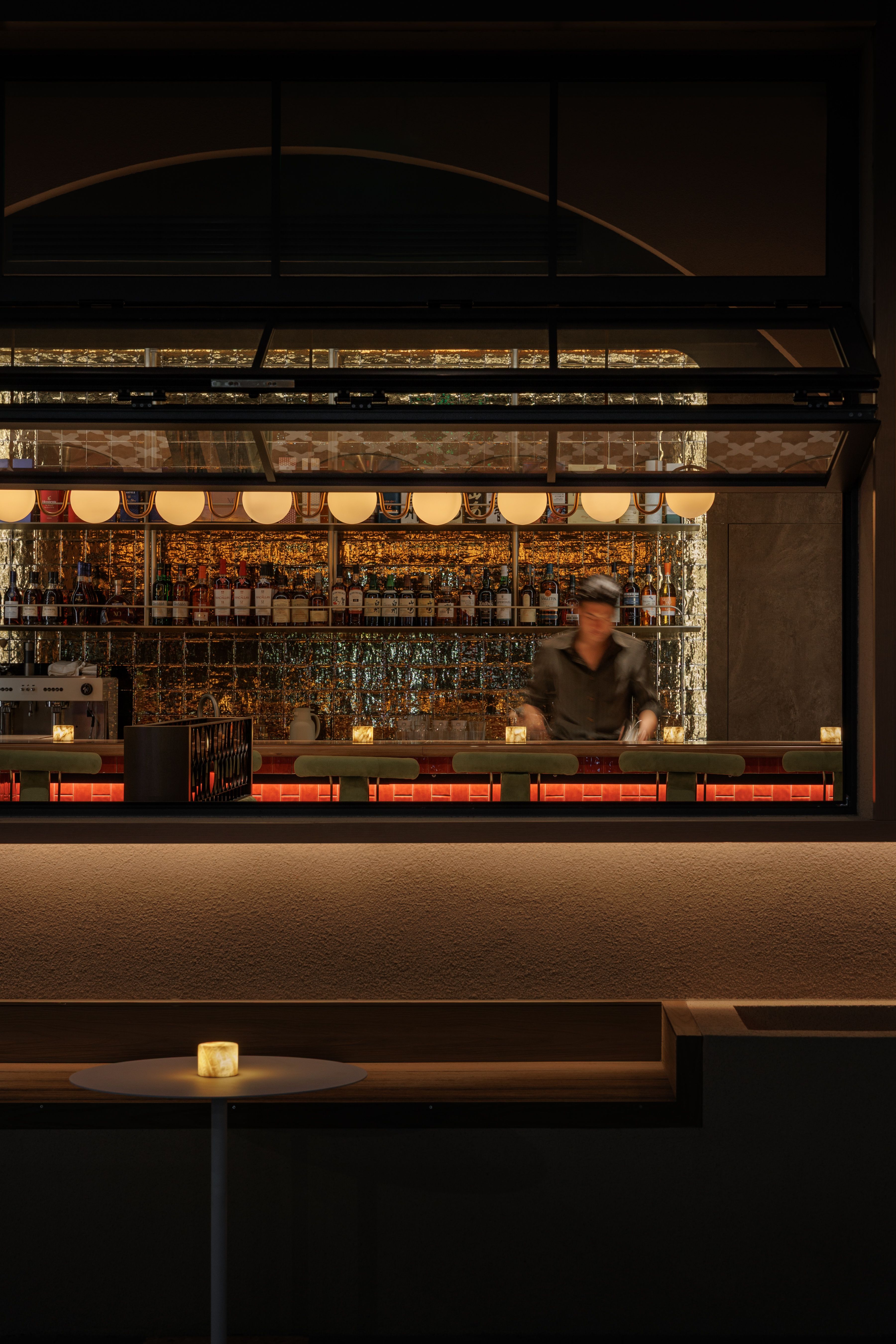
A combination of folding gridded windows and outdoor wooden seating reduces the rigidity of the corner edge. An extended parapet line wraps around the facade, doubling as the base for built-in seating and continuing toward the secondary entrance. This continuous material language not only refines the building’s proportions but also strengthens its visual identity.
At the main entrance, red glazed handmade tiles highlight the threshold and circulation, adding depth and richness to the facade composition.
A Spanish Fusion Interior
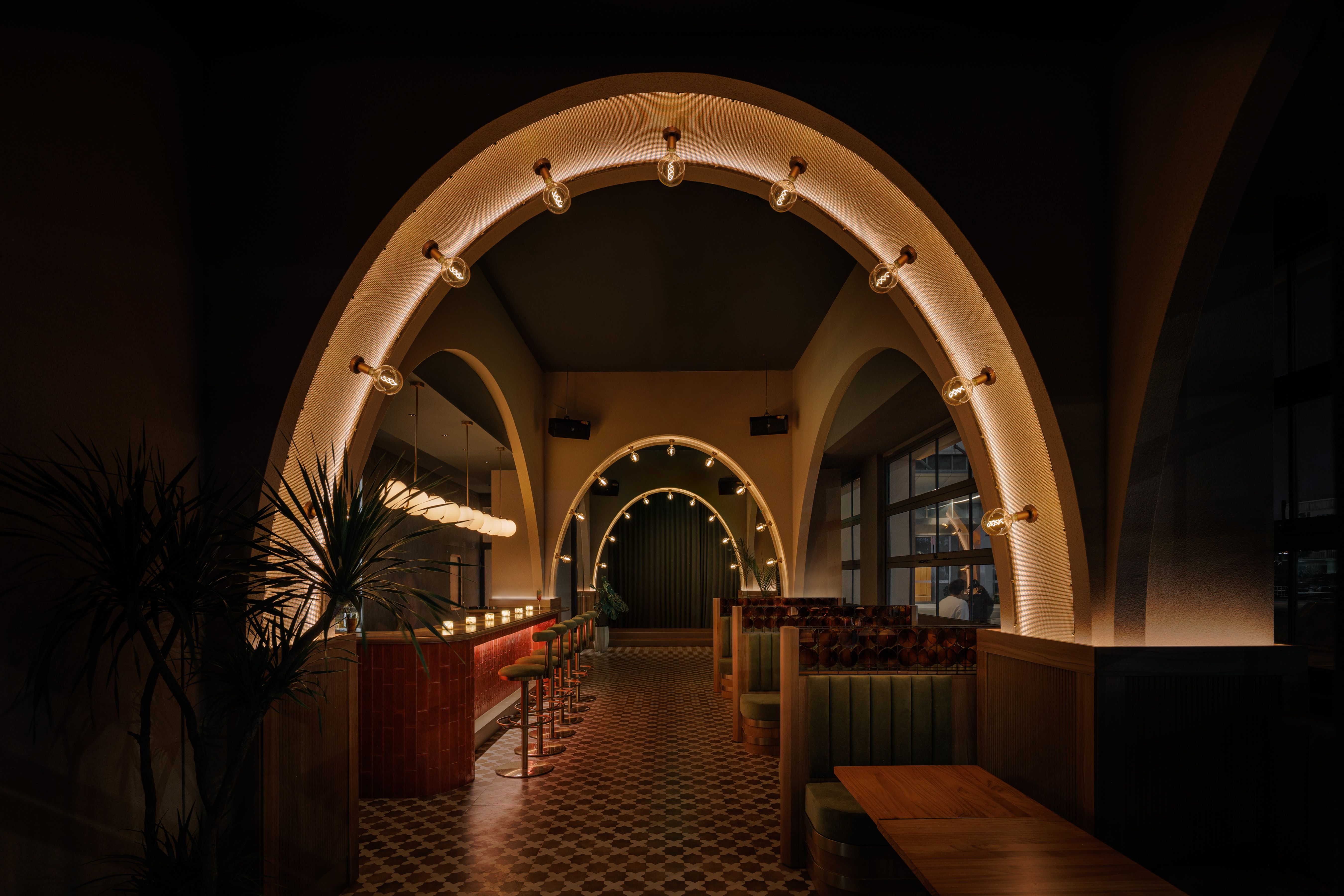
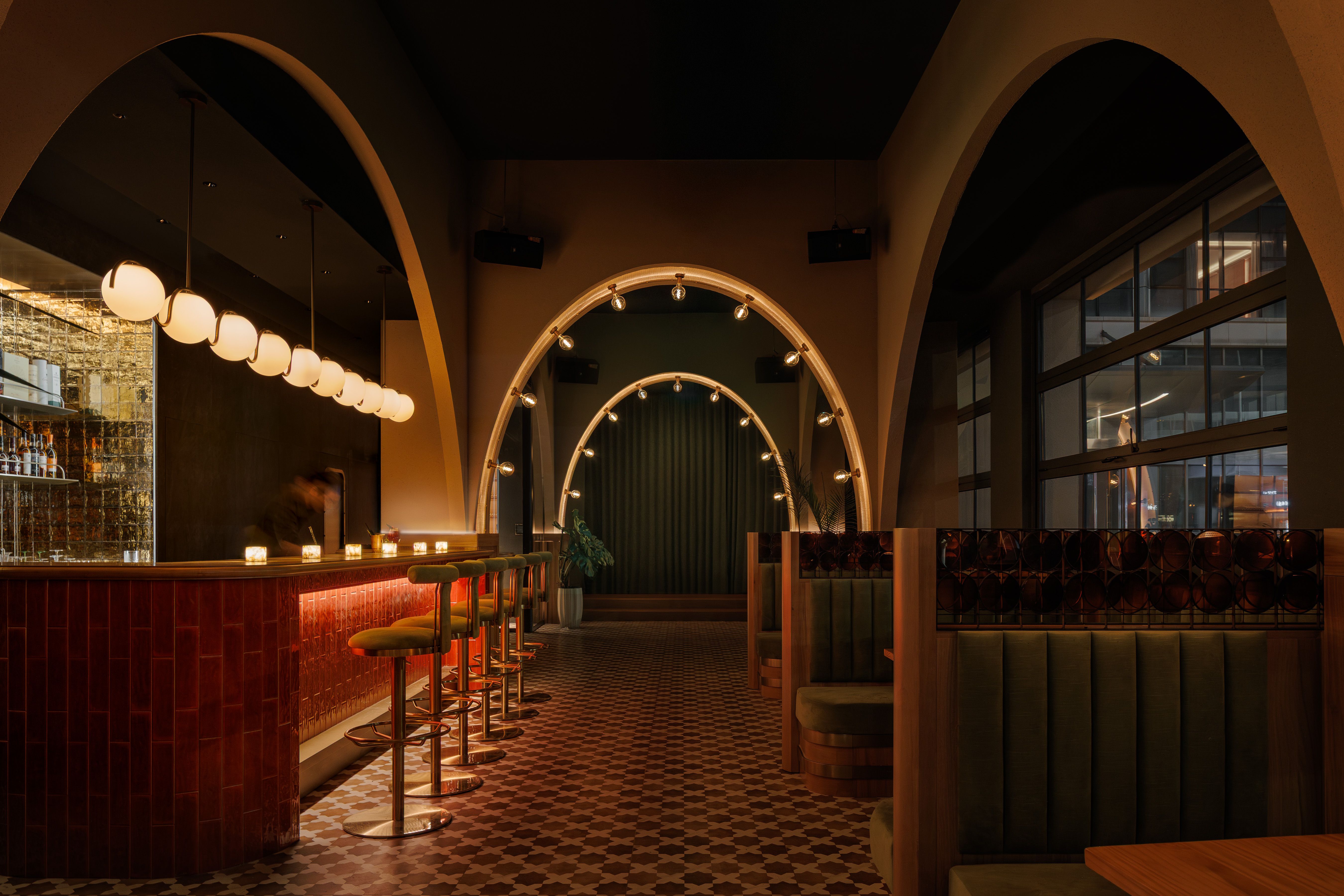
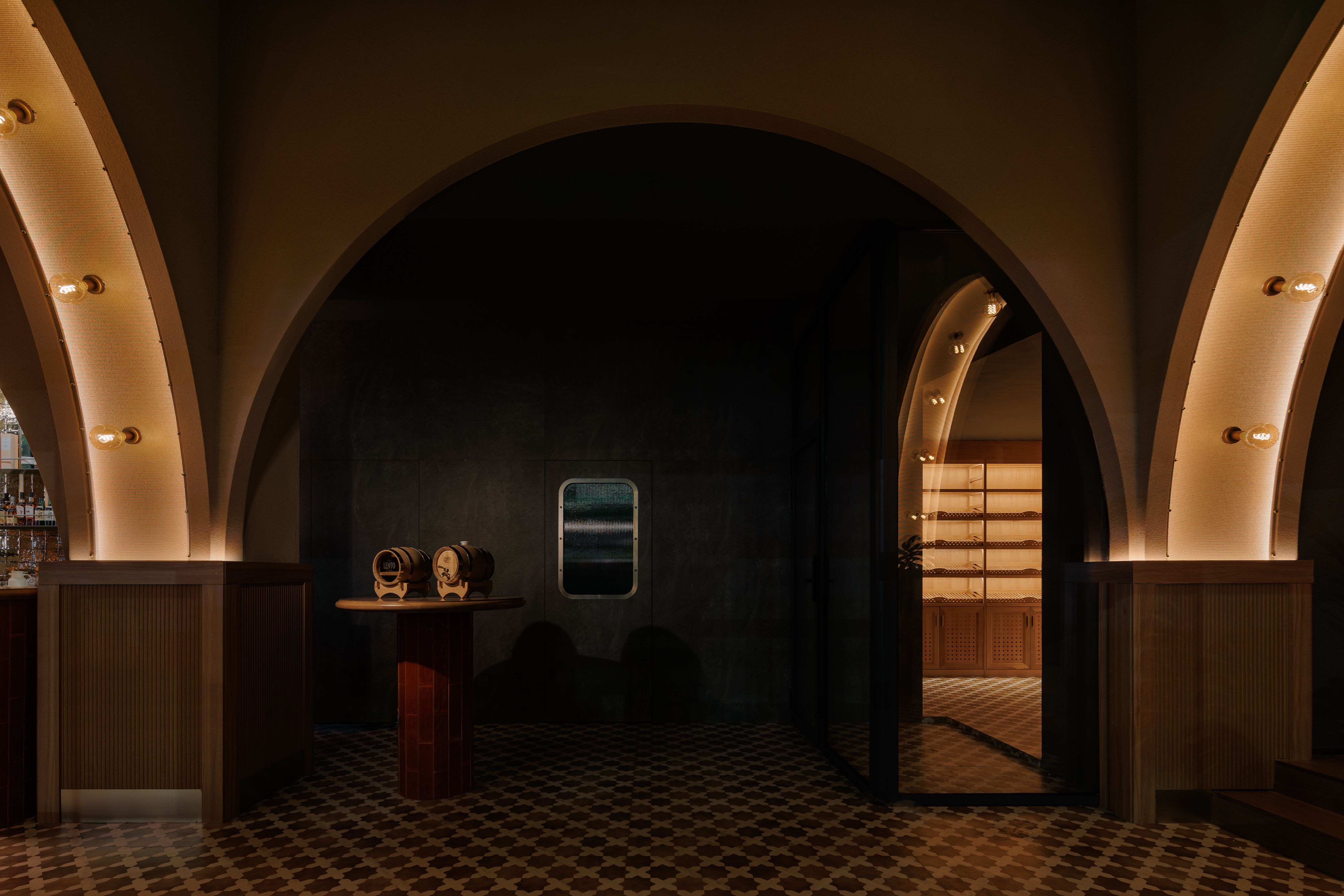
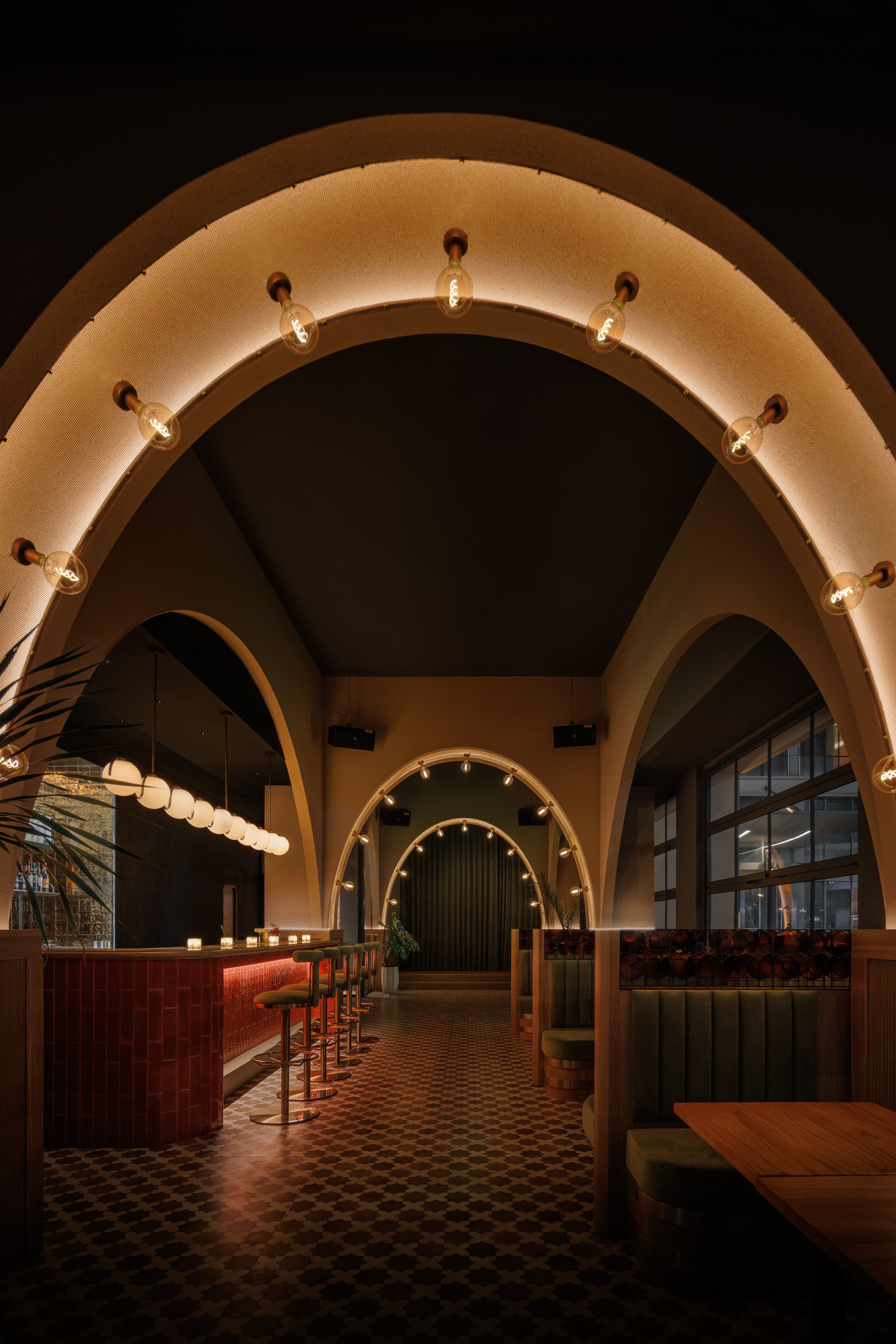
The interior draws on a “Spanish Fusion” language, expressed through ceilings, columns, and spatial sequences. The main hall is divided by a series of arches into six primary zones: entrance vestibule, stage area, cigar room, bar, seating area, and rear vestibule.
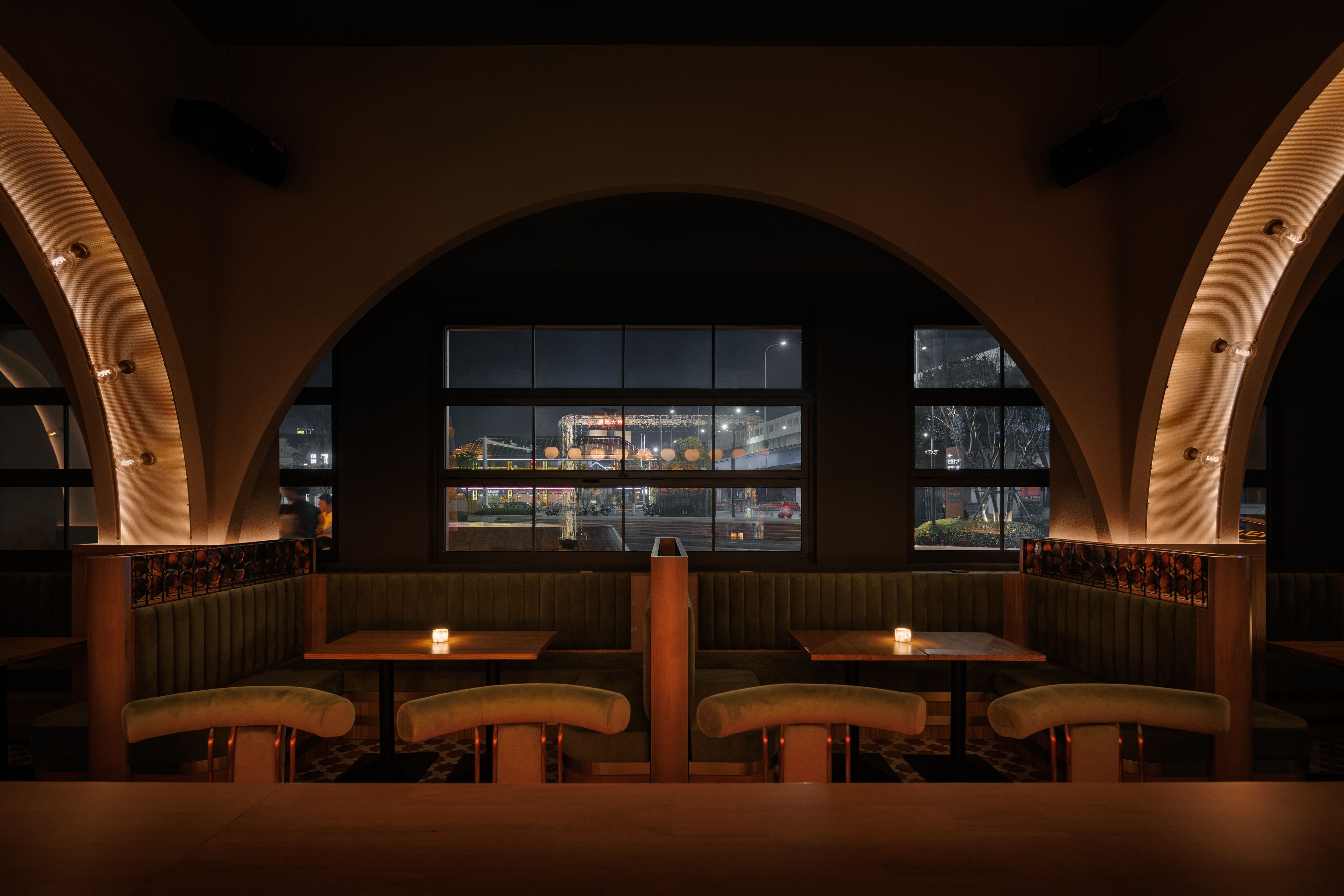
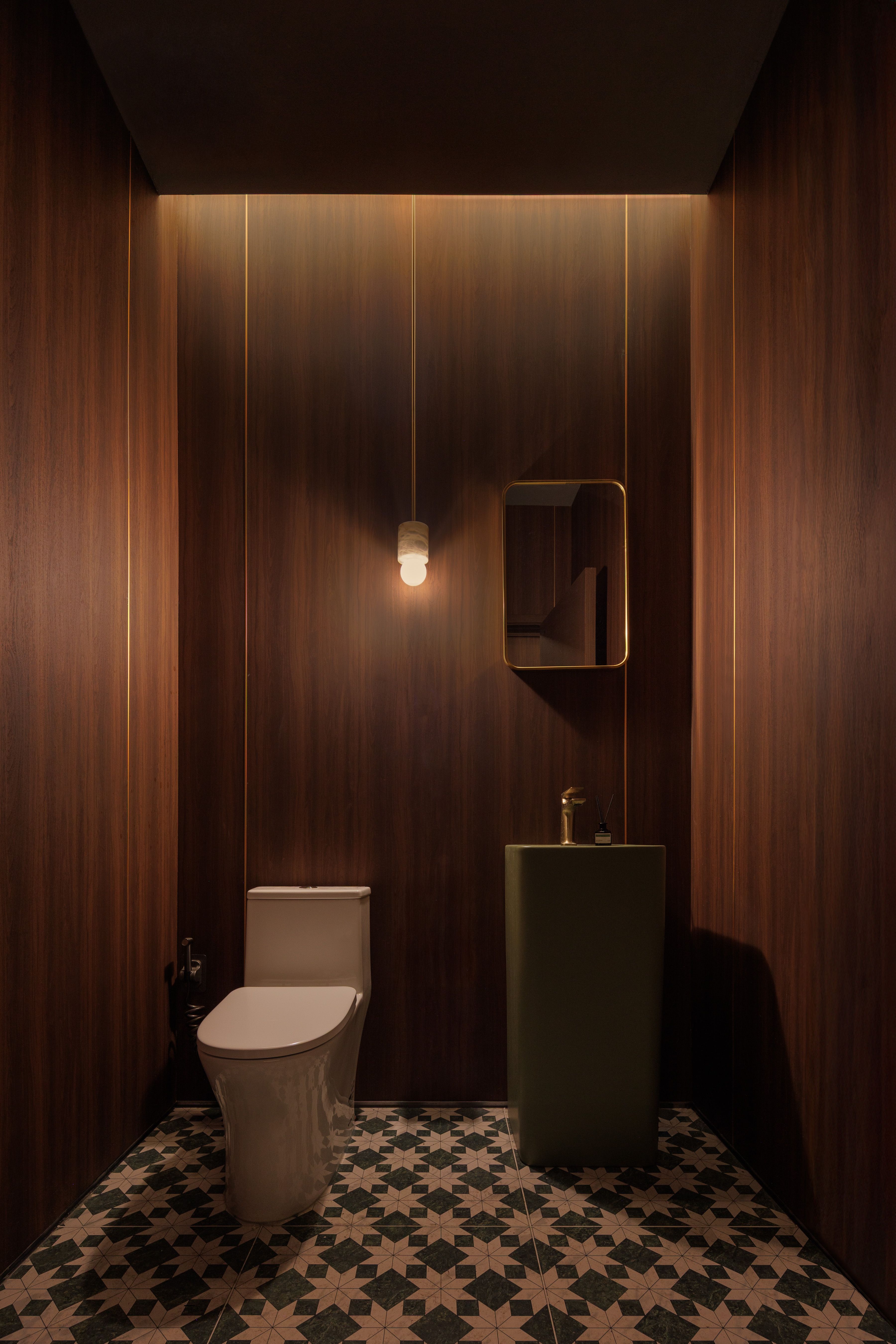
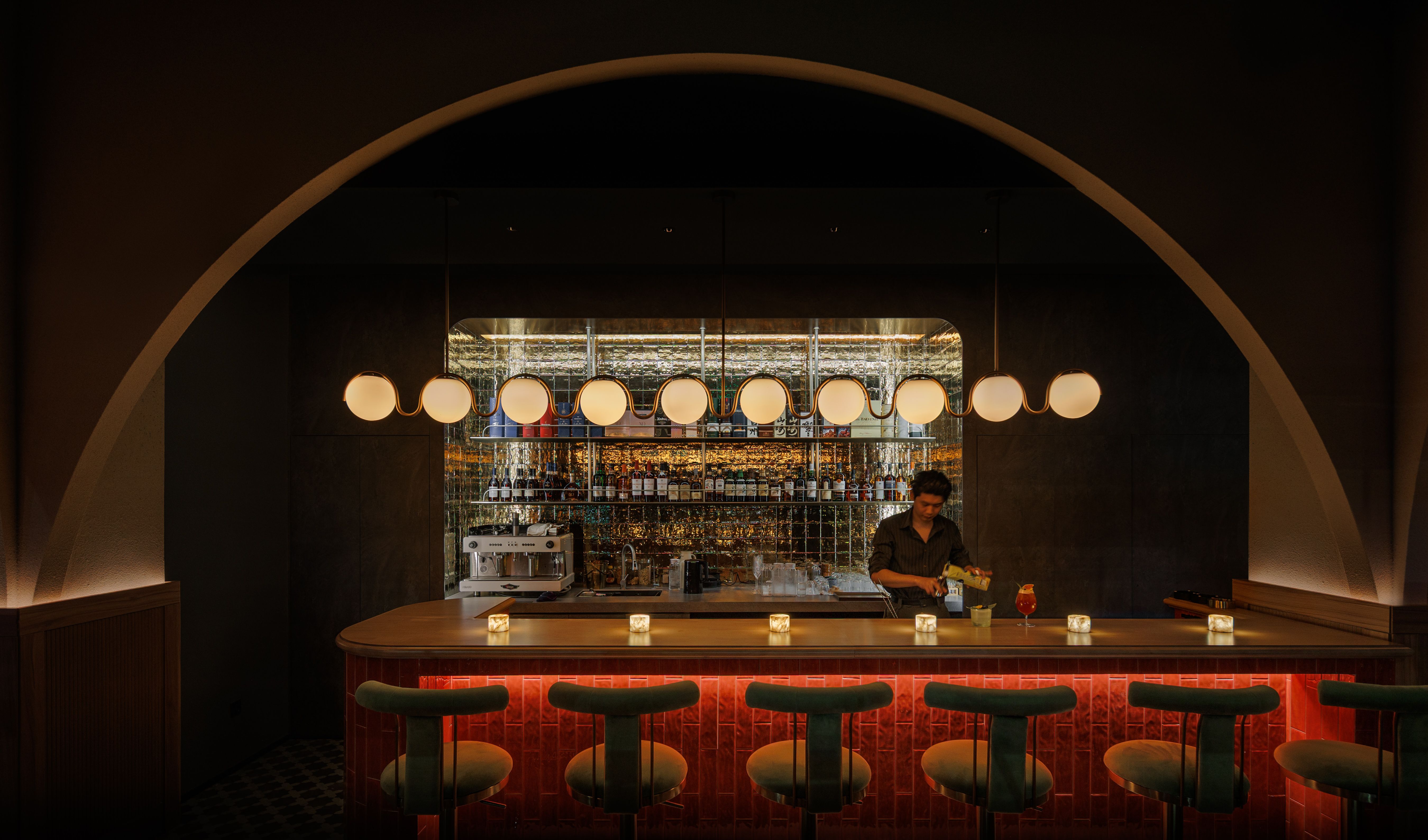
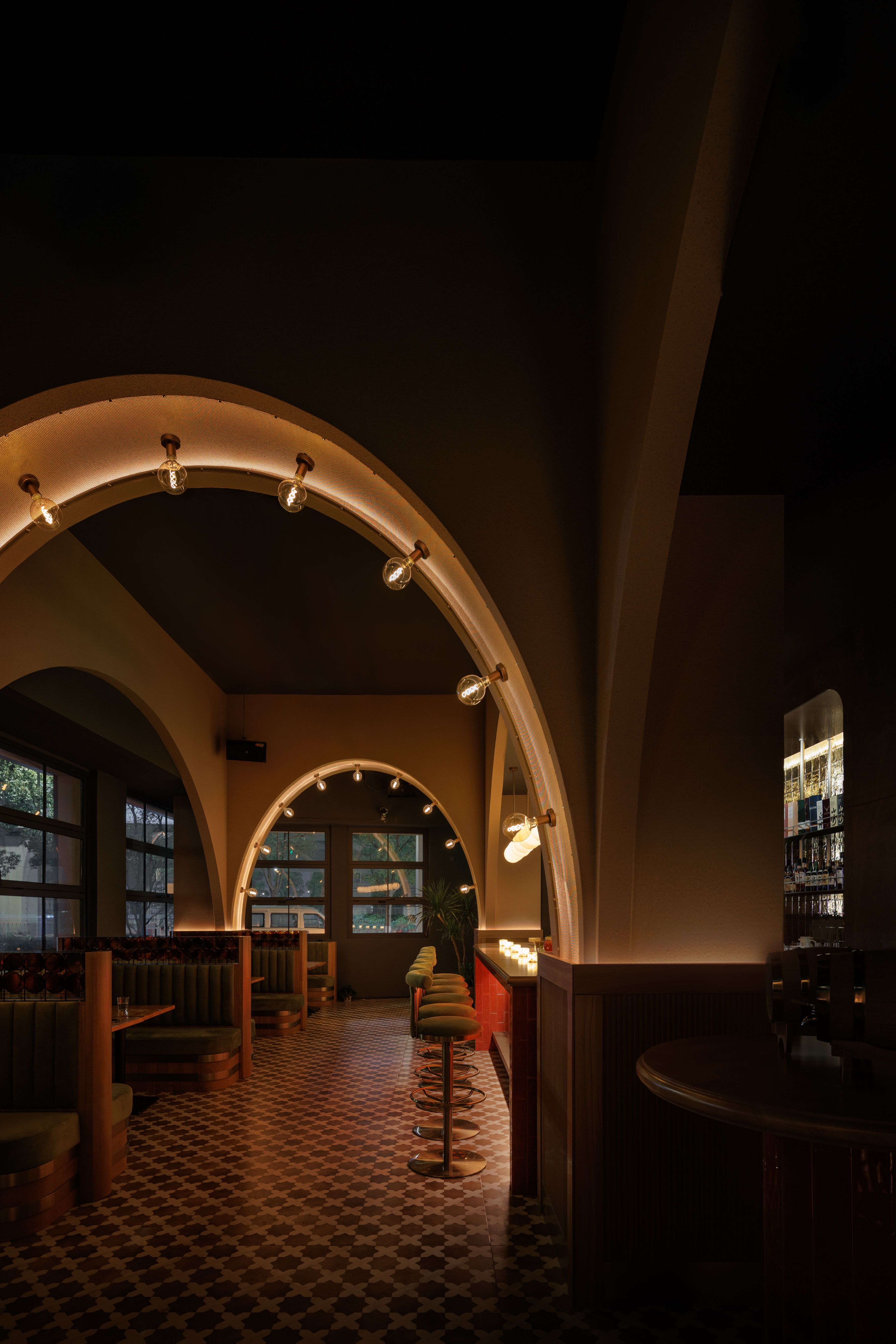
Octagonal star-patterned tiles—referencing Moorish cultural motifs—run throughout the space, creating a unifying ground. Three Gothic-style arches establish visual hierarchy and spatial rhythm across key areas, while a network of arches combined with nine decorative light fixtures introduces a sense of ceremony and layered experience.
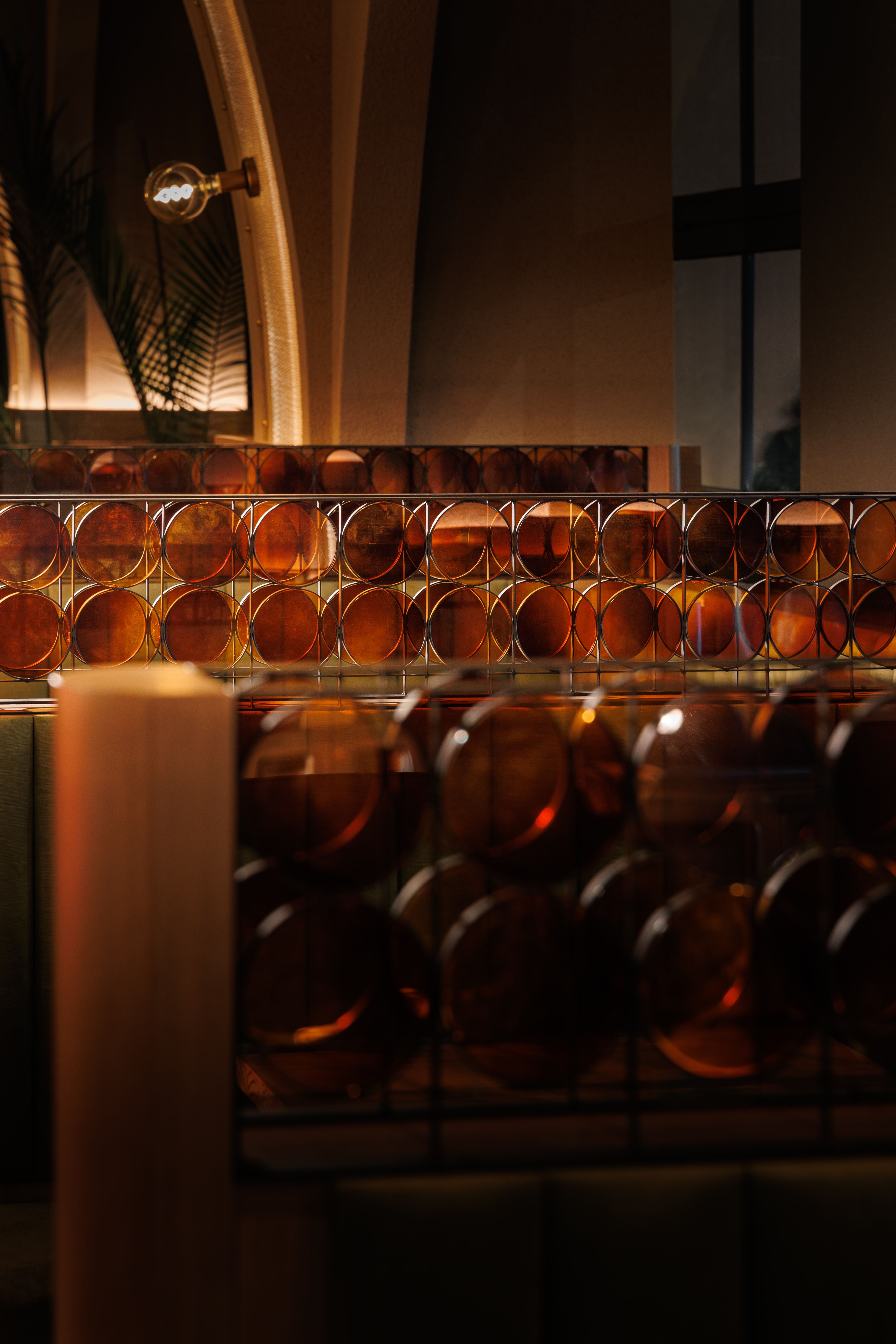
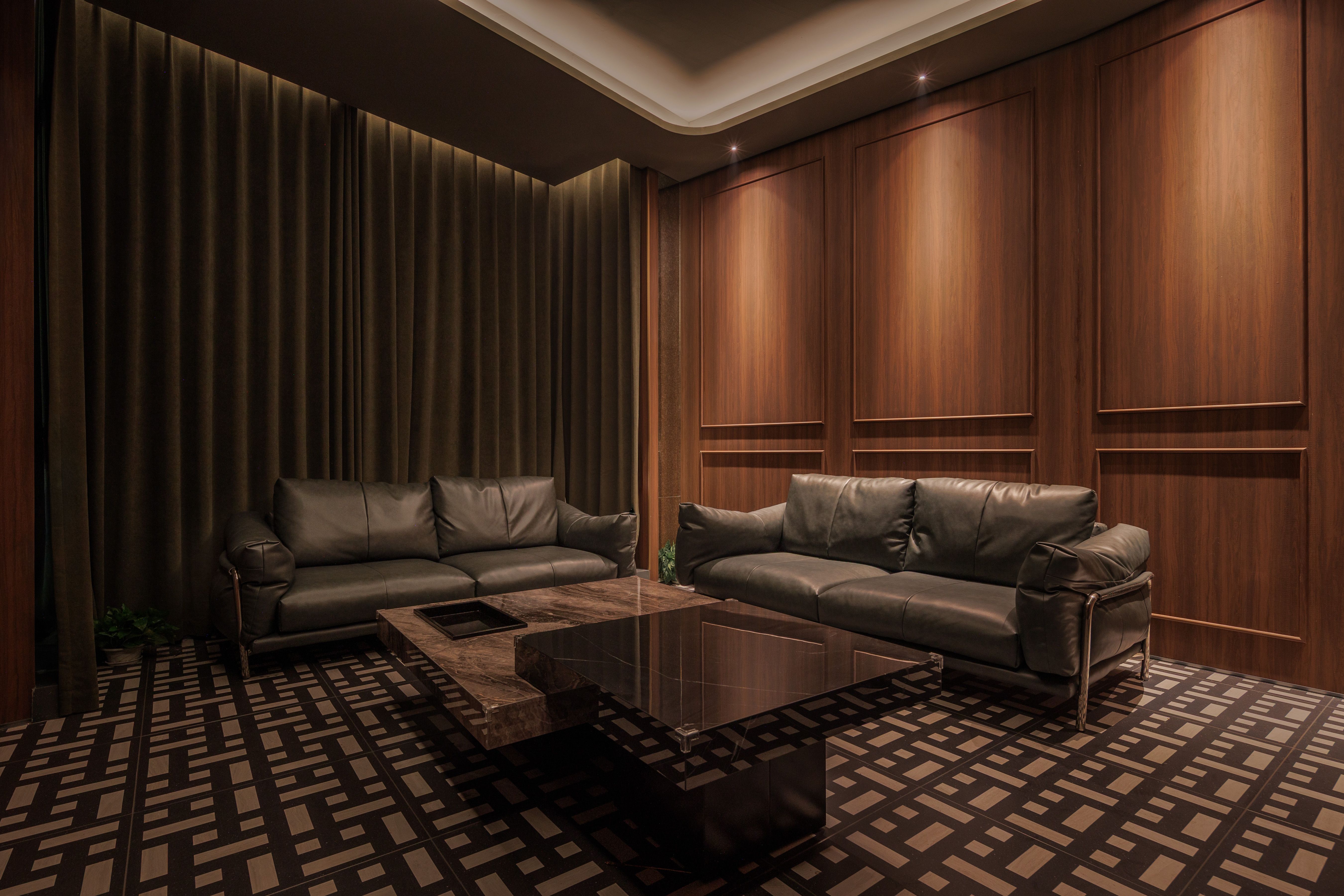
In the seating area, glacier walnut finishes and olive-green velvet upholstery balance architectural solidity with warmth and hospitality. Circular metal screens paired with colored glass reinterpret the language of church windows in a contemporary way.
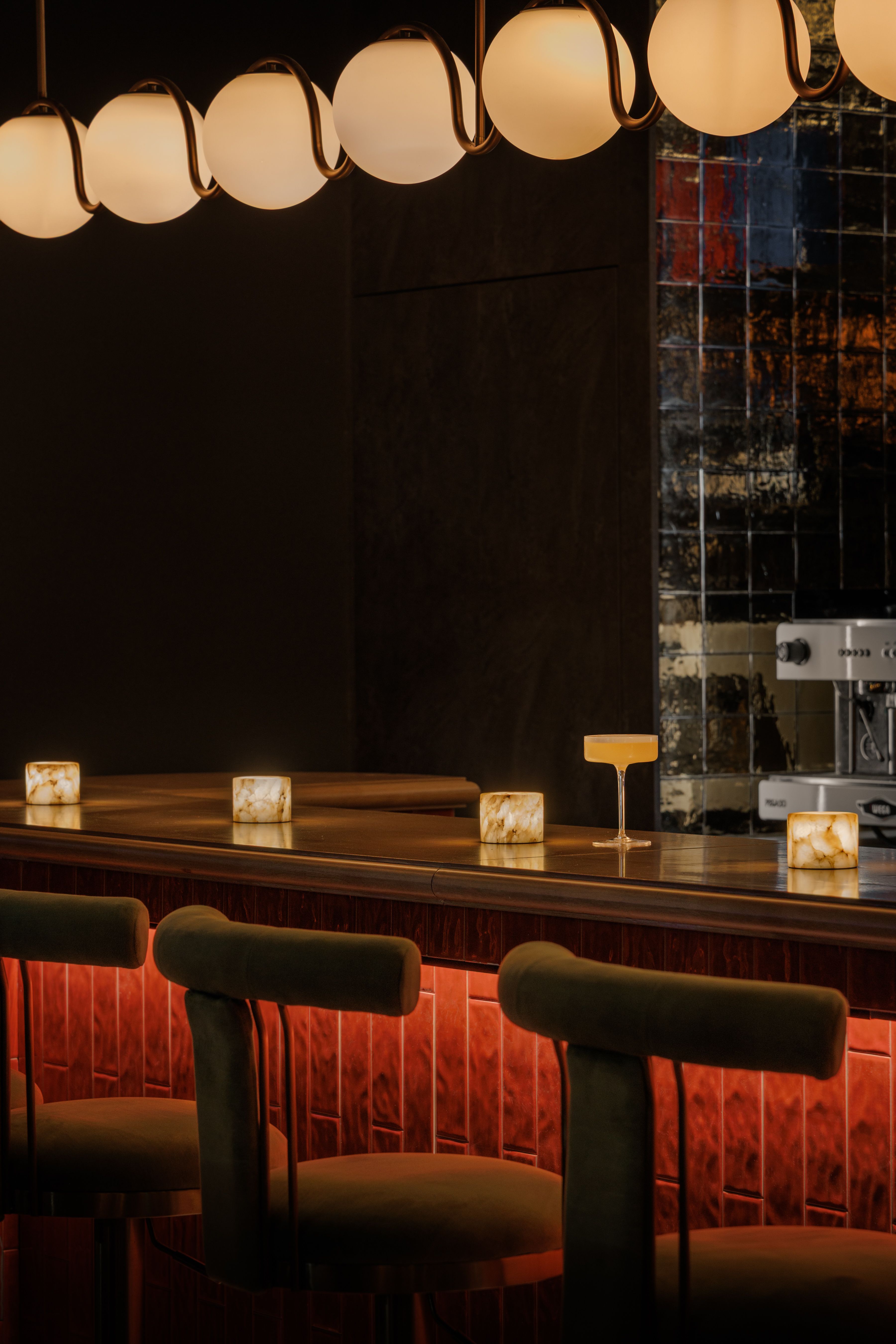
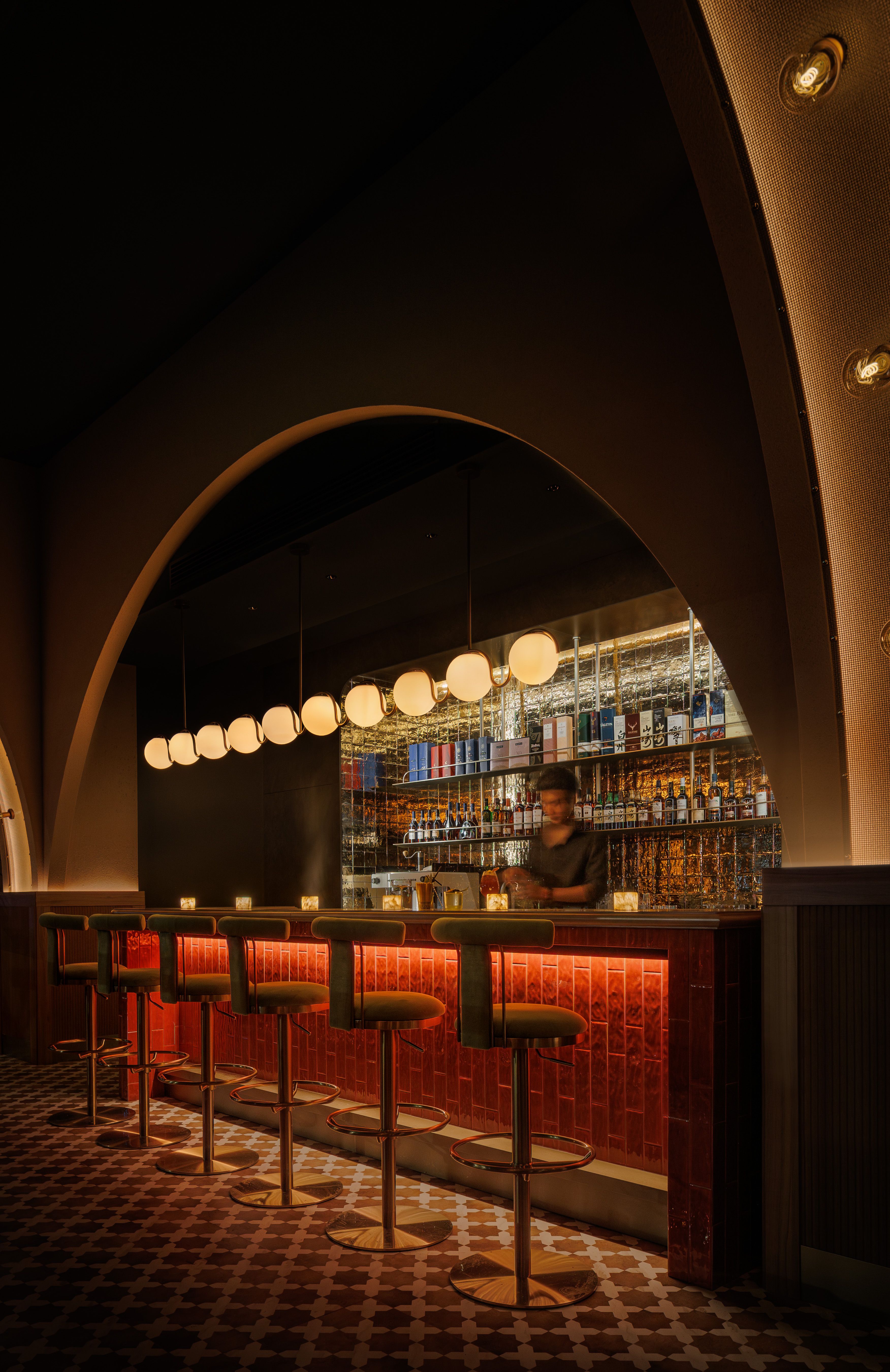
The bar facade reprises the red glazed handmade tiles from the entrance, reinforcing the project’s material continuity and spatial identity. Stainless steel shelving combined with gold-toned square tiles introduces a more contemporary contrast.
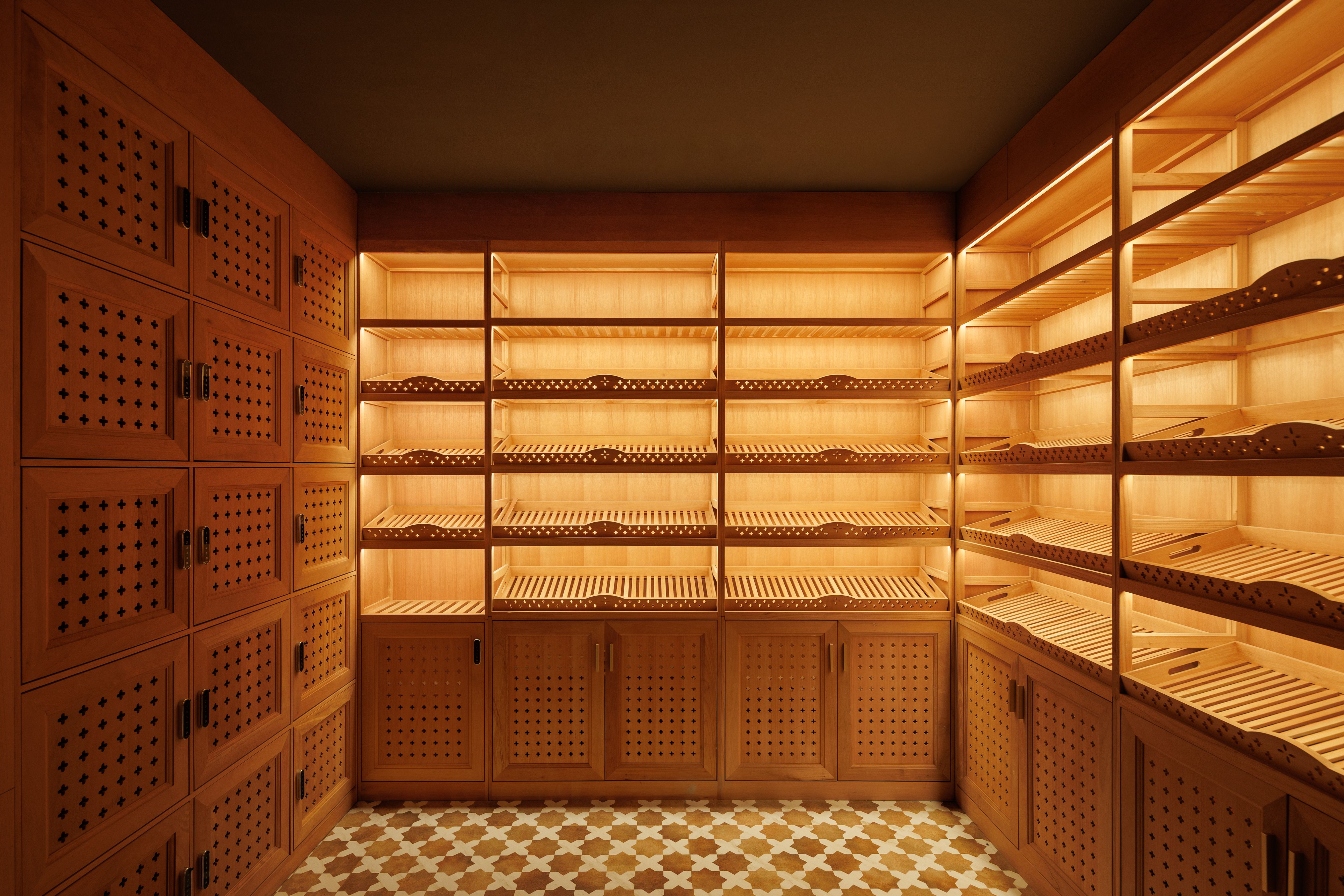
A transparent cigar room showcases cedar wood cigar cabinets, turning storage into display. The circular island layout supports both product browsing and clear circulation flow.
Staircase as Spatial Narrative
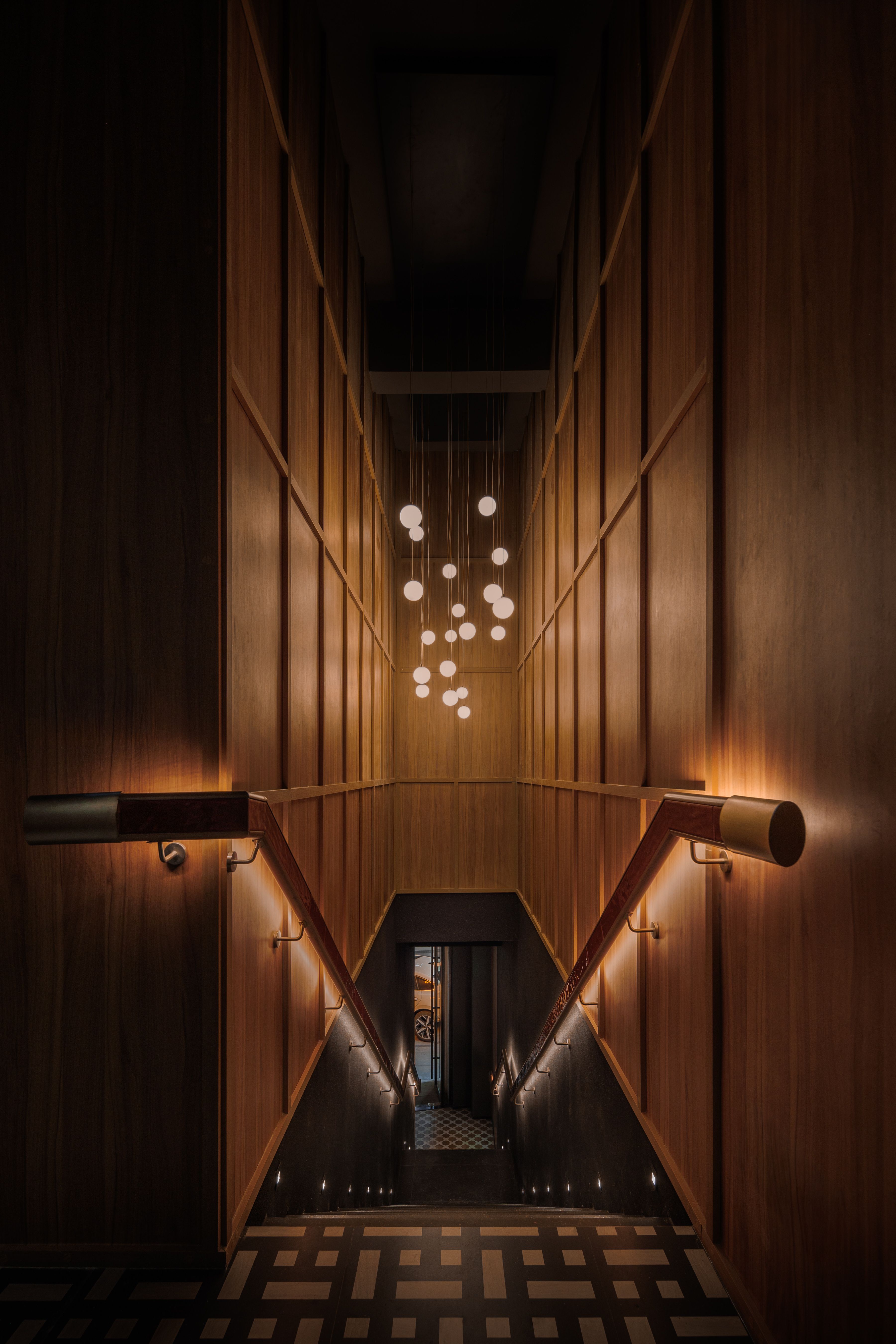
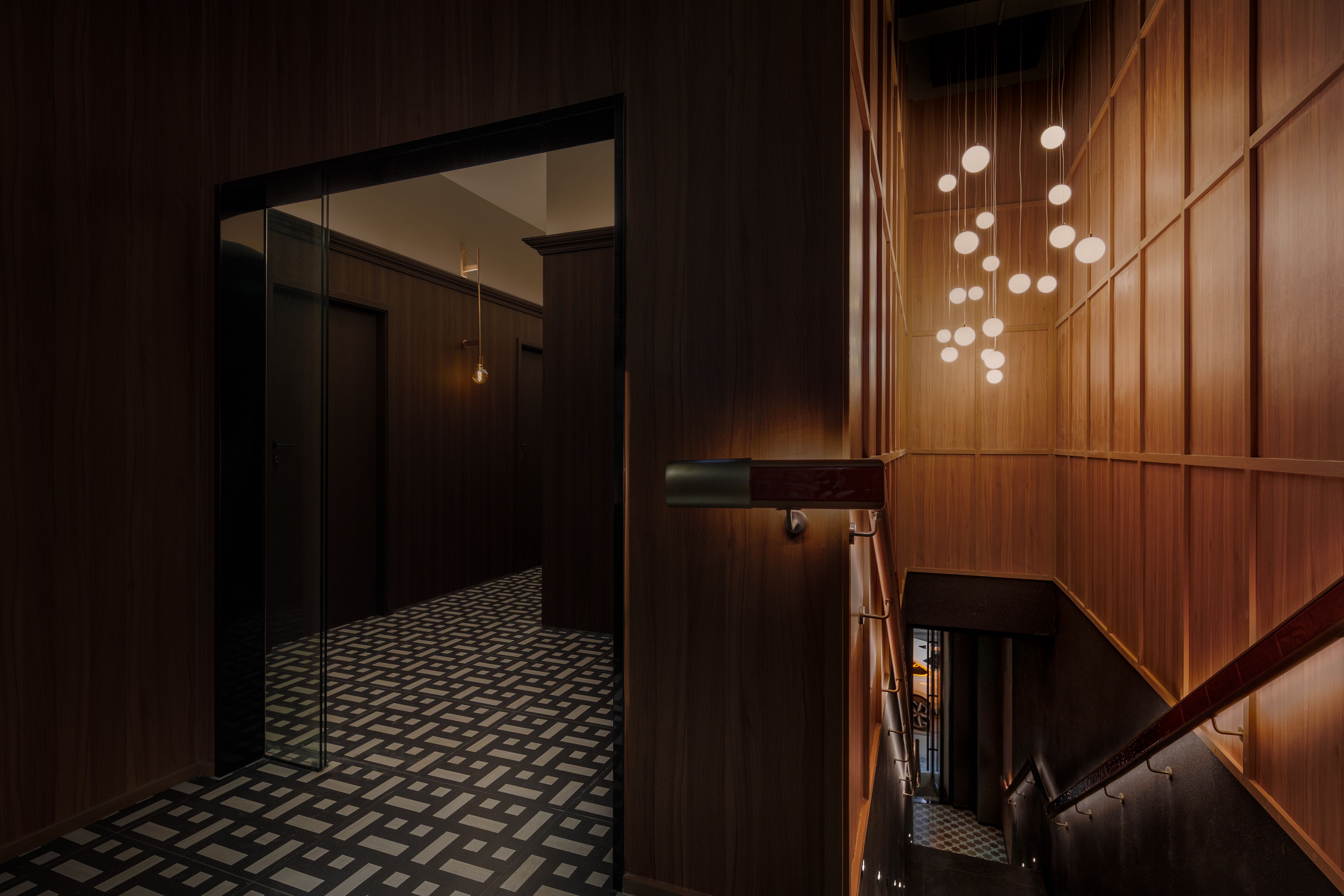
The staircase connecting the two floors is articulated through a contrast of wood and stone, dividing it into a triangular stair volume and a rectilinear ceiling plane.
A wooden handrail inlaid with red glazed tiles continues the material language of the ground floor while enriching tactile experience. This intervention brings subtle light variation into an otherwise dim transitional space.
Above, more than twenty suspended pendant lights at varying heights create a poetic spatial narrative, while linear wood detailing reinforces the underlying modular order of the space.