Amaro Sister Cocktail Bar
1 / 20
2 / 20
3 / 20
4 / 20
5 / 20
6 / 20
7 / 20
8 / 20
9 / 20
10 / 20
11 / 20
12 / 20
13 / 20
14 / 20
15 / 20
16 / 20
17 / 20
18 / 20
19 / 20
20 / 20
| Project name | Amaro Sister Cocktail Bar |
| Project type | Bar and Beverage |
| Design | TEG |
| Website | https://designteg.com |
| Contact e-mail | wuhan@tegdesign.net |
| Design year | 2025 |
| Completion Year | 2025 |
| Leader designer | Chengtian Pu |
| Team | Jinhui He, Dong Li, Yi Wang, Yue Wu |
| Project location | No.16 Nanjing Road, Jiang’an District, Wuhan, China |
| Gross built area | 70㎡ |
| Photo credit | IN-FIELD studio |
| Partner | N/A |
| Clients | Amaro Sister |
Drawing inspiration from the bittersweet and convivial nature of Amaro, Amaro Sister Cocktail Bar translates the spirit of the Italian aperitif into a spatial experience that is both relaxed and engaging. The project explores how structure, material, and subtle spatial choreography can shape a contemporary social environment.
Connecting the Street
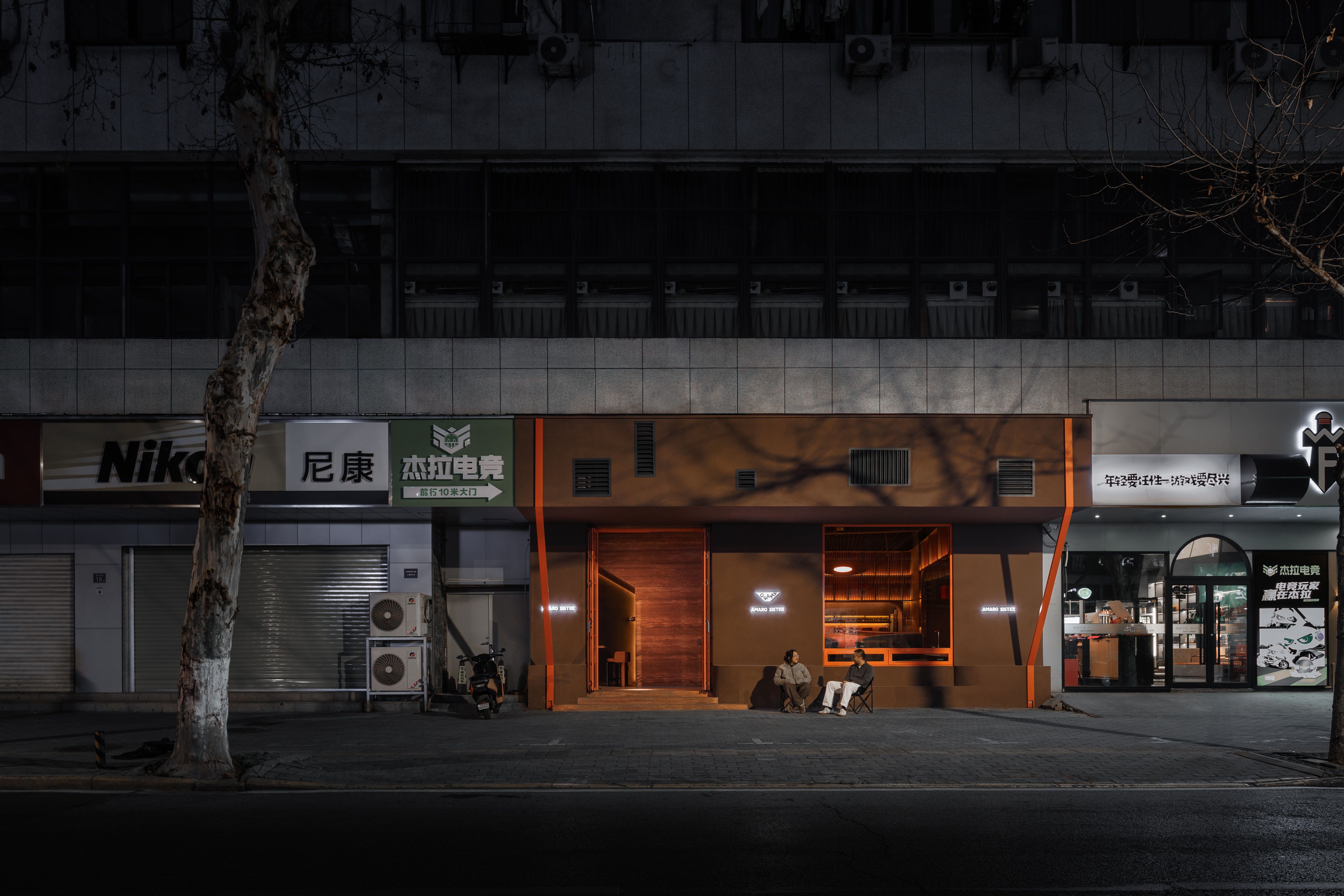
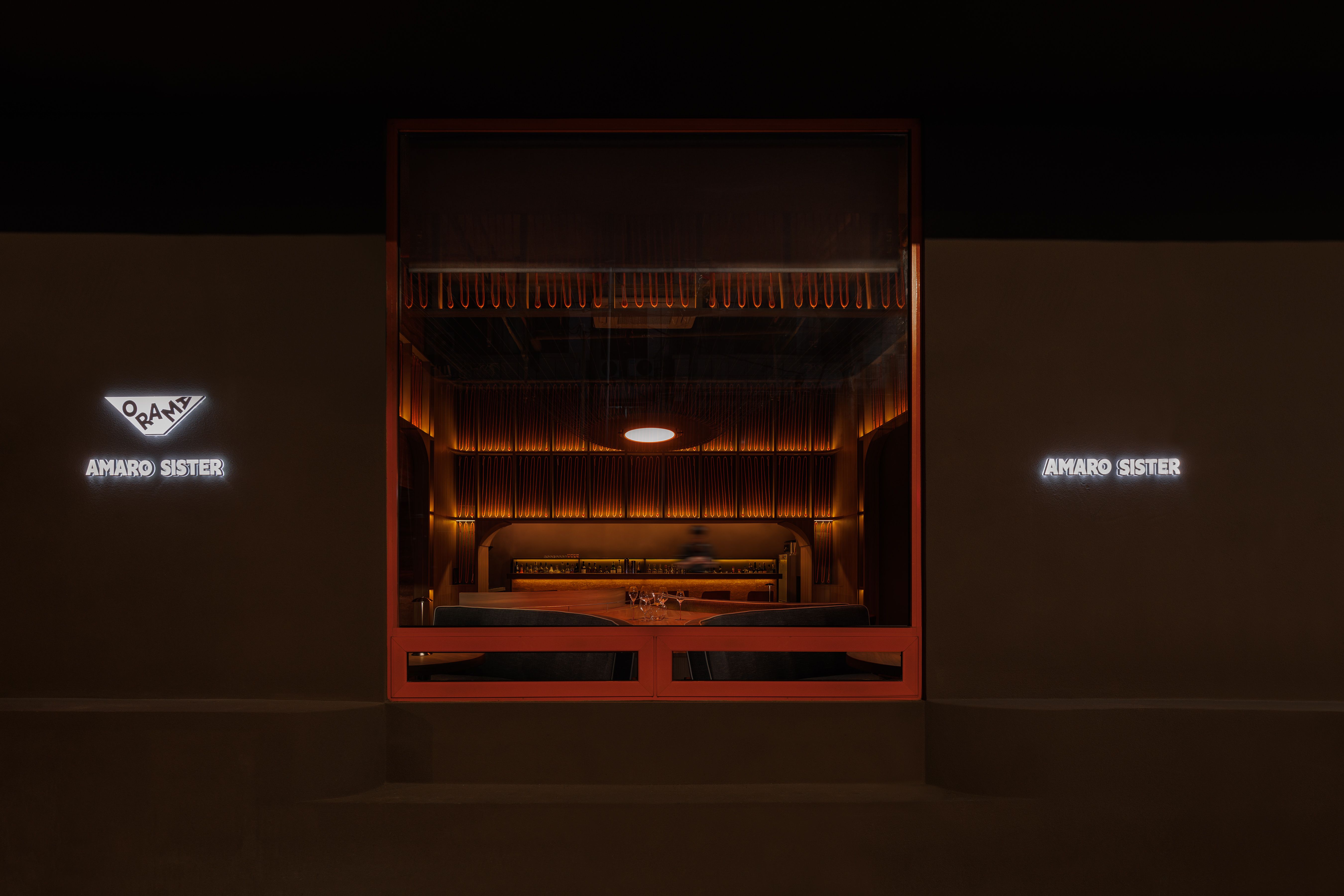
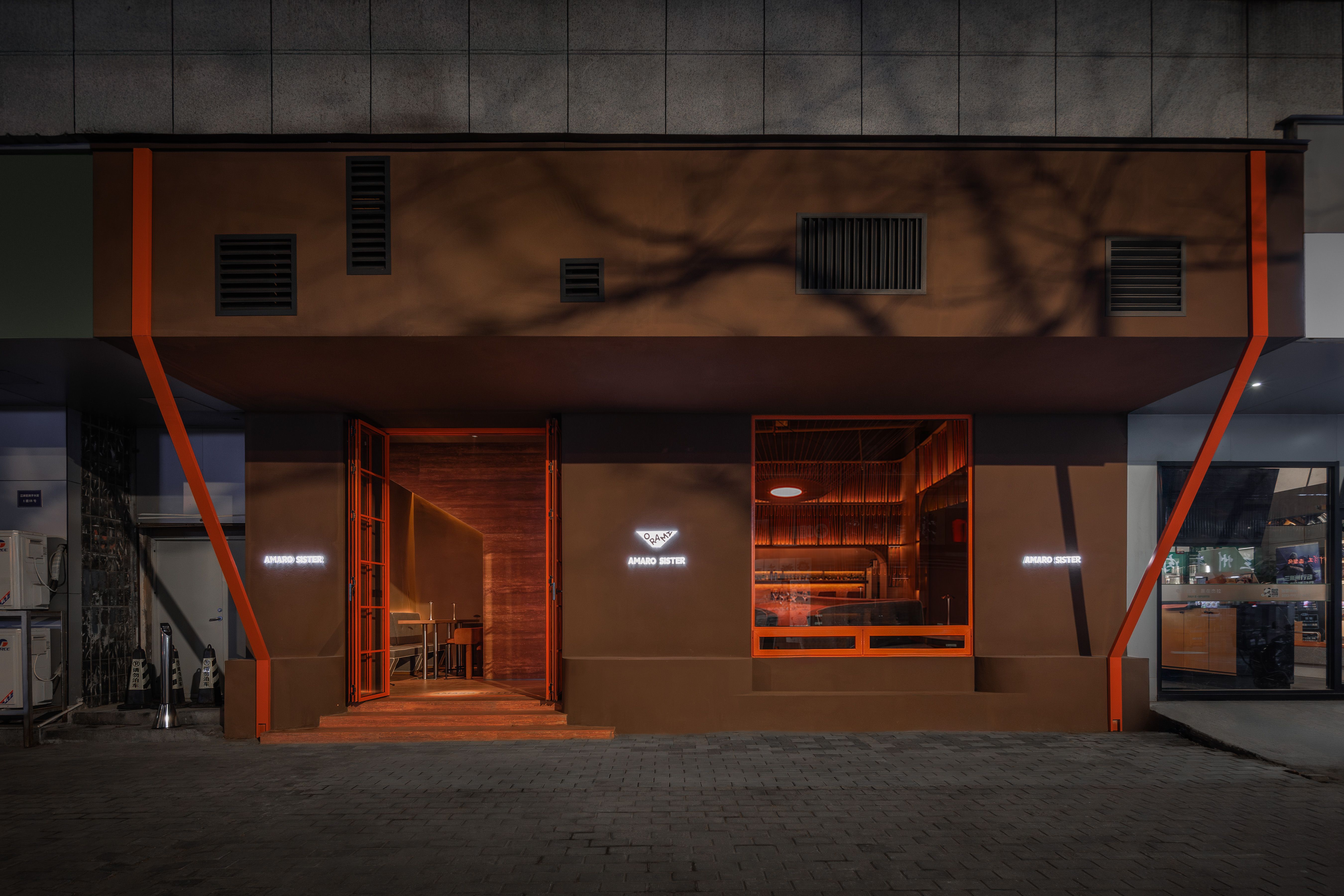
Rather than turning inward, the facade establishes a direct dialogue with the street. A series of openings—operable windows, folding doors, and panoramic glazing—blur the boundary between inside and outside, allowing the life of the bar to spill into the urban context.
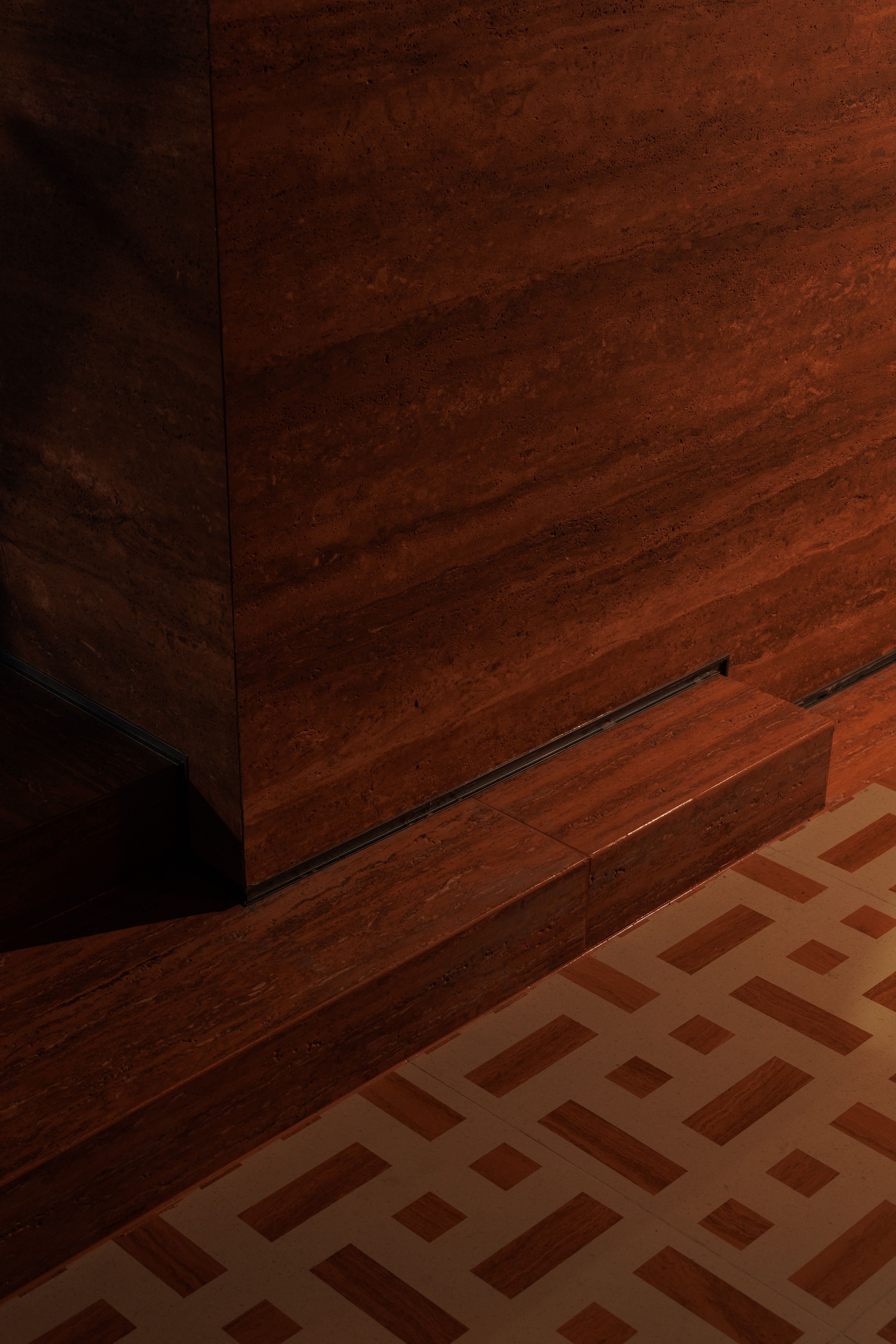
A bold canopy unifies the elevation, framing openings of similar proportions. Bright orange-red trims accentuate the structural rhythm while integrating drainage details into the architectural expression. Red travertine steps extend from the facade into the interior, forming a continuous spatial gesture that anchors the project’s material language from the outset.
Layered Thresholds
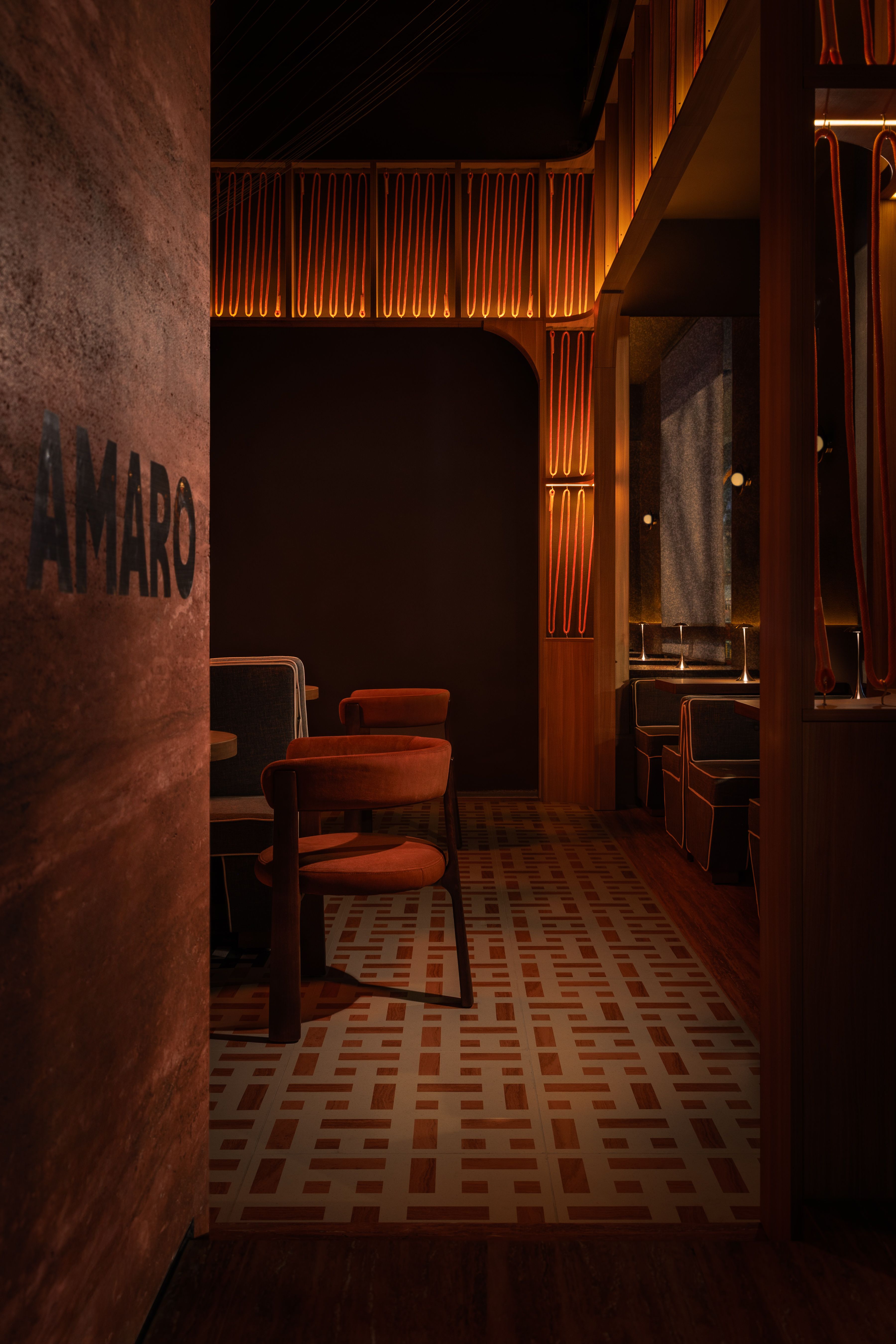
Inside, the entrance sequence is defined by subtle level changes. A back-of-house partition divides the space into raised and sunken zones, organizing circulation while introducing a sense of spatial layering.
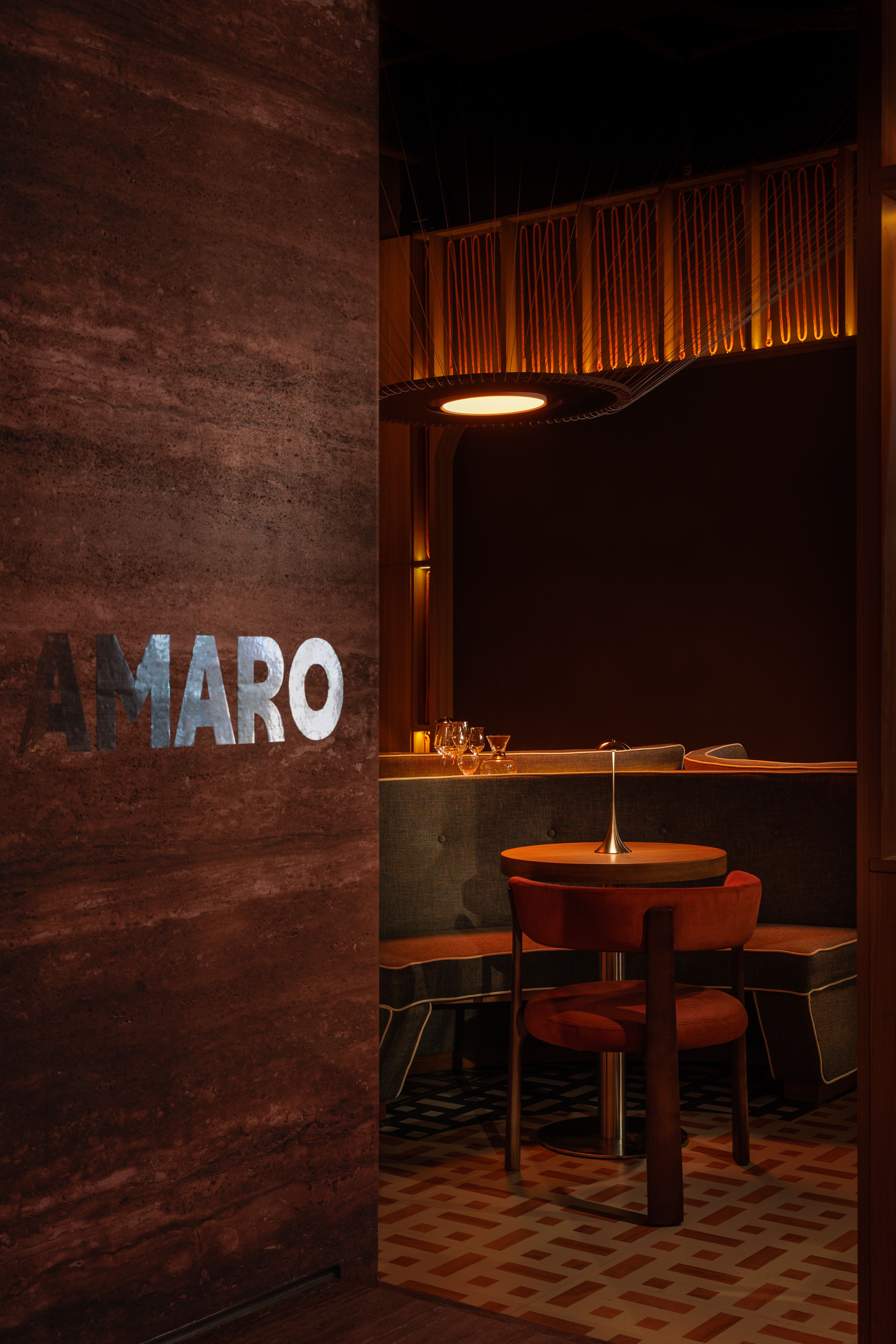
A communal table sits alongside a display fridge at the threshold, activating the entry with both social and functional elements. Angular geometries and carefully positioned lighting add depth and dynamism, while the contrast between red travertine and metallic branding elements creates a memorable visual identity under low light conditions.
A Framed Interior Landscape
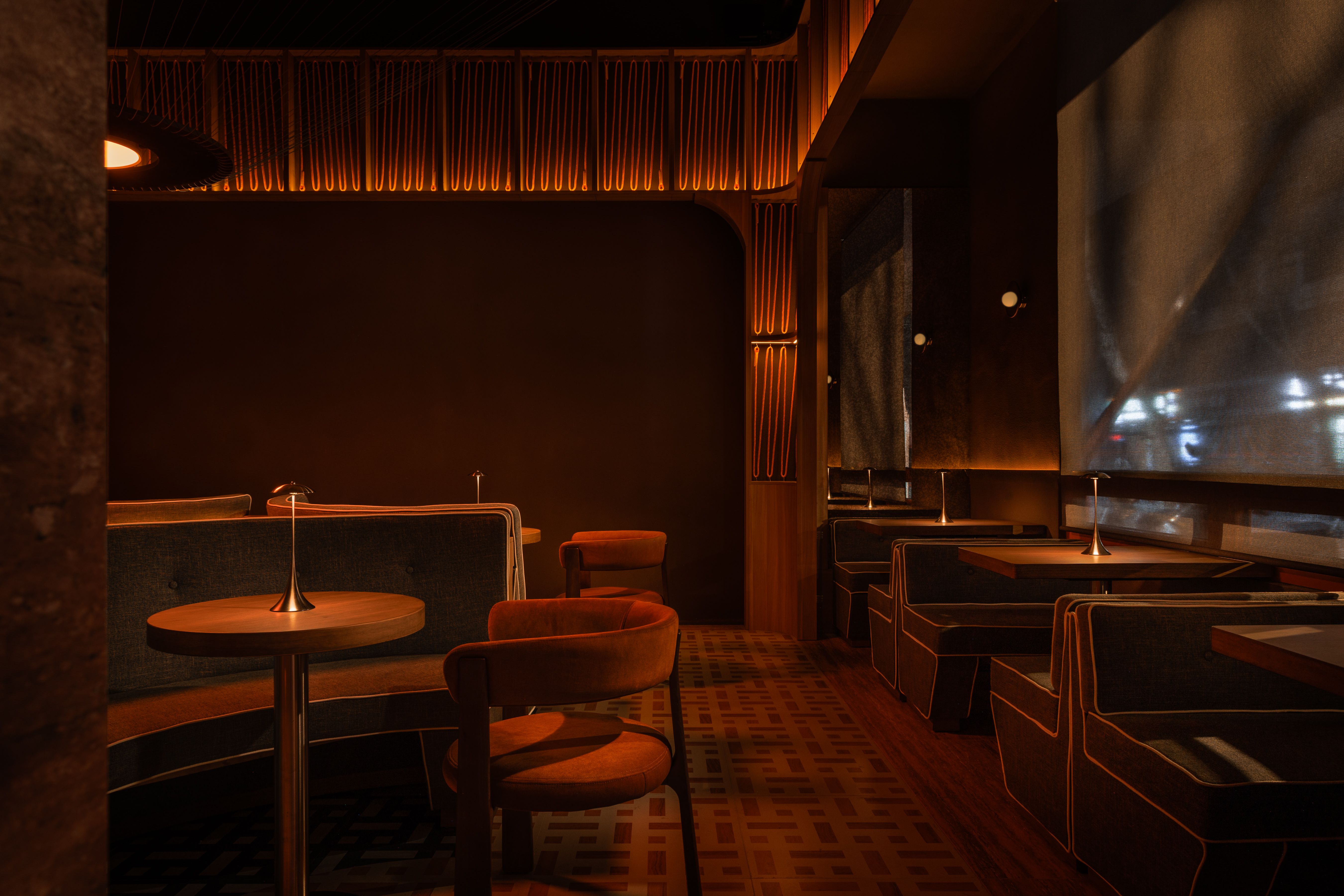
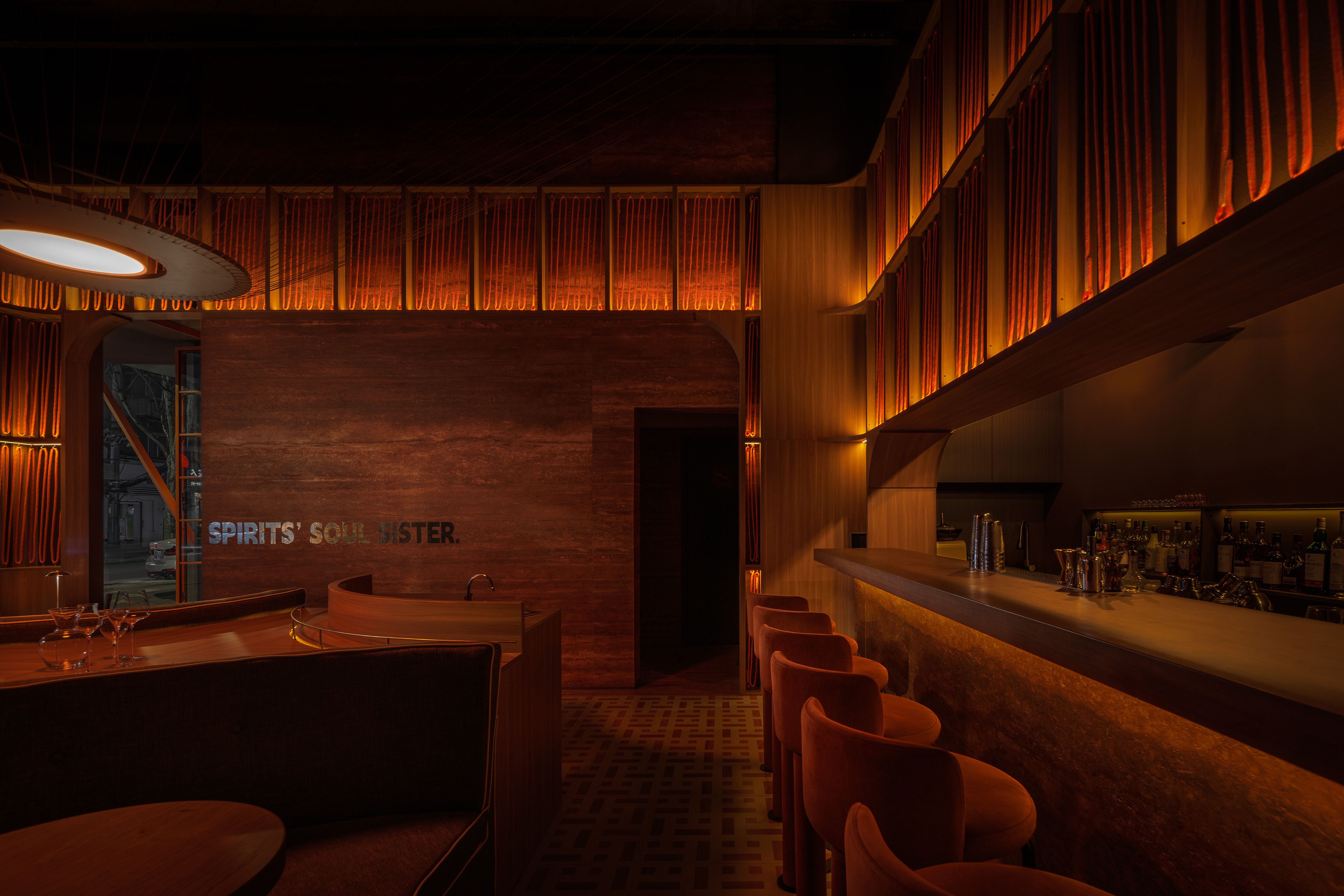
The main hall unfolds as a sunken, open social field structured by a three-part spatial organization: intimate window seating, group-oriented booths, and an interactive bar.
A series of timber frames of varying heights define these zones while reinforcing a central atrium. Rather than enclosing space completely, the frames act as a spatial scaffold—loosely organizing movement and sightlines while maintaining visual continuity.
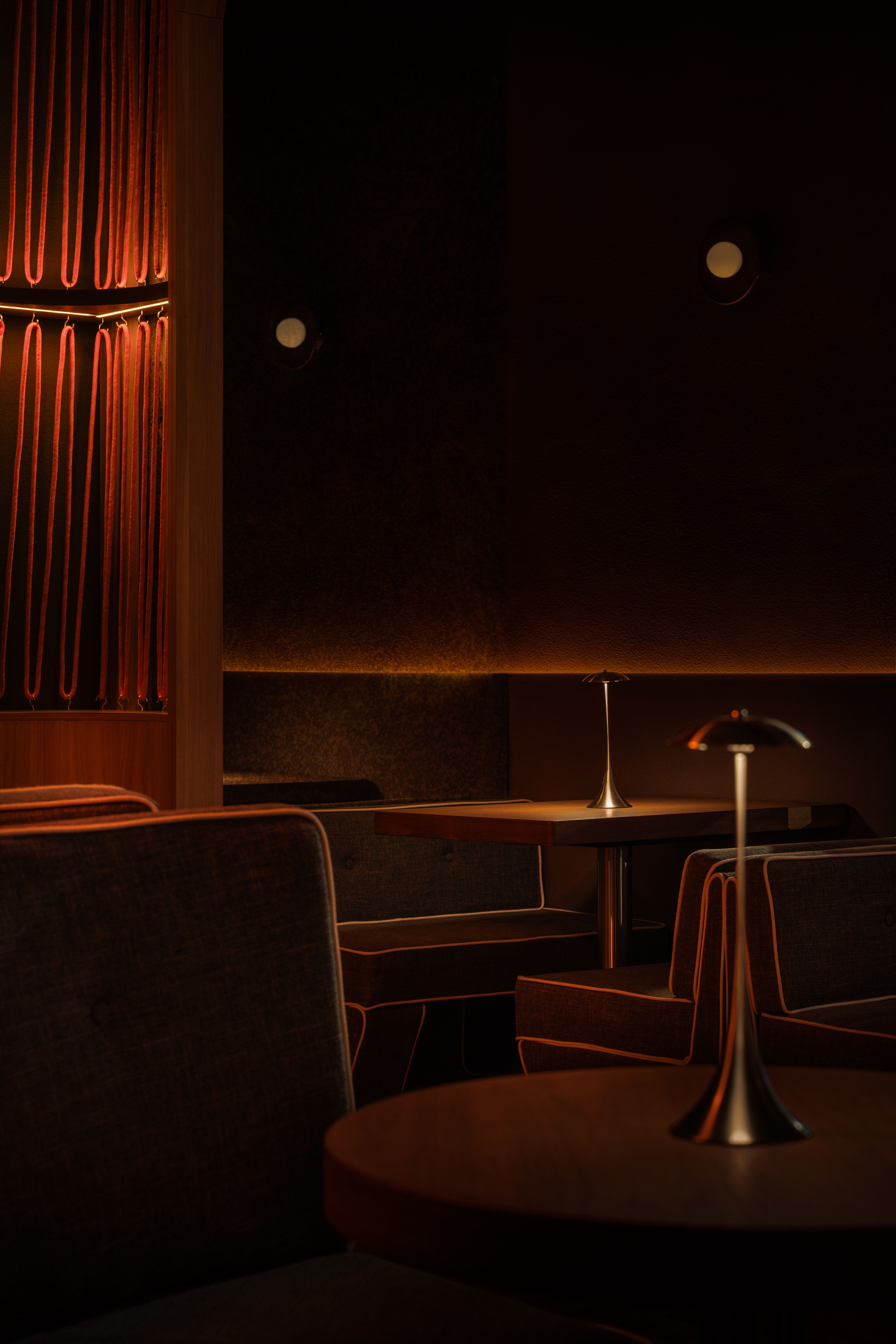
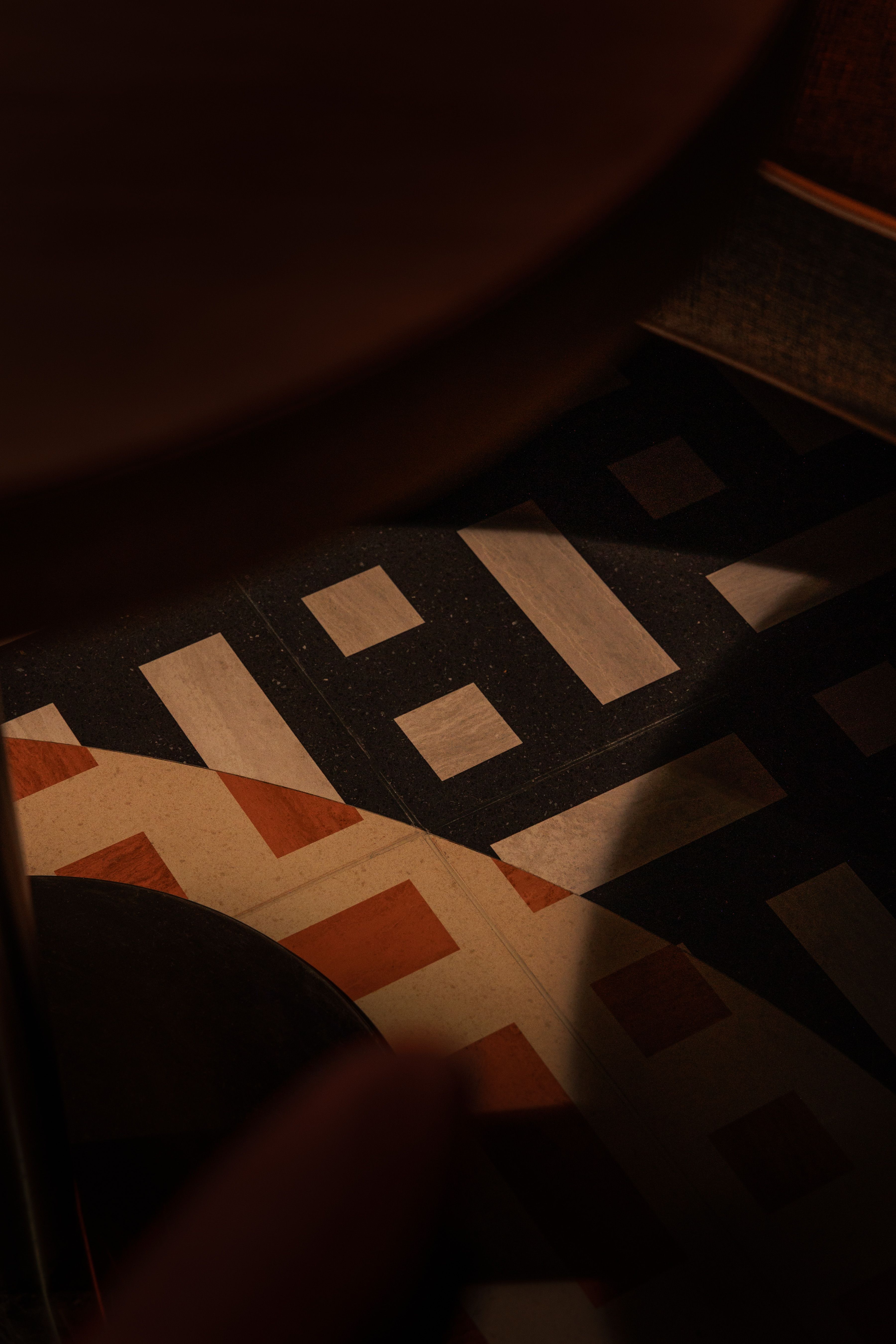
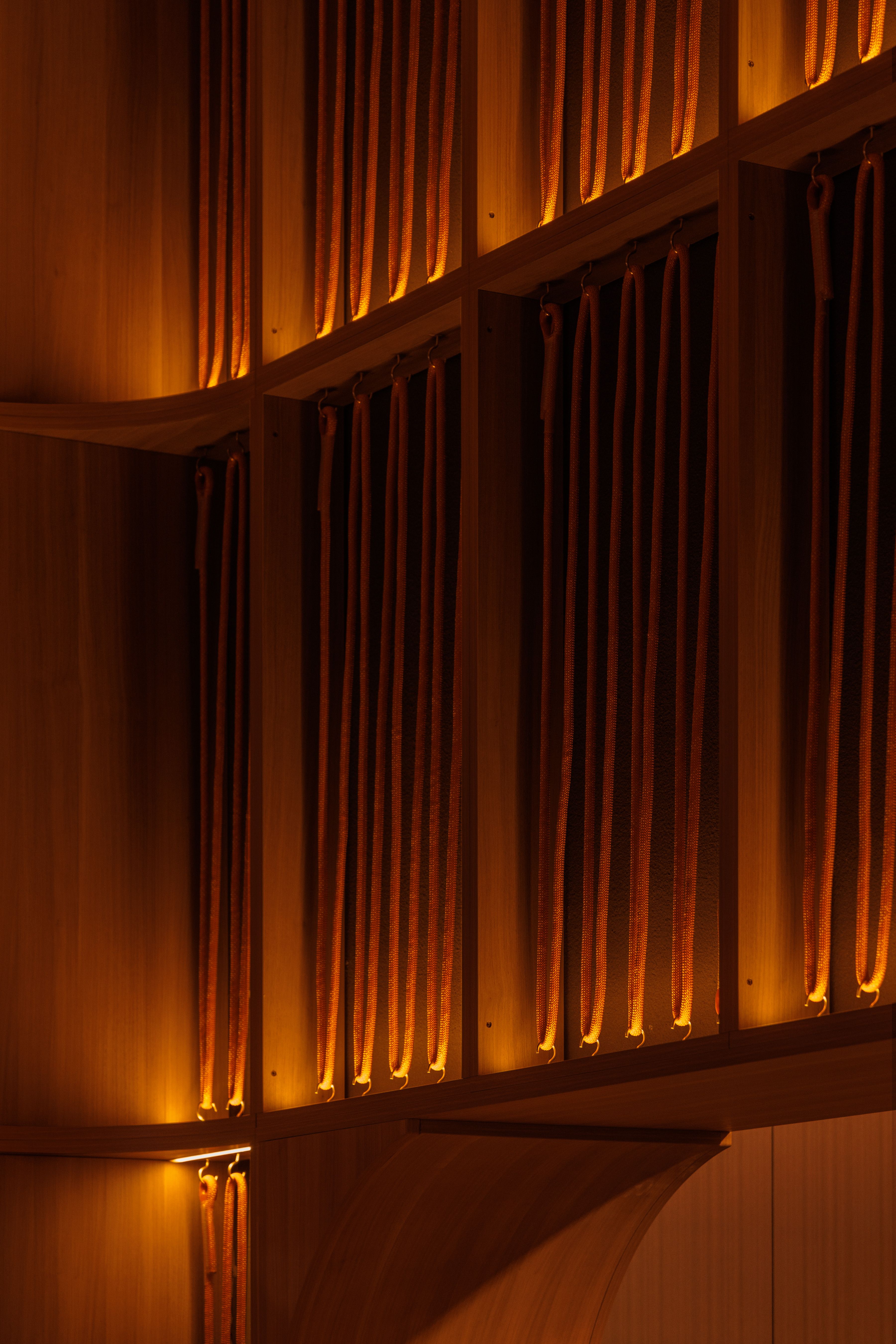
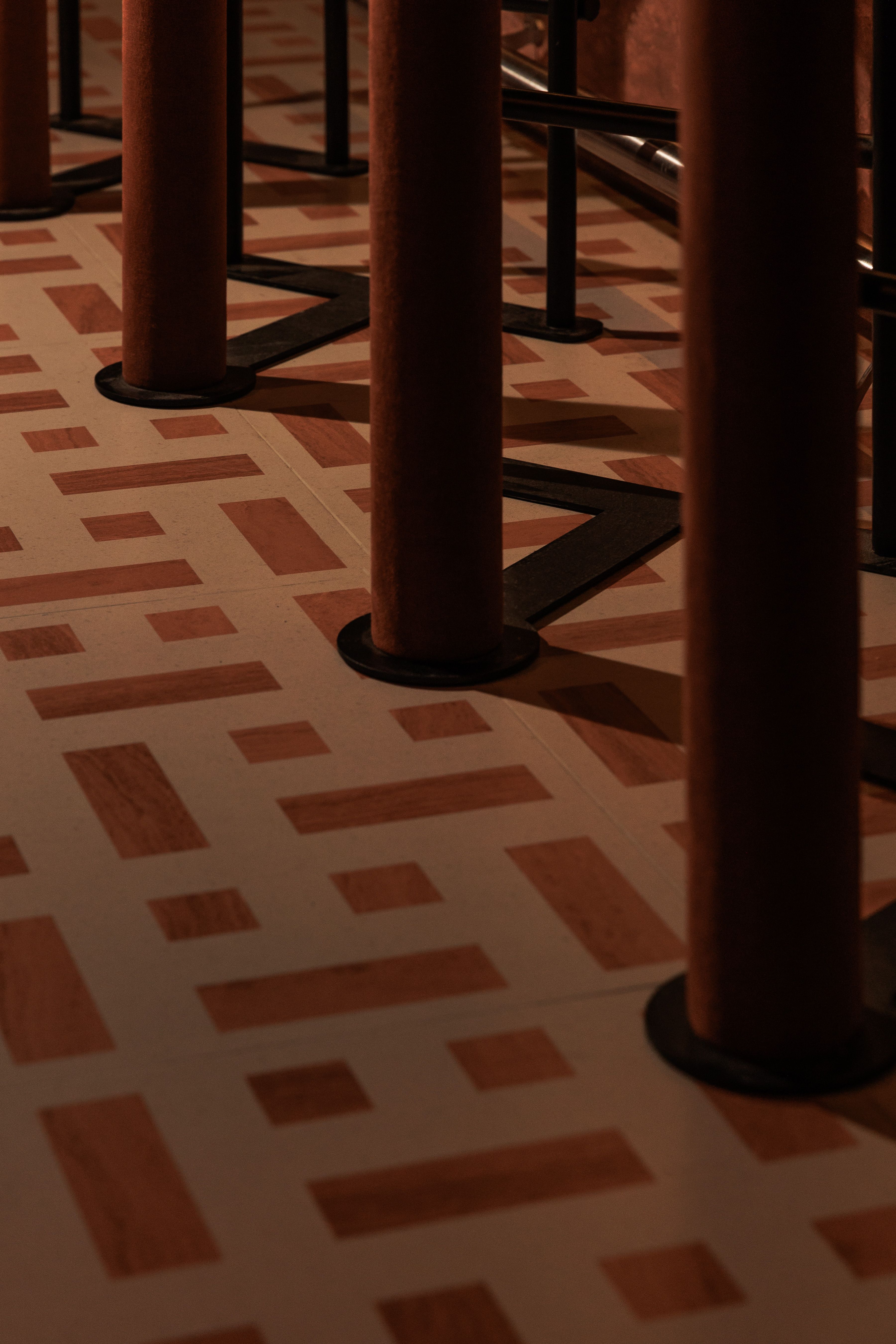
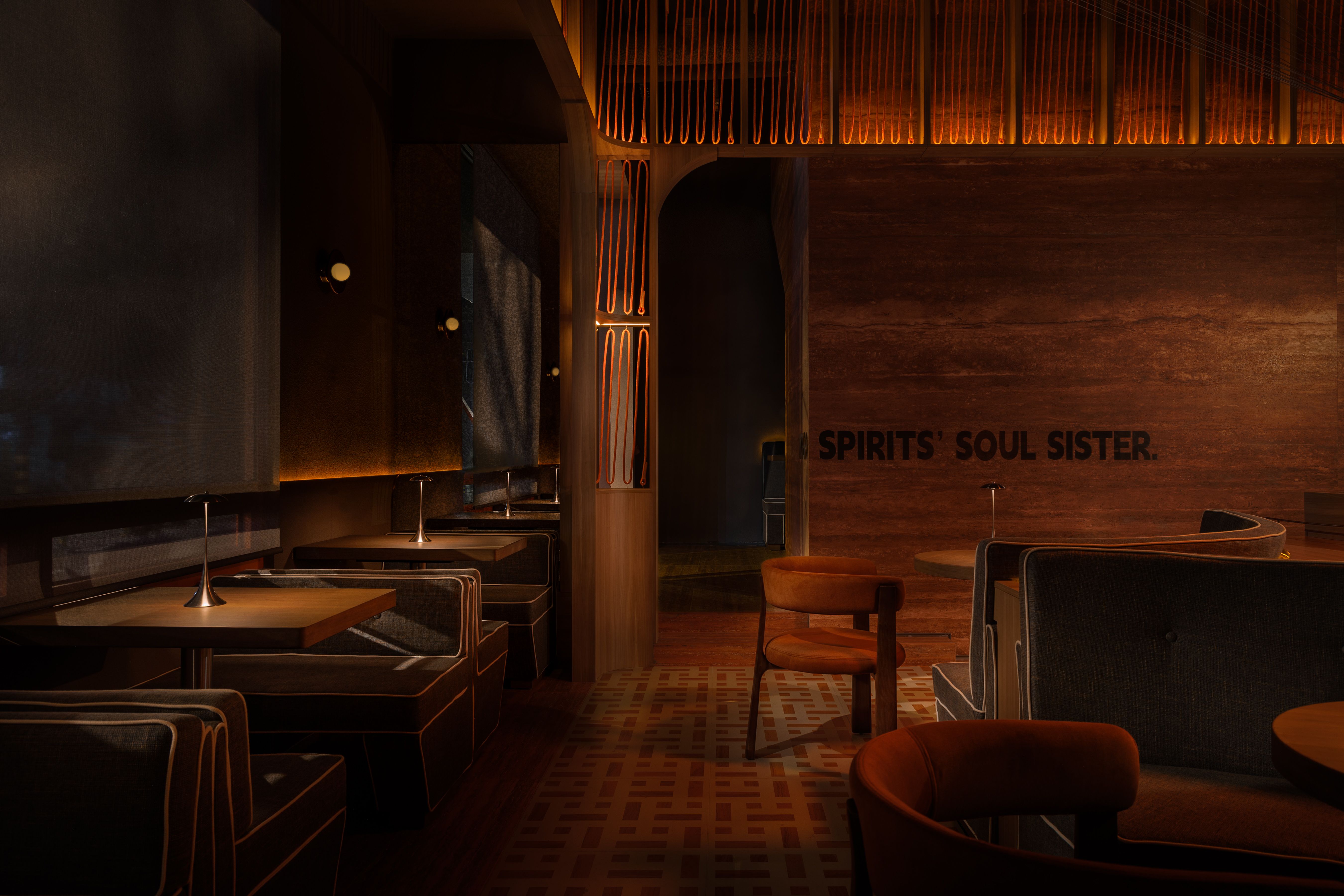
Within this framework, rope-like forms and material textures introduce a sense of softness and play, offsetting the structural clarity. The flooring—alternating between red travertine and terrazzo—extends the logic of the facade inward, creating a cohesive dialogue between plan and elevation.
The Central Booths
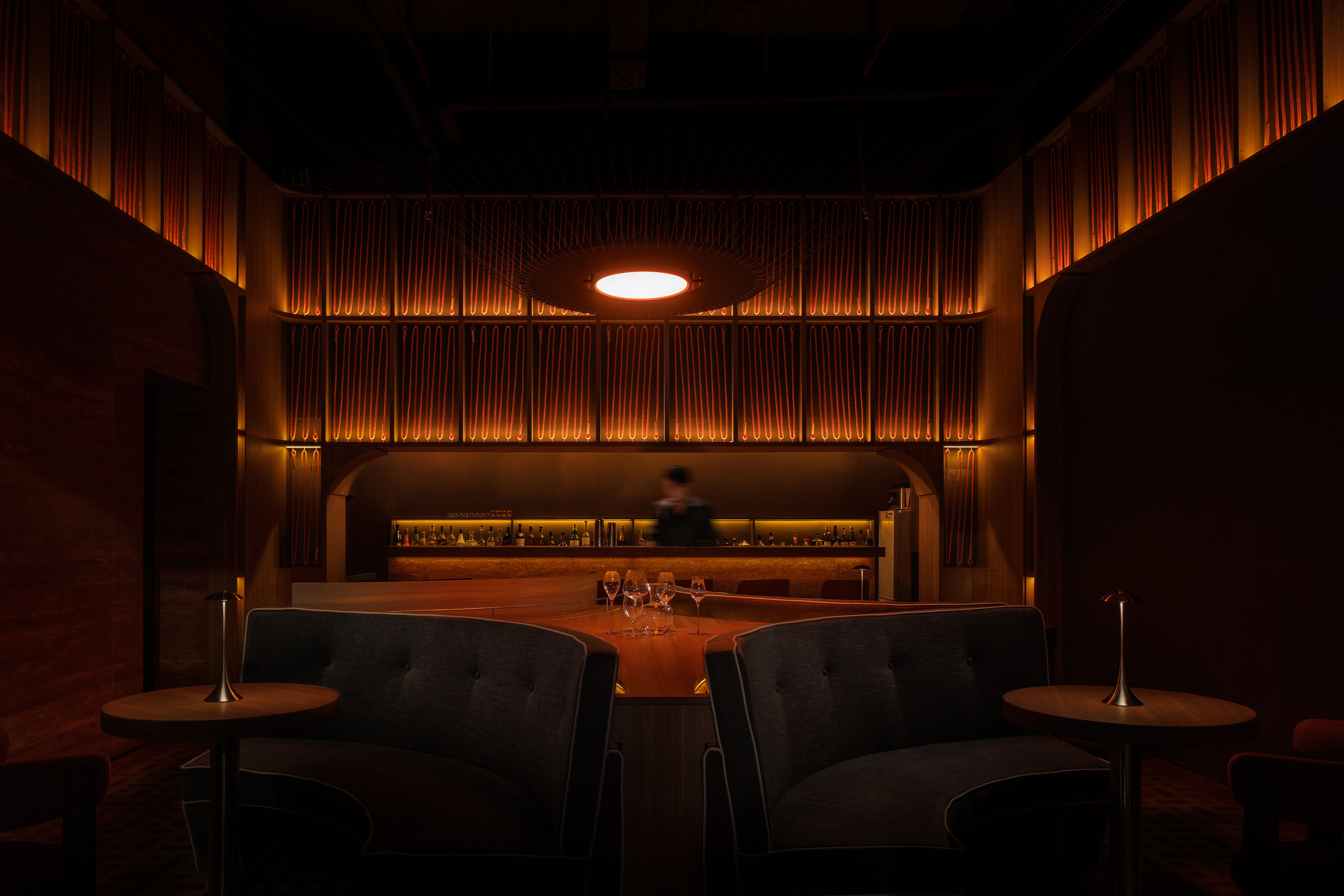
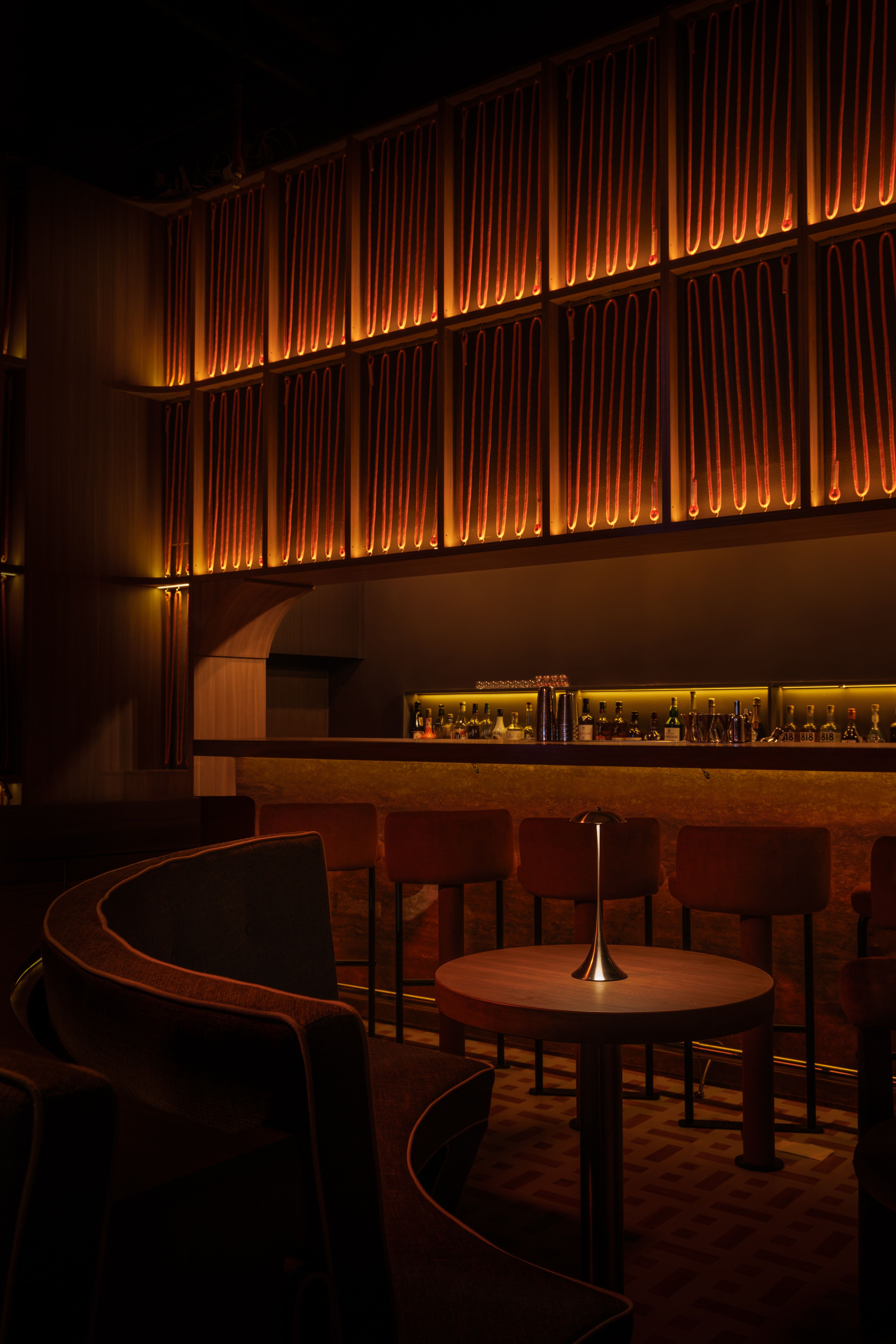
At the heart of the space, three curved booths and a corresponding curved mixing station establish a strong spatial focal point. This configuration enhances both visual centrality and operational efficiency, forming a secondary service relationship with the main bar.
Above, a custom lighting installation composed of fine steel wires and metal discs defines the atrium with a delicate, atmospheric presence. Integrated curved light strips further soften the geometry, while upholstered seating introduces a tactile sense of comfort.
Material transitions beneath the booths—shifting between contrasting terrazzo patterns—subtly reinforce the spatial hierarchy and movement within the interior.
Intimate Edges
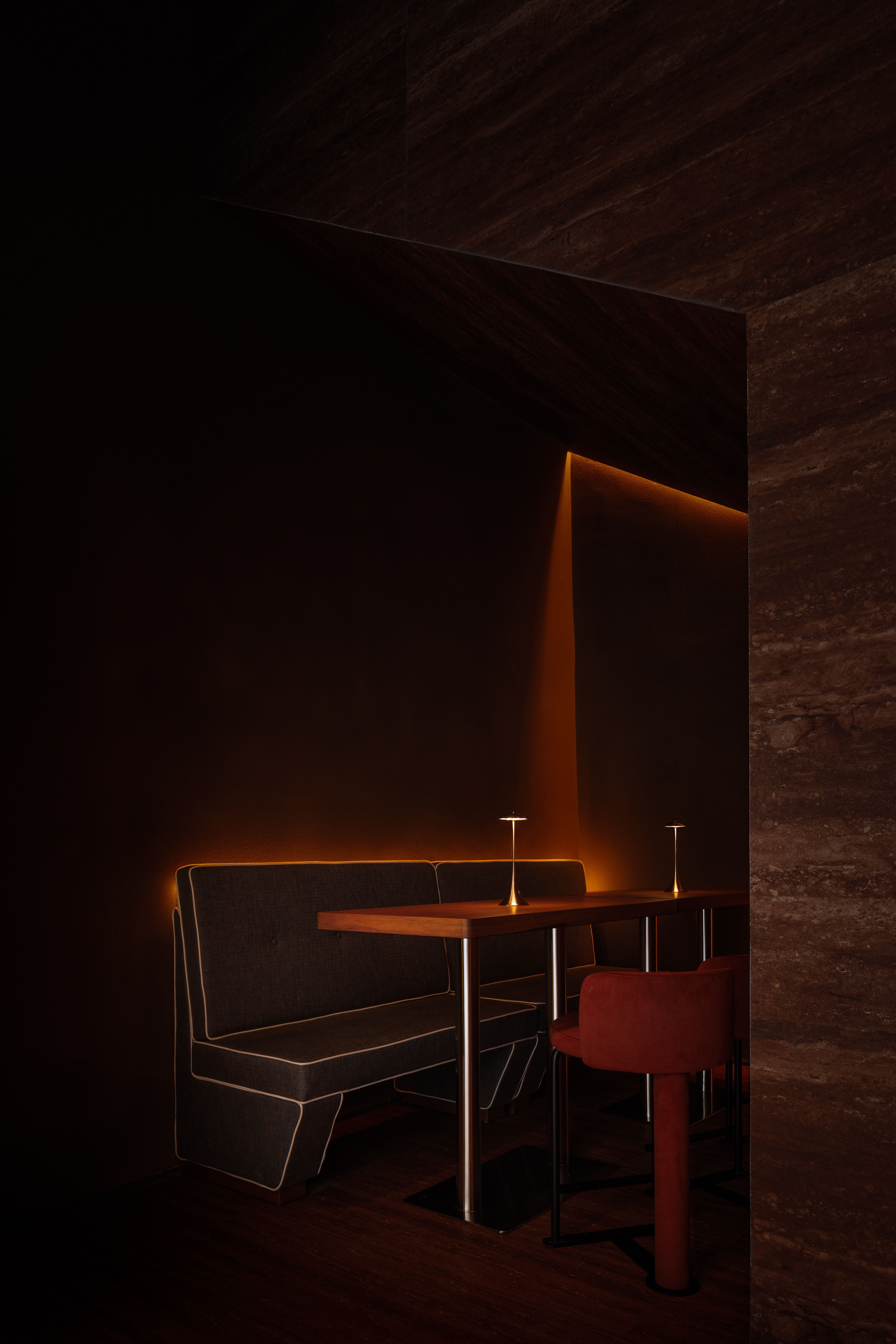
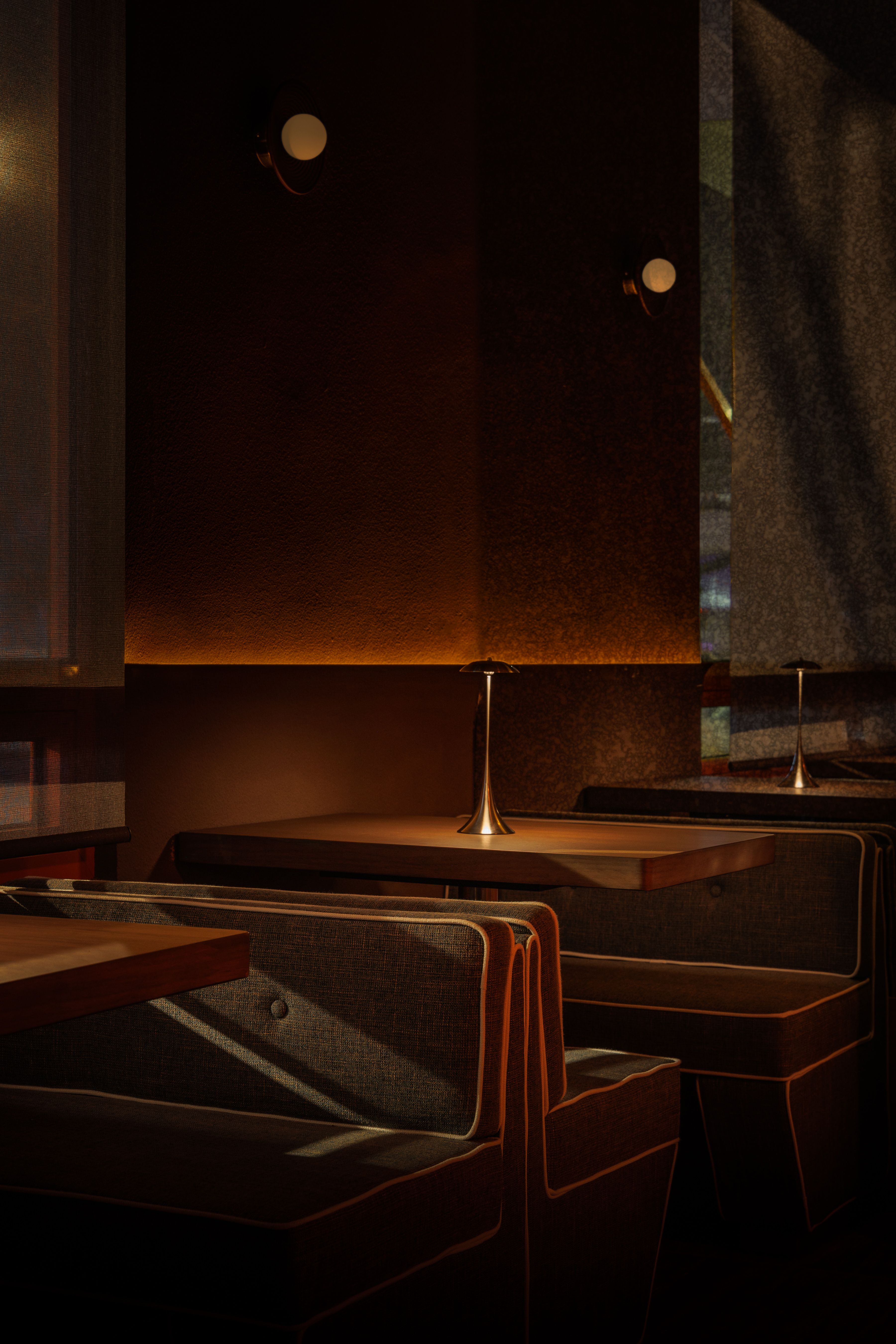
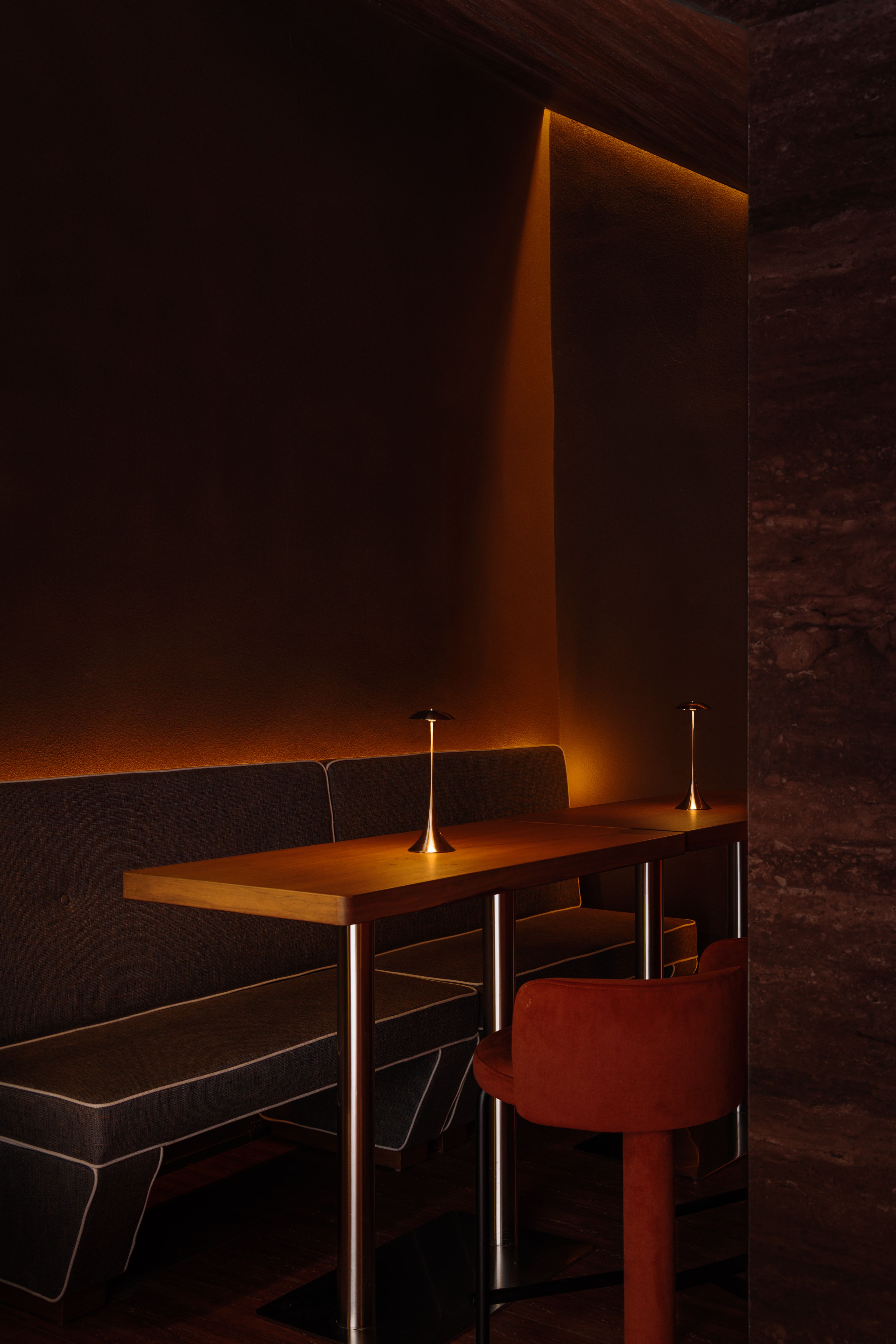
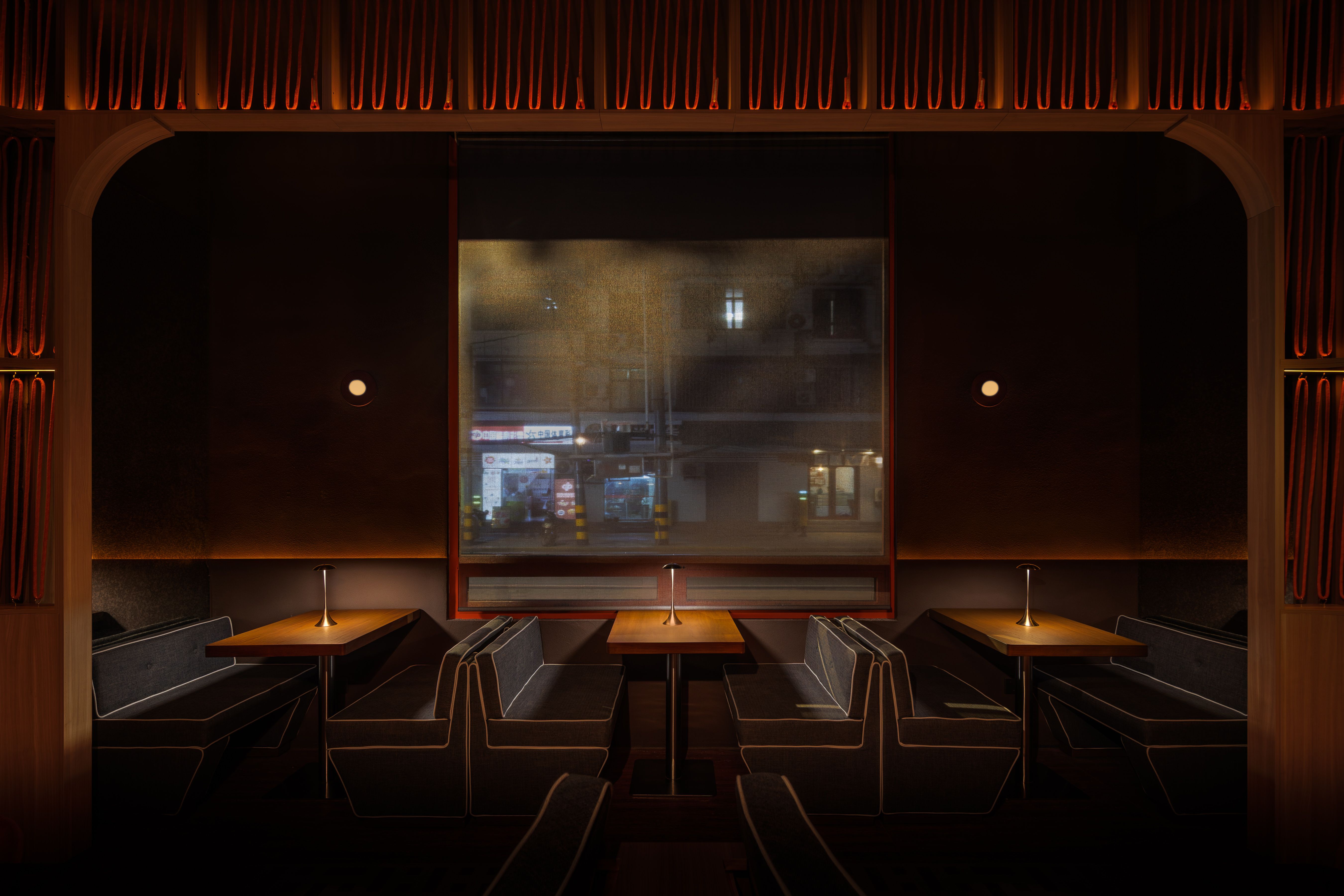
Along the facade, window seating is conceived as a sequence of intimate, two-person settings. The space compresses and expands in section, creating a canyon-like spatial experience that enhances privacy within an otherwise open plan.
Wall sconces, low-level lighting, and antique mirrors contribute to a layered visual depth, offering a more refined and secluded atmosphere in contrast to the central social zone.
A Relaxed Bar Setting
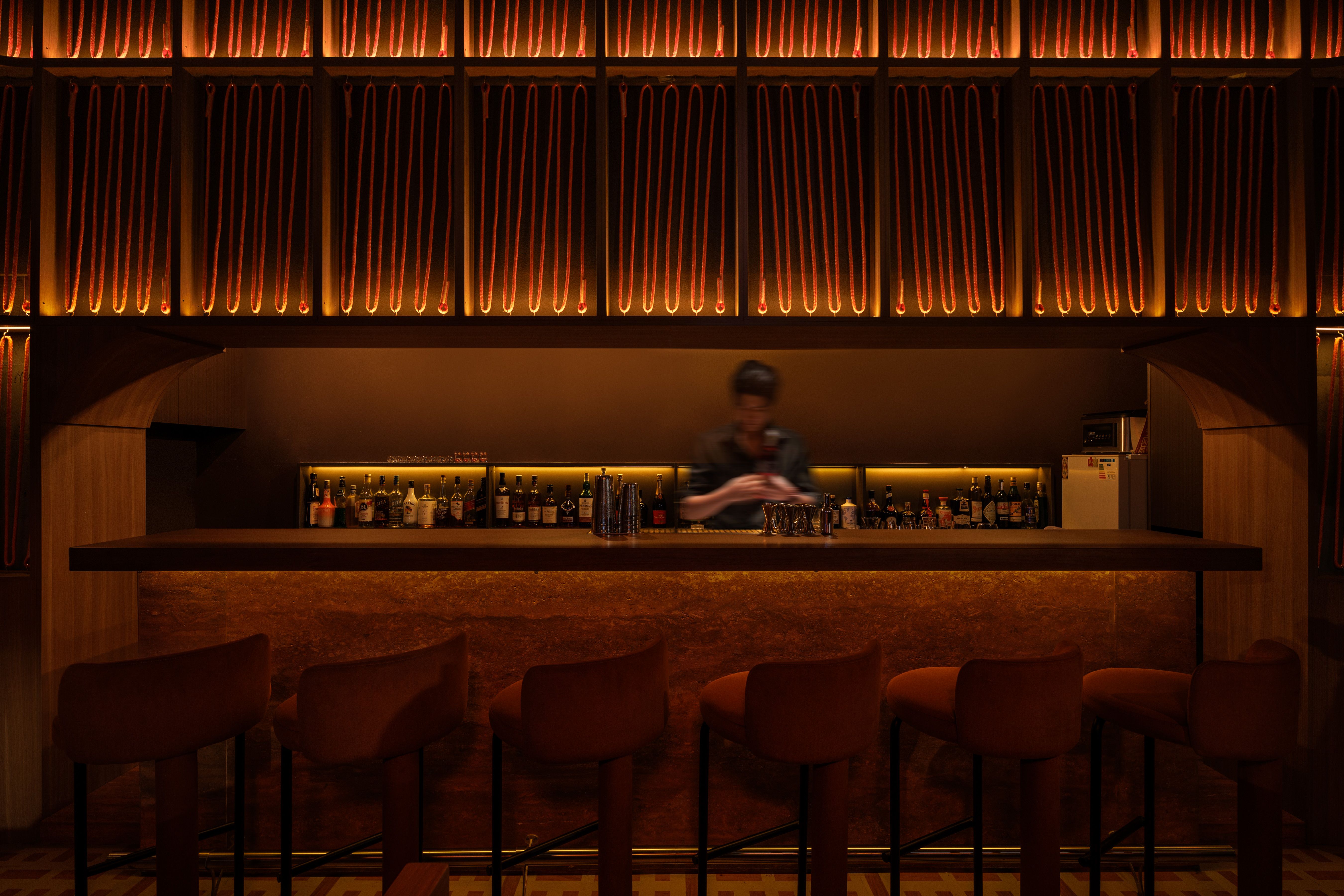
The bar is designed as both a focal point and a backdrop for interaction. A framed counter, recessed display niches, and sculptural seating elements work together to define its architectural presence.
Lighting is carefully calibrated to remain soft and ambient while ensuring functional clarity at the countertop. This balance supports a more natural and relaxed exchange between bartenders and guests, aligning with the overall ethos of the space.
Project Description
Through a careful balance of structure and softness, Amaro Sister Cocktail Bar reinterprets the essence of Amaro as a spatial experience—one that is open yet intimate, composed yet playful, and ultimately designed to bring people together.